Great Dane Puppy Potty Training: Stress-Free Housebreaking Guide
Potty training a Great Dane puppy doesn’t have to be a disaster. With the right setup, a simple routine, and clear communication, you can housebreak your gentle giant with fewer accidents and less stress.
🐾 5 Steps to Potty Train Your Great Dane Puppy
Successful Great Dane potty training starts with consistency, patience, and a clear routine. Because Great Dane puppies grow quickly, establishing good habits early helps prevent confusion and indoor accidents.
Step 1 – Create a Puppy Zone
Set up a dedicated puppy zone that includes a crate, bed, and safe play space. This controlled environment helps your puppy learn where it is safe to relax while also reinforcing structured Great Dane training routines.
Step 2 – Follow a Consistent Potty Schedule
A reliable routine is one of the most important parts of Great Dane potty training. Take your puppy outside after naps, after meals, after play sessions, and first thing in the morning.
Step 3 – Take Your Puppy Outside Frequently
Young Great Dane puppies may need bathroom breaks every 30 to 60 minutes. Frequent trips outside help your puppy learn the correct place to go while reducing the chances of accidents inside the home.
Step 4 – Stay Calm When Accidents Happen
Accidents are a normal part of puppy training. Instead of punishment, calmly redirect your puppy outside and reward them when they finish in the correct place.
Step 5 – Reward Success Immediately
Praise and small training treats reinforce the behavior you want. When your Great Dane puppy goes potty outside, reward them immediately so they associate the correct location with positive feedback.
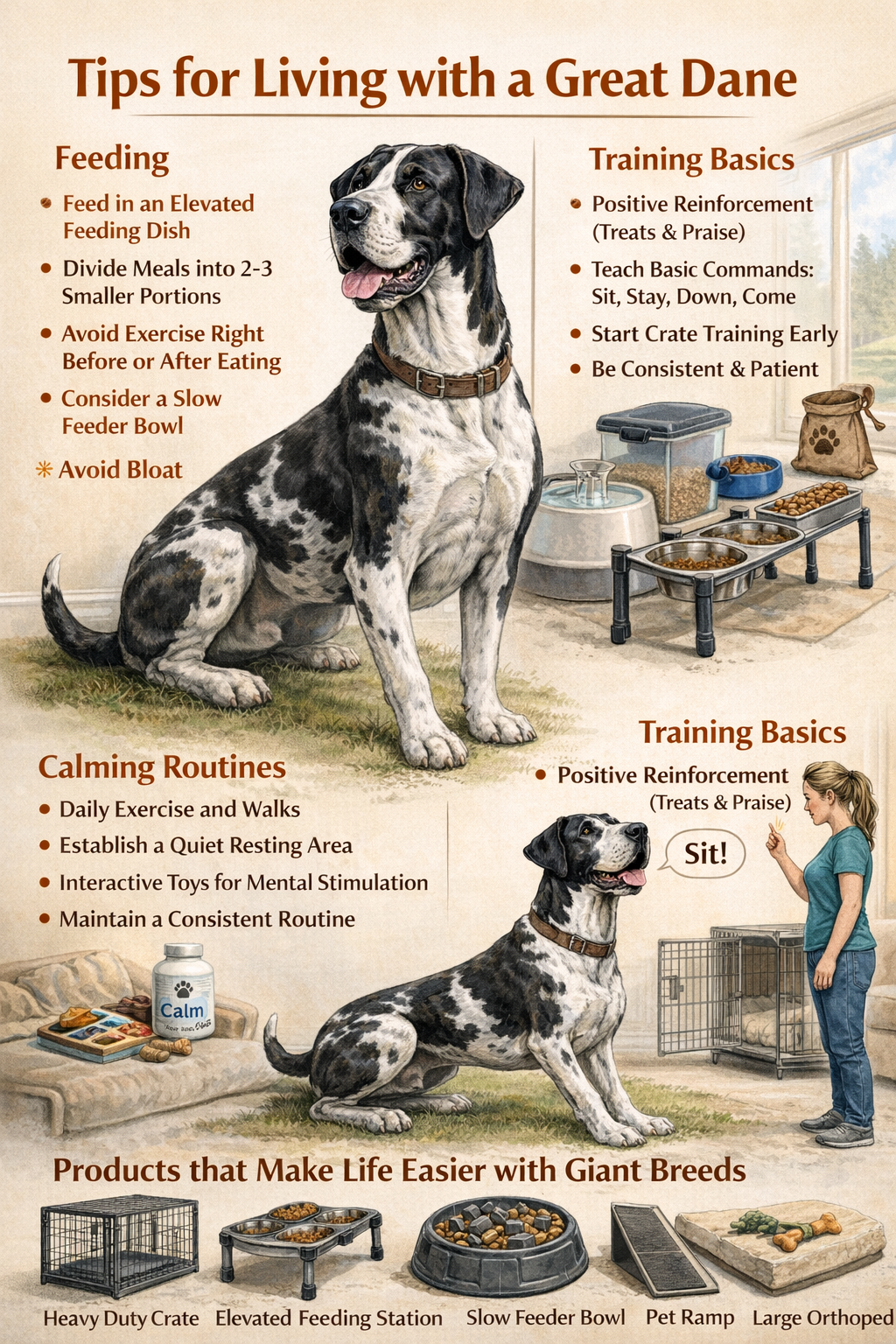
Training Tips & Daily Routines
Feeding, training basics, calming routines, and products that make life easier with giant breeds.
Go to Care →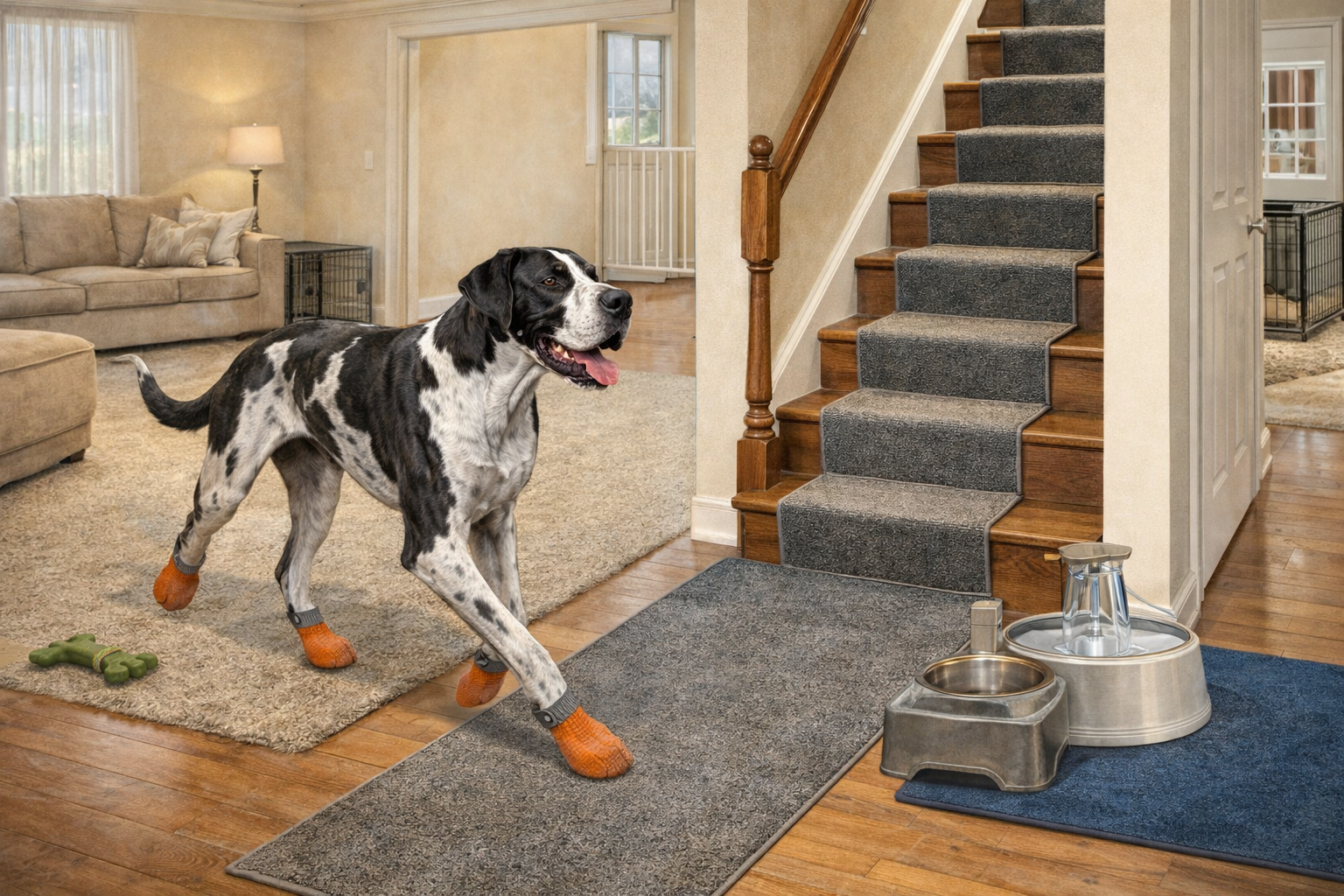
Great Dane Safe Home
Traction zones, stairs safety, and house setup changes that prevent slips and injuries.
Safer House →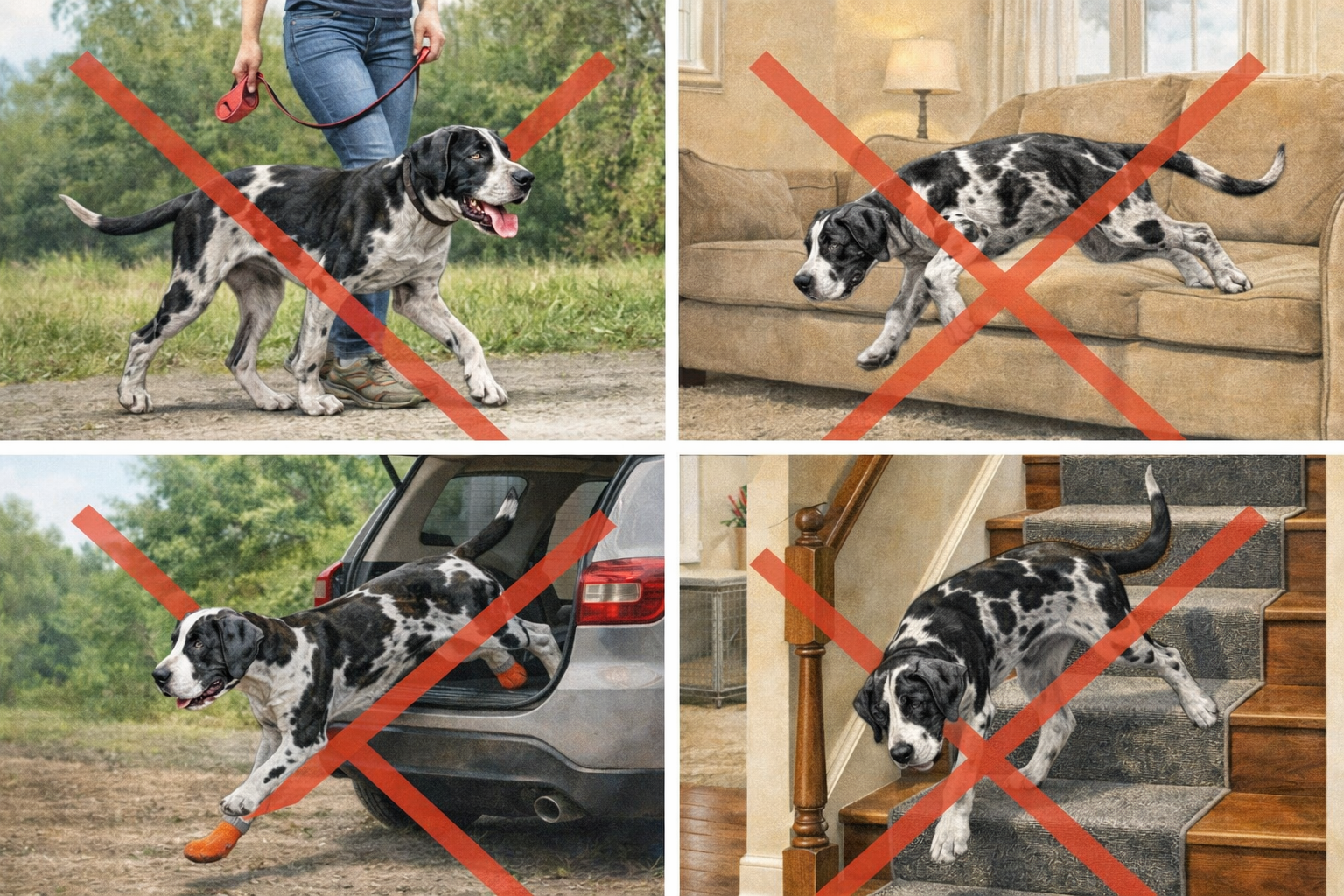
Exercise Guide (Puppy-Safe)
How much movement your Great Dane really needs—without stressing joints during growth.
Exercise Guide →Step 1: Puppy Zone Setup
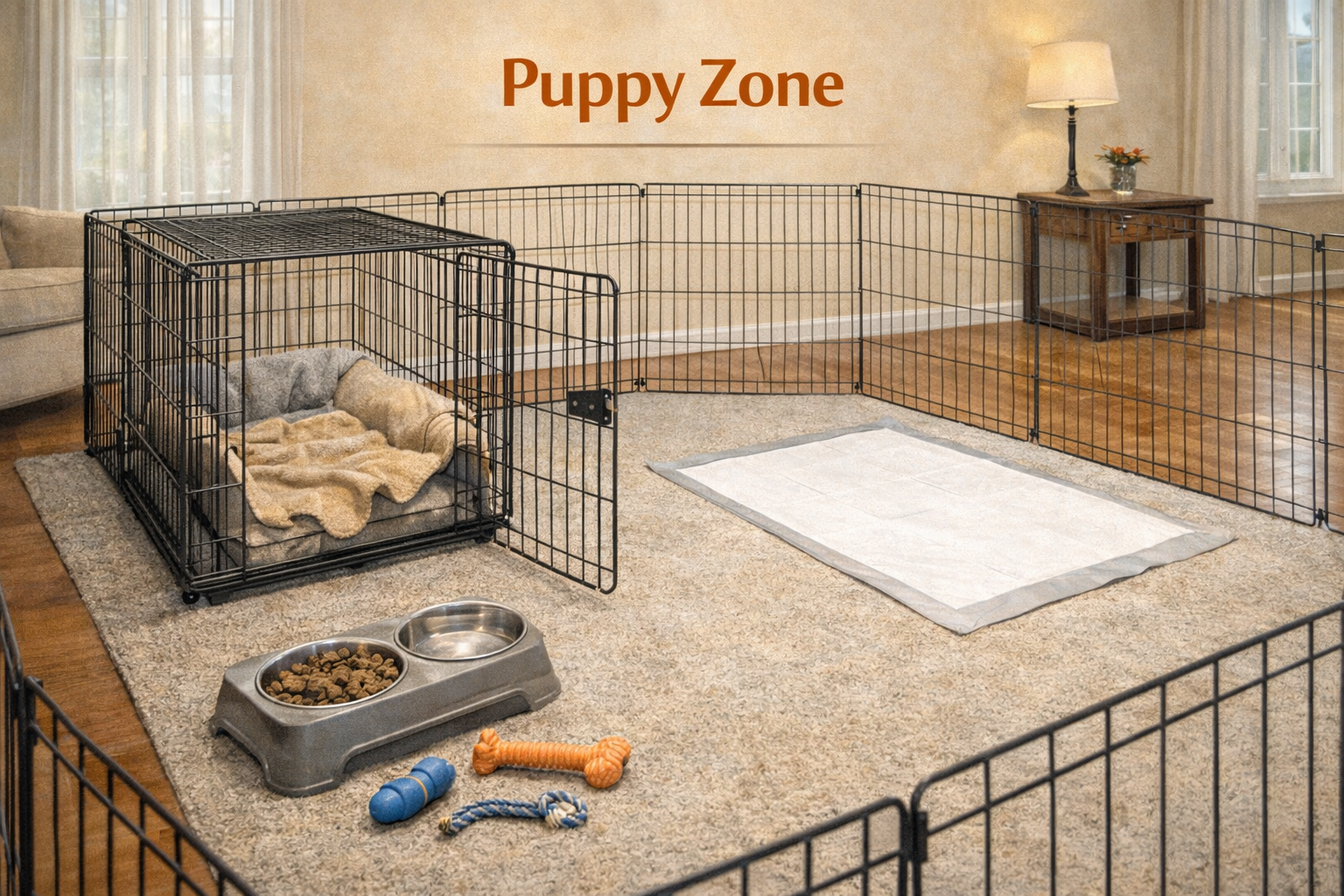
Puppy Zone (PZ): Building a Safe Space for Great Dane Training
One of the most important foundations of successful Great Dane puppy training is creating what I call the Puppy Zone (PZ). This is your puppy’s dedicated safe space — a place where they can relax, reset, and feel secure. When introduced properly, the Puppy Zone becomes a powerful tool for building confidence, encouraging independence, and supporting healthy sleep habits.
Most importantly, the Puppy Zone should be accessible at all times. Whenever you are supervising, I strongly recommend leaving the gate open so your puppy can come and go freely. This freedom allows your Great Dane puppy to begin choosing the space on their own, which is a critical step in positive Great Dane crate and zone training.
Encouraging Natural Naps in the Puppy Zone
Ideally, your puppy will begin to nap inside the Puppy Zone voluntarily. When this happens, you are winning. Puppies that learn to settle and sleep in their safe space during the day typically transition much more smoothly to sleeping there at night. In fact, daytime naps inside the PZ often predict fewer nighttime struggles.
However, if your puppy falls asleep outside the zone, you can gently move them into their bed inside the Puppy Zone when possible. Over time, this helps reinforce where restful sleep should happen. Consistency here truly pays dividends during nighttime Great Dane training routines.
Make the Puppy Zone Comfortable and Engaging
Just as importantly, building a comfortable bed inside the Puppy Zone is crucial. Your Great Dane puppy should view this space as inviting, not restrictive. In addition to proper bedding, I recommend keeping several safe enrichment items available in case your puppy is not quite ready to sleep.
For best results, I strongly suggest using the “Smells Like Success” method for toys and blankets. Familiar scents help puppies settle faster and feel more secure in their environment. You should also keep a few favorite toys inside the zone at night, along with an occasional puzzle toy or treat-dispensing toy for mental engagement.
Bedtime Strategy for Great Dane Puppies
When I put my puppies down for the night, I like to give them something that takes time to work on — for example, a safe chew or a bone with a small amount of peanut butter inside. The goal is simple: keep your puppy calmly occupied long enough for sleep to take over naturally. More often than not, once they finish working on the treat, they settle down and drift off.
Additionally, if your puppy develops the habit of shredding pee pads (and many do), I recommend switching to a tray system with artificial turf covering the pad. This helps prevent destructive habits while still supporting your house-training plan.
Using White Noise to Reduce Nighttime Disruptions
Finally, this is an excellent time to introduce white noise. Playing soft music or leaving the television on at low volume can significantly reduce your puppy’s reaction to outside sounds. Without background noise, many Great Dane puppies will bark or whine the moment they hear movement outside. White noise helps mask those triggers and often leads to calmer, more consistent sleep patterns.
When used consistently, the Puppy Zone becomes one of the most valuable tools in your entire Great Dane training system, supporting better sleep, calmer behavior, and a more confident young dog.
Jump to setup →Step 2: Potty Schedule
Great Dane Potty Training: Consistency Changes Everything
When it comes to Great Dane potty training, consistency is absolutely the key. In fact, this becomes even more important when more than one person in the household is helping with training. If you are following one routine but your spouse or kids are doing something completely different, your puppy will struggle to understand what is expected. Simply put, mixed signals slow down progress in any Great Dane training program.
For this reason, everyone in the home must be on the same page from day one. The clearer and more predictable the routine, the faster your Great Dane puppy will learn where and when to go.
Using a Leash to Guide Potty Success
One tool that can make early Great Dane puppy training much smoother is keeping a lightweight leash attached during supervised periods. This allows you to calmly guide your puppy straight outside and directly to the potty area without chasing, grabbing, or creating confusion. As a result, your puppy begins to associate going outside with the correct behavior much more quickly.
Additionally, the leash method pairs very well with door bell training if you choose to use it.
How the Potty Bell Method Works
Briefly, the bell method is simple. Each time you take your puppy outside to potty, you ring the bells hanging on or near the door. Over time, many puppies learn to ring the bells themselves to signal they need to go out. While I have not personally relied on this method, I do know several experienced owners who swear by it, particularly as their Great Dane puppies grow older and become more independent.
Timing Matters in Great Dane House Training
Equally important is being proactive with potty breaks. You must be diligent about taking your puppy out:
• Immediately after waking from a nap
• When they suddenly stop during play
• Right after playtime ends
• Roughly every 30 minutes during early training
• Especially after eating or drinking large amounts of water
Just as importantly, keep a close eye on your puppy’s body language. The moment they stop what they are doing and begin sniffing the floor, it’s go time. Quick action in these moments is one of the fastest ways to prevent indoor accidents and reinforce good Great Dane potty training habits.
Stay Consistent Even After Progress
Even after your puppy seems mostly trained, do not abandon the routine too quickly. Consistency over time prevents frustrating setbacks and helps lock in reliable habits. Remember, with Great Danes especially, steady structure early on pays off in a very big dog later.
Praise Is the Most Powerful Training Tool
Finally — and this is critical — when your puppy successfully goes potty outside, you need to celebrate the win. Offer enthusiastic praise, calm affection, and positive reinforcement so your puppy clearly understands they made the right choice. In effective Great Dane training, reward timing matters enormously.
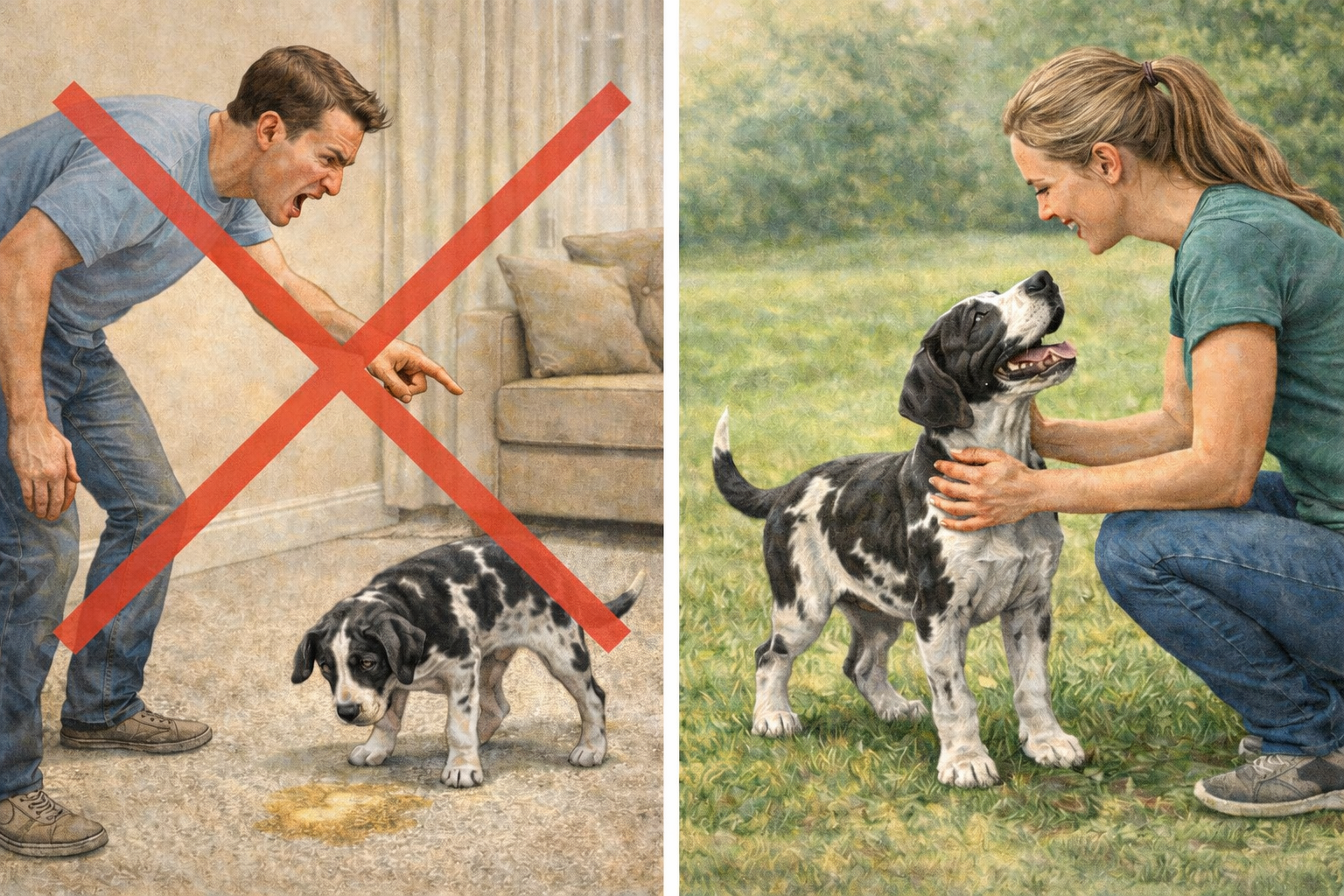
Just as important, never yell at or punish your puppy for accidents inside. They are still learning. Think of it this way: if you had a newborn baby, you would not yell or punish them for using their diaper. The same patience applies here. Clear guidance, consistent routines, and positive reinforcement will always outperform frustration.
See the schedule →Step 3 & 4: Accidents + Consistency
Handling Mistakes During Great Dane Puppy Training
When it comes to successful Great Dane puppy training, how you handle mistakes matters just as much as teaching the correct behavior. First and foremost, remember this: your puppy knows absolutely nothing yet. They do not understand our language, our expectations, or our dramatic hand waving. However, one thing puppies quickly recognize is human tone — especially yelling and disapproval.
Great Dane Bond
As your bond grows, your Great Dane puppy will naturally want to please you. In fact, most Danes are highly sensitive to their owner’s mood. Because of this, harsh corrections can do more harm than good. If you think about it, you would never yell at a newborn baby for making a mistake. The same calm, patient mindset should guide your entire Great Dane training approach.
Teaching “No” the Calm Way
One of the first commands I like puppies to learn is a calm, clear “No.” However, the key word here is calm. Any time you catch your puppy doing something inappropriate — or about to — give a firm but controlled “No,” then immediately redirect using the leash and guide them toward the correct behavior.
For example, if your puppy begins to potty inside, interrupt gently and move them outside to finish. If they do complete their business outdoors, follow up right away with praise and reward. This helps your puppy connect the dots much faster during Great Dane house training.
Why Harsh Corrections Backfire with Great Danes
It is especially important to understand that Great Danes can be naturally sensitive and, at times, a bit timid. Because of this, yelling or physical punishment often creates fear rather than learning. In many cases, harsh reactions simply make the puppy more uncertain and less confident. This will negatively affect their personality when they get older.
Great Danes are known for their wonderful, gentle personalities. However, if that confidence is damaged early through overly harsh handling, you may never fully see the best version of your dog. Calm structure, clear guidance, and consistent routines will always produce better long-term results in any Great Dane training program.
Proper Cleanup Prevents Repeat Accidents
Finally, accidents will happen — and when they do, proper cleanup is critical. You must use a cleaner specifically designed to eliminate odor completely. Dogs have an incredibly powerful sense of smell, and if any trace of urine or feces remains, your puppy may interpret that spot as an approved bathroom area.
By removing the scent thoroughly and continuing your consistent routine, you dramatically reduce the chances of repeat accidents inside the home.
How to handle accidents →Step One: Create a Great Dane Puppy Zone
Before schedules or commands, set up a dedicated puppy zone. Limiting space early prevents random accidents and builds confidence.
What to include in the puppy zone
- Cover the kennel so it feels like a cozy den.
- Chew toys to keep them busy (and out of trouble).
- Place a pee pad or turf tray inside the zone. I like using some artificial turf with a tray beneath it so they learn to potty on grass.
- Having a surface you can clean quickly and spot accidents on is key.
- Use a baby gate or pen to keep the zone contained and safe.
Keep the crate door open during the day so your Great Dane puppy can come and go freely. Make sure to feed them in the zone and let them nap there. Most puppies will avoid going potty where they rest and eat. Of course I read that everywhere, but most of the pups I bred did not care about going potty in their bed! I don’t know where I heard that nonsense, but maybe there are puppies out there NOT going in their beds!?
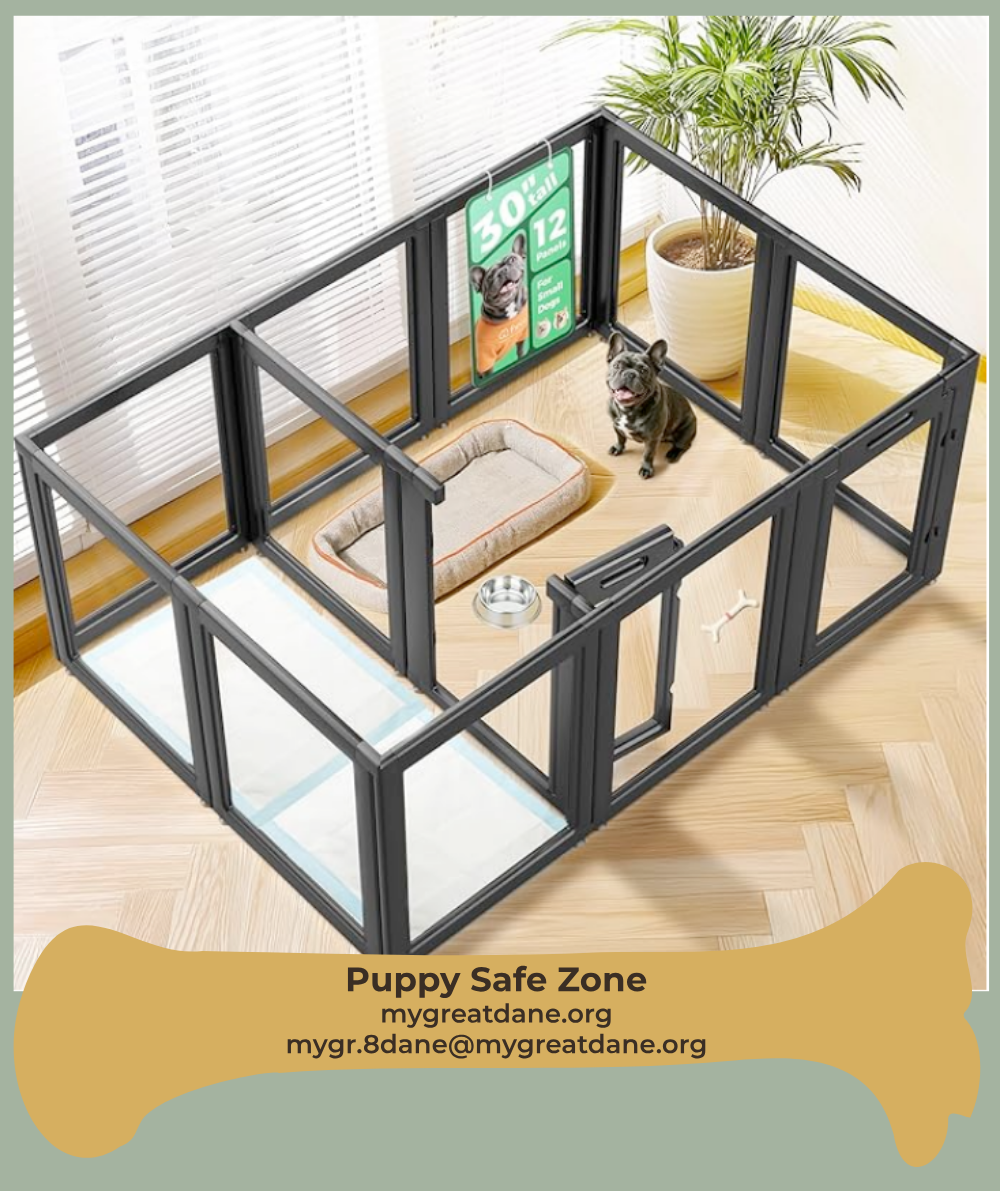
Great Dane Puppy Training Playpen Setup (Highly Recommended)
When it comes to Great Dane puppy training, having the right environment from day one makes a huge difference. This playpen setup is one of the closest ready-made solutions I have found on Amazon for creating a structured, safe puppy zone. In fact, this is almost the exact style of setup I recommend for new Great Dane owners.
Most importantly, the built-in divider separates the playpen into two independent areas. As a result, you can create a dedicated potty space on one side and a clean play or rest area on the other. However, if your training plan changes, the divider door is removable. Once removed, both sections connect into one larger space, giving you excellent flexibility as your Great Dane puppy grows.
Secure Design for Energetic Great Dane Puppies
Because Great Dane puppies grow fast and can be surprisingly athletic, safety is critical. Fortunately, the transparent, seamless panels help create an escape-resistant enclosure that keeps energetic puppies safely contained. In addition, the smooth panel design reduces the risk of paws getting caught in gaps, which is especially important during early Great Dane training and management.
Clear Visibility Helps Reduce Puppy Anxiety
Another feature I really like is the clear panel design. Not only can you easily keep an eye on your puppy at all times, but your dog can also see what is happening around them. As a result, many puppies settle more quickly and experience less confinement anxiety, which makes early Great Dane crate and playpen training much smoother.
Easy Cleanup for Real-Life Puppy Messes
Let’s be honest — puppies are messy. Thankfully, the waterproof, dust-resistant panels wipe clean quickly after daily accidents or spills. Therefore, maintaining a hygienic Great Dane puppy area becomes much more manageable, even during the busiest training weeks.
Tool-Free Setup with Flexible Layout Options
Finally, assembly is refreshingly simple. Because the panels snap together without tools, you can quickly build, adjust, or expand the play area to fit your space. Whether you are setting up a dedicated Great Dane puppy training zone or creating a temporary barrier, the modular design makes it easy to adapt as your puppy develops.
My honest take: This setup is extremely close to what I recommend for new puppies. The only thing it does not include is a properly sized crate for your Great Dane puppy to retreat into. Otherwise, the layout — including space for pee pads, food, and safe play — is about as practical and well thought out as it gets.
Find on Amazon →Step Two: Use a Consistent Potty Schedule
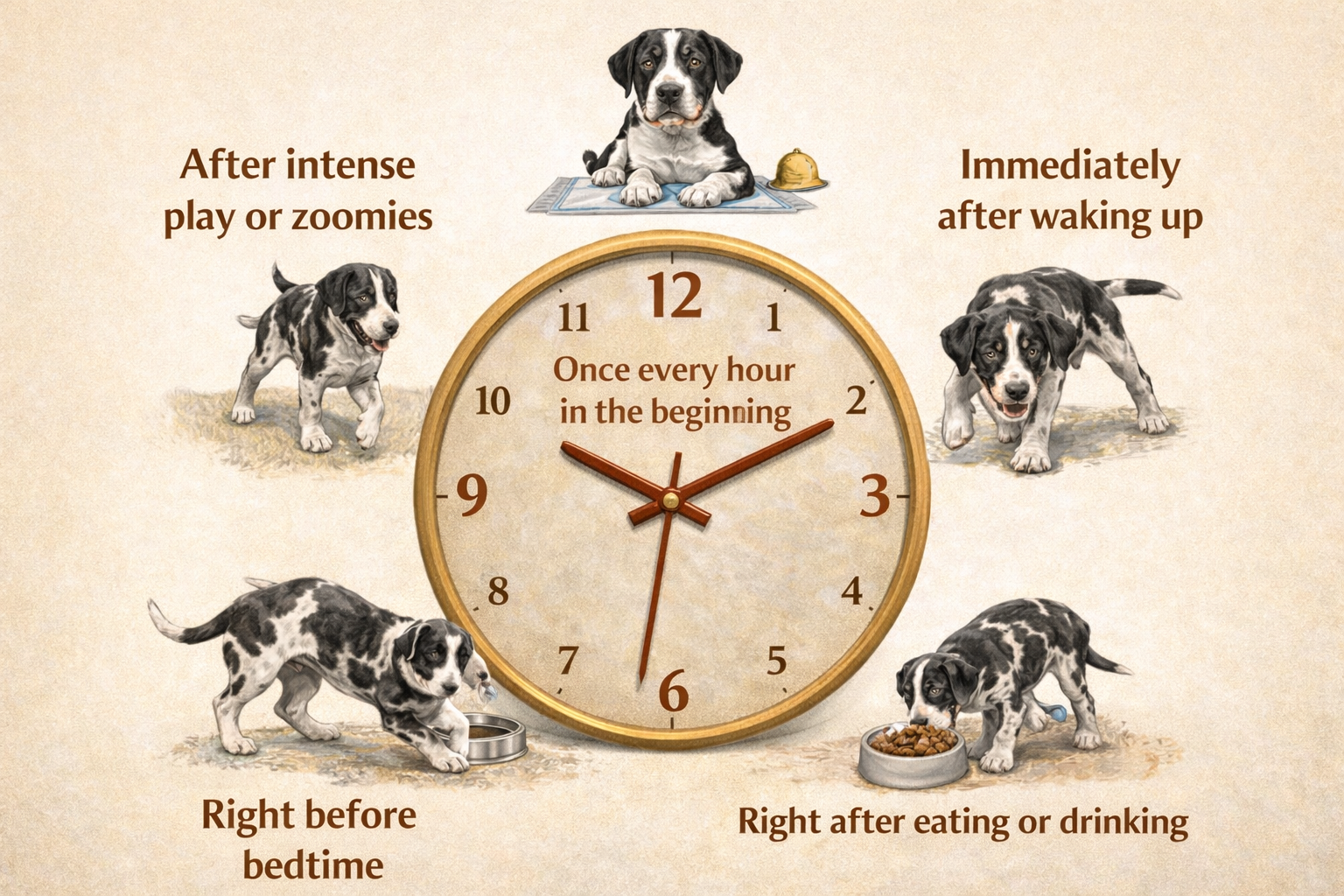
A predictable potty training schedule is the foundation of housebreaking. The more chances you give your puppy to be right, the faster they connect the dots. Great Dane potty training is not rocket science, but being consistent and organized is essential.
Take your puppy outside (or to their pad)
- Once every hour in the beginning.
- Immediately after waking up.
- Right after eating or drinking.
- While playing if your puppy stops and starts sniffing, it’s go time! By “go time,” I mean hurry up and take that pup outside!
- Before bedtime. The best habit to give your puppy is going right before bedtime.
Use the same potty spot each time and repeat a simple cue like “Go potty.” This is a great phrase to get your pup used to. When they go, calmly celebrate with praise and maybe tiny treat. If you’re potty training indoors first, slowly move the pad closer to the door every day, and then eventually outside.
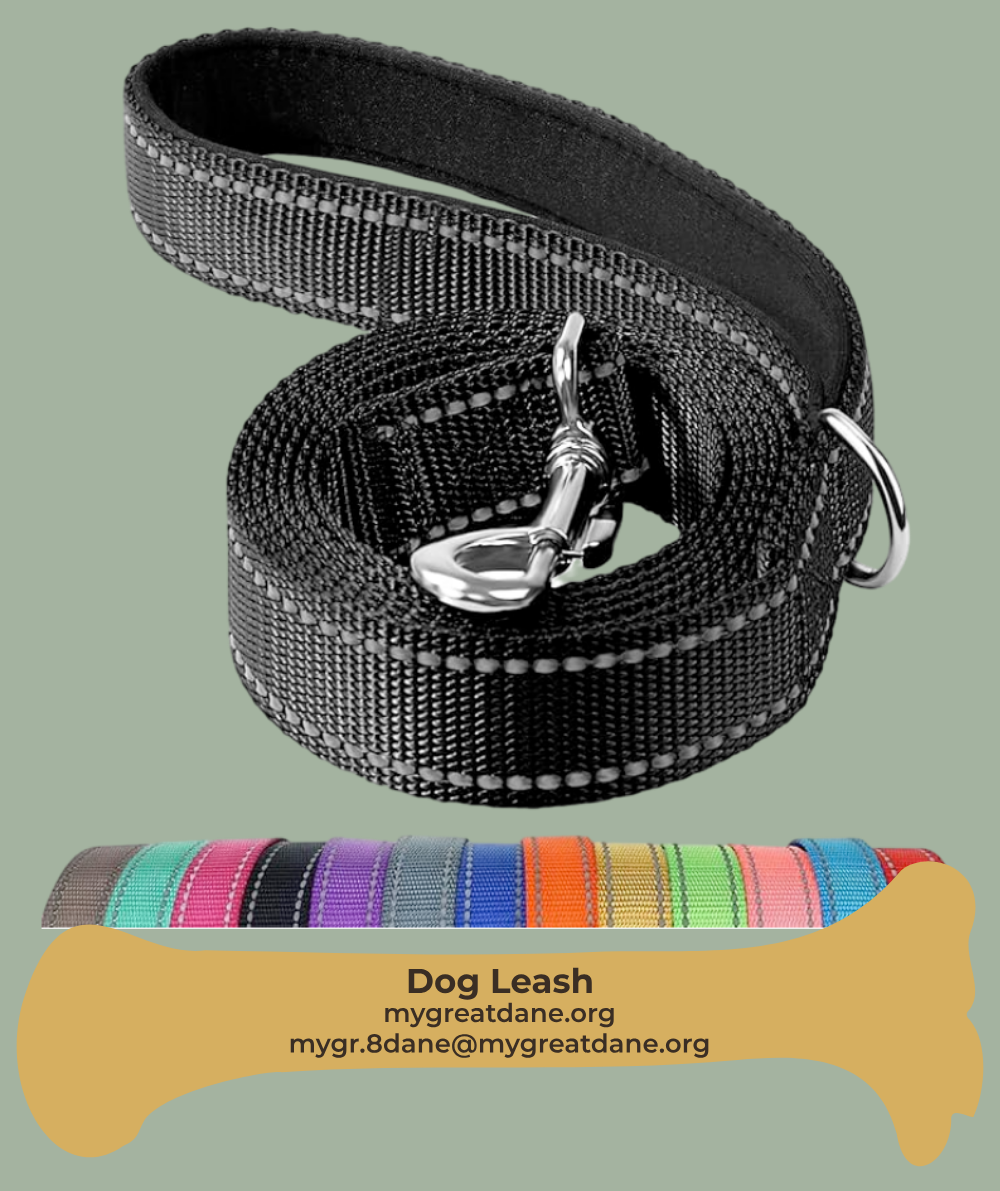
Joytale Dog Leash, 6 FT Double-Sided Reflective, Padded Handle Nylon Heavy Duty Leashes for Medium & Large Dogs Walking, Black
A six-foot lead is one of the most useful tools in everyday Great Dane puppy care, especially for indoor management, recall practice, and calm redirection. Because it keeps your puppy within reach, you can guide behavior the moment unwanted habits begin instead of reacting too late.
Redirection Using A Six-Foot Lead
When your puppy is inside, I strongly recommend keeping a lightweight six-foot lead attached during supervised time. As a
result, you can gently redirect at any moment without chasing, grabbing, or creating stress. The key here is gentle redirection.
Never jerk, pull, or drag your puppy. Instead, use the lead as a quiet guide to help them make better choices.
Just as importantly, redirection only works when you provide a clear alternative. For example, if your puppy heads into
a restricted room, calmly guide them back to the correct area. Likewise, if they grab a shoe or power cord, redirect them
immediately to an appropriate chew toy. Over time, this consistent pattern teaches your puppy what to do, not just what to avoid.
Always follow successful redirection with calm praise and affection. This reinforces the correct behavior and builds confidence
in the learning process.
Cautionary Advice
I’ve seen firsthand how quickly puppies can make dangerous decisions. Years ago, my boss’s young dog slipped out the door, ran
straight into the road, and was tragically hit by a car. It was devastating. In many situations like this, a simple lead during
early training stages can provide the extra second of control that prevents a heartbreaking accident.
Used correctly, a six-foot lead is a simple but powerful safety and training tool for raising a well-mannered Great Dane puppy.
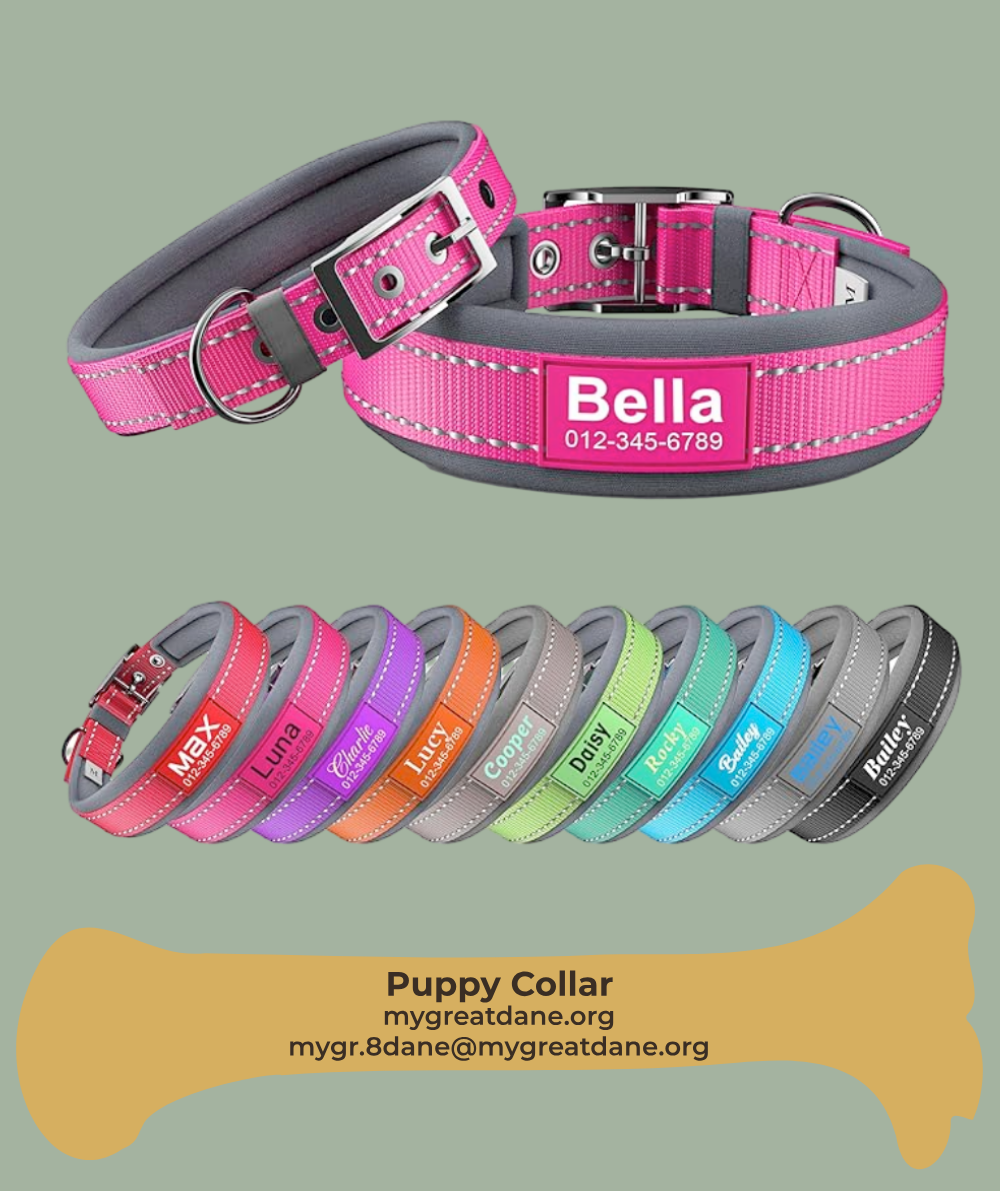
Personalized Dog Collar with Name & Phone Number | Reflective Ultra Wide Soft Neoprene Padded | Durable Metal Buckle for Large, Medium, and Small Dogs in Pink, Purple, Blue & Other Stylish Colors
Please Read and Consider: Your puppy is going to need a properly fitted collar. There’s really no way around it. However, one detail I strongly recommend paying close attention to is the type of buckle you choose.
Metal Buckle
For Great Dane puppy care, I strongly prefer a metal buckle collar over plastic quick-clip styles. While plastic
snap buckles are convenient, they can fail under sudden pressure or a sharp jolt, especially with fast-growing, strong puppies.
I have personally seen plastic quick-connect buckles fail even on young Great Dane puppies during early leash training inside the
house. Because of that experience, I recommend sticking with a sturdy metal buckle during the learning phase when unexpected lunges
and excitement are most common.
Never Jerk or Pull
That said, even metal hardware should always be used correctly and checked regularly for wear. In rare cases, I have seen
metal components fail on adult Great Danes, but this was typically due to improper use or damaged equipment rather than
normal handling.
As your puppy matures and develops reliable recall and leash manners, you can decide whether to transition to other collar
styles. However, during early training and management, a well-fitted collar with a quality metal buckle provides an extra
layer of security and peace of mind.
Affiliate link: I may earn a small commission at no extra cost to you. If this guide helped you, using my links helps support MyGreatDane.org.
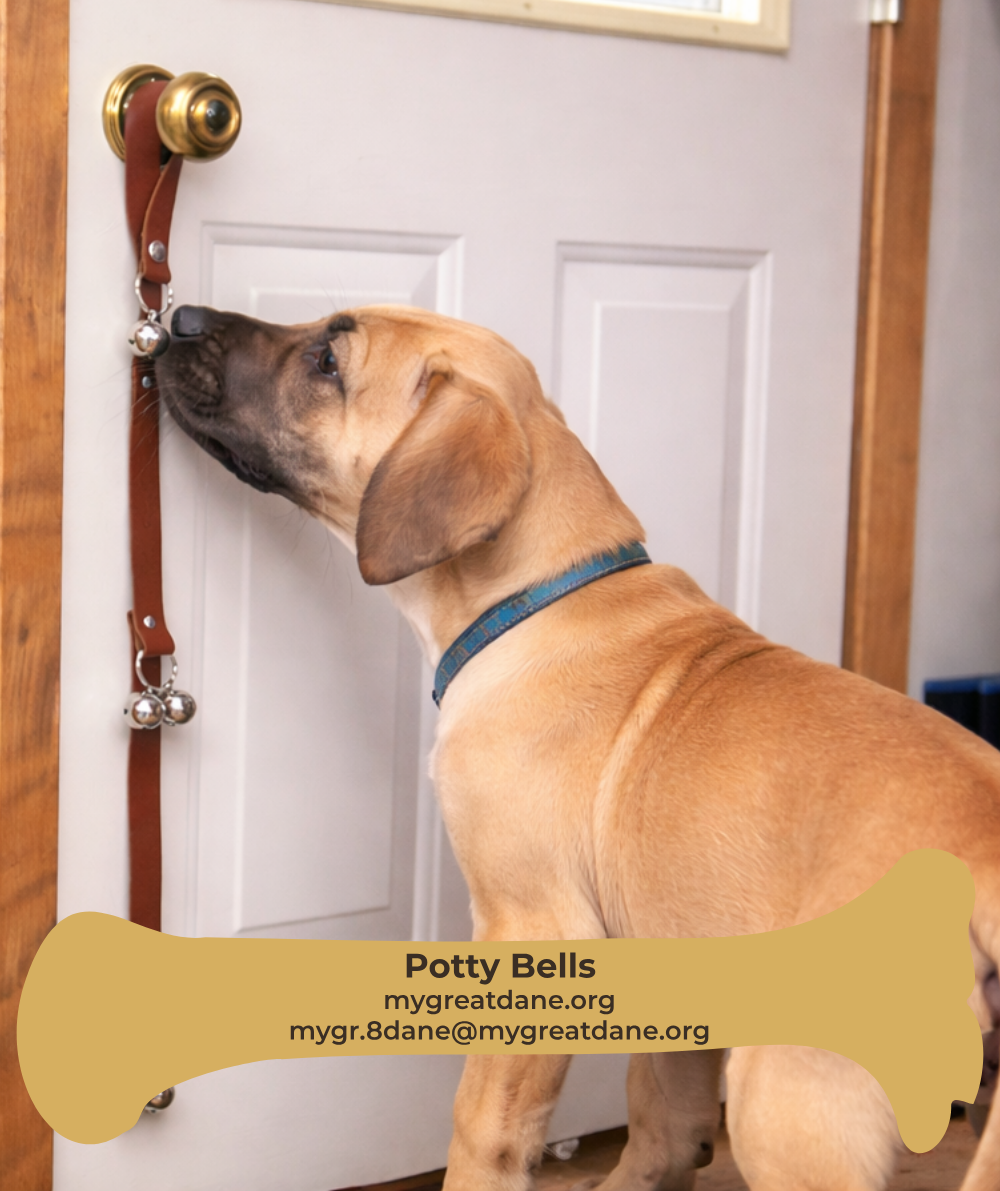
Bell Training for Great Dane Potty Breaks
Teaching your puppy to ring a bell for potty breaks can be a very effective part of your overall Great Dane training routine. When introduced consistently, bell training gives your dog a clear, reliable way to communicate their needs. As a result, many owners see faster progress in Great Dane house training and fewer indoor accidents.
To begin, hang a set of potty bells on the door at your puppy’s nose or paw level. Then, every time you take your puppy outside, guide them to touch or nudge the bells so they jingle immediately before the door opens. Most importantly, always reward this behavior with praise, a small treat, and quick access to the outdoors.
Step-by-Step Bell Training for Great Dane Puppies
Introduce the Bells: First, allow your puppy to sniff and investigate the bells on the floor. This helps them become comfortable with the object before you hang it on the door.
Establish the Routine: Next, hang the bells on the doorknob or beside your designated potty exit. Every single time you take your puppy out, gently guide them to ring the bell first. Consistency here is critical for successful Great Dane potty training.
Reward Immediately: The moment the bell rings, celebrate calmly with praise and a small treat, then open the door right away. Timing is extremely important in effective Great Dane training.
Separate Play from Potty: Finally, only honor the bell when it is truly potty time. If your puppy rings just to go outside and play, calmly leash them, take them to the potty area, and wait about five minutes. If nothing happens, quietly bring them back inside. This prevents the bell from becoming a “free backyard access” button.
Find On Amazon →Affiliate link: I may earn a small commission at no extra cost to you. If this guide helped you, using my links helps support MyGreatDane.org.
Important Tips for Bell Training Success
- Use a Clear Cue: As your puppy begins to understand the motion, add a verbal cue such as “Ring it” or “Outside.” Over time, many Great Dane puppies will begin to connect the cue, the bell, and the trip outdoors.
- Add a Gentle Lure if Needed: If your puppy seems hesitant, you can place a tiny smear of peanut butter or cream cheese on the bell to encourage a nose nudge. However, use this sparingly — the goal is confidence, not dependency.
- Leash Up for Focus: When responding to the bell, keep your puppy on a leash. This helps reinforce that the trip outside is for business first, not immediate playtime.
- Be Patient: Every puppy learns at a different pace. While some Great Dane puppies pick this up in a few days, others may take a bit longer. Calm repetition always wins.
- Stay Consistent: Most importantly, always use the same door for potty breaks. Consistency builds clarity, and clarity speeds up your entire Great Dane house training program.
- When practiced regularly, bell training can become a powerful communication tool that supports a smoother, more predictable Great Dane puppy routine.
Your puppy isn’t being stubborn or spiteful. They’re learning, and calm, consistent reactions keep potty training on track.
Step Three: Deal with Accidents Calmly
- Catching them in the act: calmly interrupt (“No”) and take them to the potty spot. Reward if they finish in the potty spot.
- Discovering accidents: clean it up without scolding. Correcting after they’ve already had the accident will damage trust, and create fear.
- Use enzyme cleaner: it removes odor so they aren’t drawn back to the same spot.
- Remember: accidents aren’t their fault. A puppy having an accident in the house is no different than a baby using a diaper; they don’t know or understand the difference. They’re still learning, and patience is part of the job.
Your puppy isn’t being stubborn or spiteful. They’re learning, and calm, consistent reactions keep potty training on track.
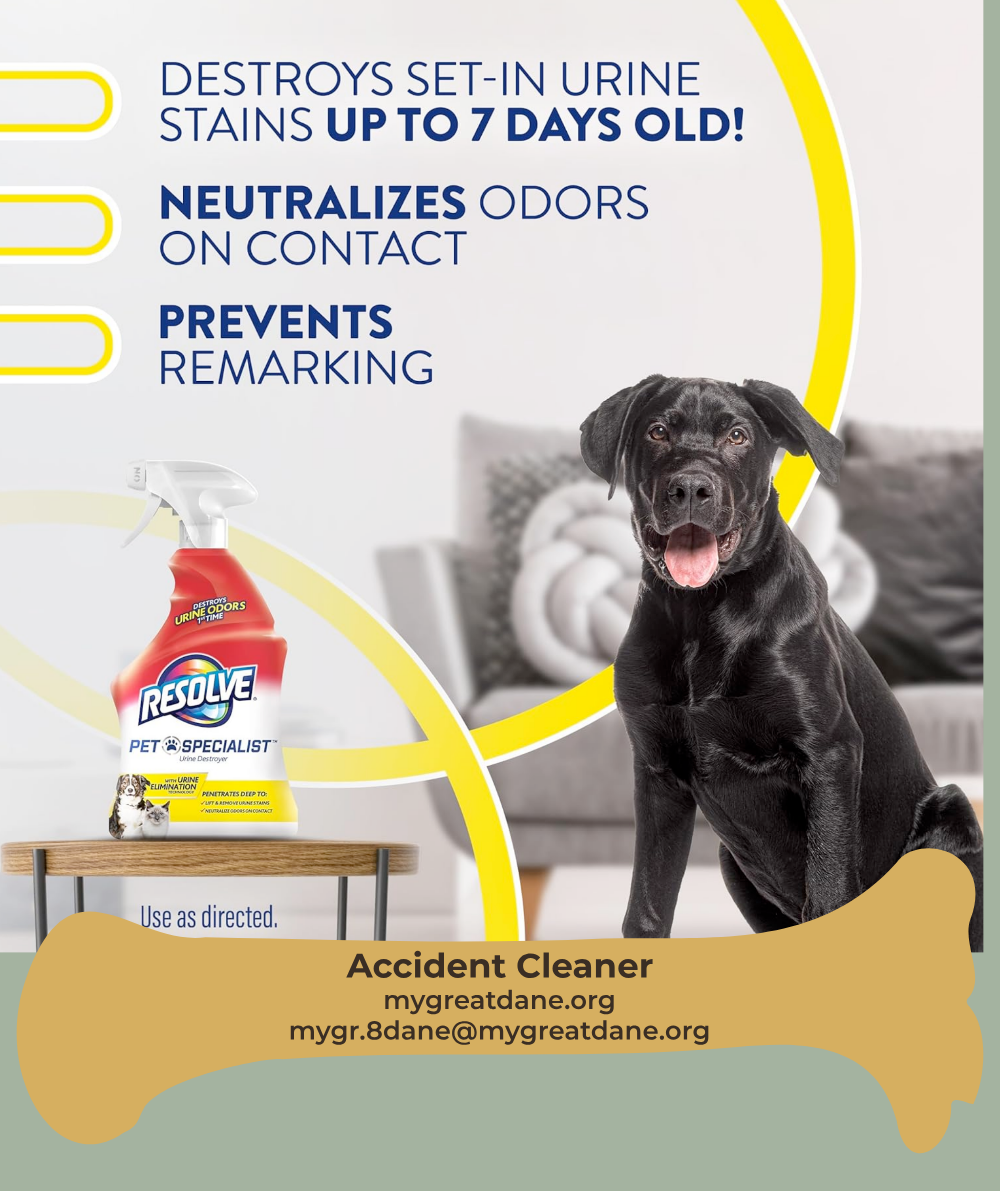
Resolve Pet Odor & Stain Remover for Great Dane Training Cleanup
When accidents happen during Great Dane puppy training — and they will — using the right cleaner is extremely important. Resolve Pet Odor & Stain Remover is designed to tackle one of the biggest challenges in early Great Dane house training: completely eliminating urine odors that can lead to repeat accidents.
Because dogs have an incredibly powerful sense of smell, even a faint remaining odor can signal that the same spot is an acceptable bathroom area. For this reason, using a cleaner that fully neutralizes urine is a critical step in maintaining consistent Great Dane potty training progress.
Why This Cleaner Works Well for Great Dane Owners
Destroys Urine Odors the First Time: Resolve uses urine elimination technology that neutralizes and removes odors on contact. As a result, your home stays fresher and your puppy is less likely to return to the same spot.
Removes Pet Stains and Everyday Messes: In addition to urine cleanup, this multi-purpose formula effectively tackles pet stains, food spills, and other common household messes that occur during active Great Dane training phases.
Helps Prevent Remarking: Just as importantly, the formula helps discourage pets from revisiting previously soiled areas. This feature is especially helpful during the early weeks of Great Dane housebreaking, when habits are still forming.
Suitable for Use Around Pets: When used as directed, the cleaner is considered suitable for use in pet households, making it a practical option for busy Great Dane homes.
Versatile Multi-Surface Use: Because the formula works on most carpets, fabrics, and hard surfaces, it provides flexible cleanup coverage throughout your training areas.
Product Details
Brand: Resolve
Manufacturer: Reckitt
Scent: Unscented
Special Feature: Multi-purpose cleaning
Contains Liquid: Yes
My take: During the early stages of Great Dane puppy training, odor control is not optional — it is foundational. Using a reliable enzymatic-style cleaner like this helps reinforce good potty habits and reduces the chance of repeat accidents in the same area.
Find On Amazon →Affiliate link: I may earn a small commission at no extra cost to you. If this guide helped you, using my links helps support MyGreatDane.org.

Amazon Basics Paper Towels: A Must-Have for Great Dane Puppy Training Cleanup
Here is one item I strongly recommend keeping stocked during Great Dane puppy training. Are these the most premium paper towels on the planet? No. However, they work — and when you are cleaning up frequent puppy messes, practical and affordable usually wins.
During the early stages of Great Dane house training, you will go through more cleanup supplies than you expect. For this reason, having a reliable supply of paper towels on hand makes daily life much easier. In fact, when it comes to routine puppy cleanup, inexpensive and dependable often beats fancy and expensive.
Why Automatic Delivery Helps Great Dane Owners
One of my favorite things about ordering these from Amazon is the ability to set up automatic shipping. As a result, you always have backup rolls ready when accidents happen — and they will happen. After all, everyone knows the feeling of being stuck on the toilet without toilet paper. Now imagine finding a fresh puppy mess with no paper towels in sight. Not ideal.
Because consistency is so important in Great Dane training and housebreaking, being prepared for quick cleanup helps reinforce good habits and keeps your training routine on track.
Product Highlights
Brand: Amazon Basics
Unit Count: 12 Rolls
Total Sheets: 1,800 (150 sheets per roll)
Ply Rating: 2-Ply
Special Feature: High absorbency
Shipment Contains: Each package includes 12 rolls with 150 two-ply sheets per roll, giving you a total of 1,800 sheets for everyday cleanup needs.
Great Value for Daily Messes: These Amazon Basics paper towels are designed to handle routine spills and pet messes while staying budget friendly — something every Great Dane household can appreciate.
Flex-Sheets for Less Waste: The adjustable sheet size allows you to use only what you need, which helps reduce waste during frequent Great Dane puppy cleanup.
FSC-Certified Materials: Made with materials sourced from well-managed forests, recycled materials, and other controlled wood sources.
My take: During the messy stages of Great Dane potty training, you simply need reliable supplies within reach. These may not be luxury paper towels, but they are affordable, absorbent, and extremely practical when you are in full puppy training mode.
Find On Amazon →Affiliate link: I may earn a small commission at no extra cost to you. If this guide helped you, using my links helps support MyGreatDane.org.
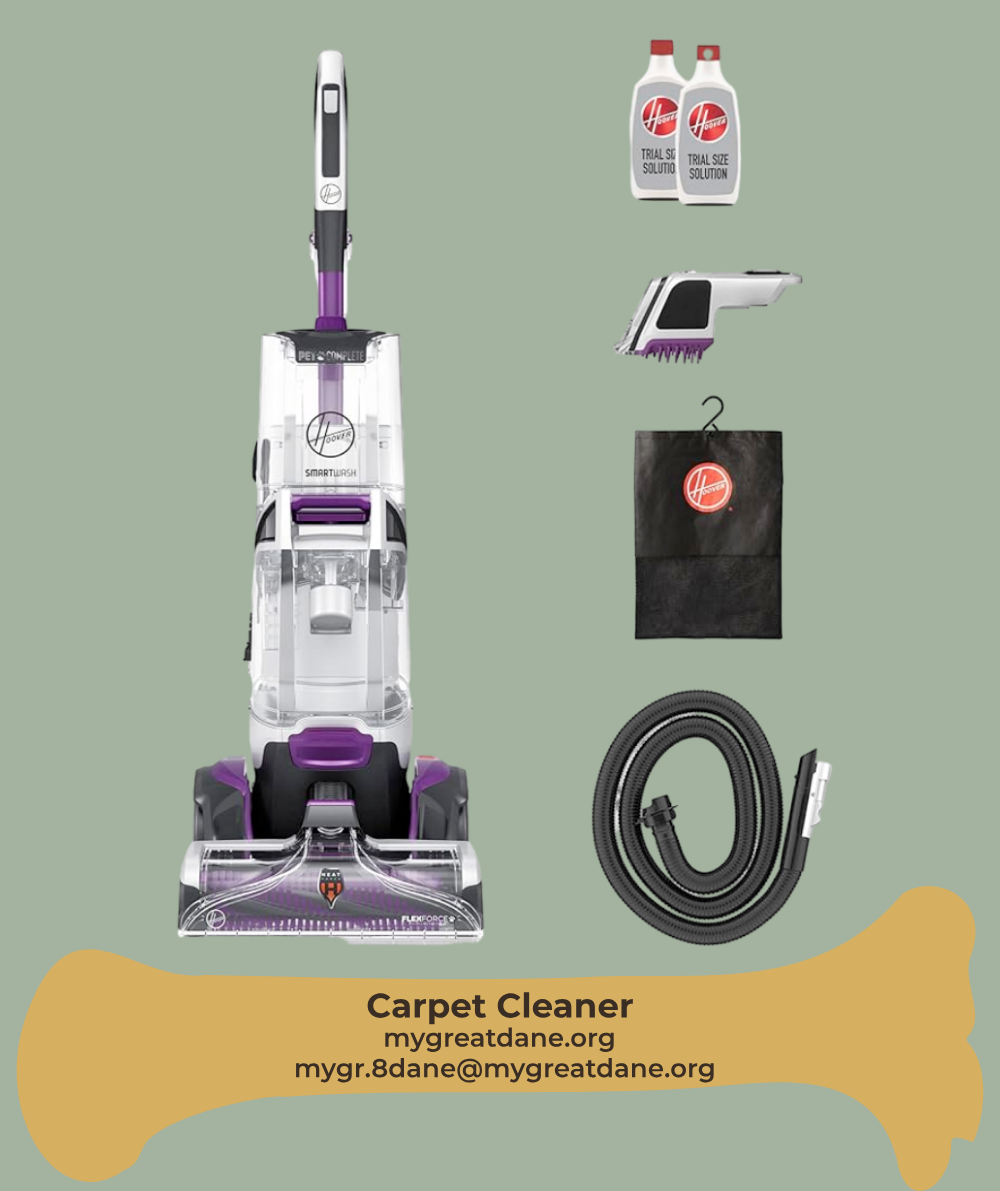
Hoover SmartWash: A Game-Changer for Great Dane Training Cleanup
This is the exact machine we use in our house, and honestly, I cannot imagine raising a large dog — especially during Great Dane puppy training — without one. Truthfully, even small-dog owners can benefit from a good carpet cleaner, but when you live with a Great Dane, it quickly becomes essential equipment.
The reason is simple: Great Danes are well known for having sensitive stomachs. Sooner or later, diarrhea happens. When that day comes, no amount of paper towels, spray cleaner, elbow grease, or soap and water is going to fully restore your carpet. During active Great Dane house training, having the right deep-clean tool can save your floors — and your patience.
My Real-World Great Dane Cleanup Routine
Typically, I start by cleaning the area as thoroughly as possible using paper towels and an odor-neutralizing cleaner. However, that is only step one. To truly finish the job and remove deep contamination, I bring out the Hoover SmartWash. This second pass is what really lifts the mess from the carpet fibers.
If you are new to Great Dane training, here is something many owners do not expect: sometimes puppies keep moving while they are going potty. As a result, you may find spots here, spots there, and unfortunately, once they step in it, the mess can spread quickly. This is exactly where a quality carpet extractor earns its keep.
Why the Hoover SmartWash Works Well for Pet Homes
Automatic Cleaning Technology: The motion-sensing SmartWash design features auto-mix and auto-dry technology, which removes much of the guesswork from deep carpet cleaning — a huge plus during busy Great Dane puppy training weeks.
Simple Push-Forward Operation: This upright cleaner is extremely easy to use. Simply push forward to wash and pull back to dry. There are no complicated triggers or buttons, and the powerful extraction helps remove both water and embedded dirt. In addition, HeatForce Technology helps carpets dry faster.
Designed Specifically for Pet Messes: The FlexForce Pet PowerBrushes are built to resist pet odors while lifting dirt, debris, and stubborn accidents. For tougher spots, the detachable Spot Chaser Pretreat Wand gives you extra targeted cleaning power.
My take: If you own a Great Dane — or plan to — this is one of those tools that pays for itself over time. Keep it clean, maintain it properly, and it should serve your household for years of real-world puppy training messes.
Find On Amazon →Affiliate link: I may earn a small commission at no extra cost to you. If this guide helped you, using my links helps support MyGreatDane.org.
Step Four: Stick with the Plan
The fastest way to house-train a Great Dane is boring consistency: same spot, same words, same routine every day.
- Make sure everyone in the household follows the same rules and schedule.
- Keep the routine going even after your puppy seems “mostly trained.”
- Reduce freedom slowly—expand space only when accidents stop.
- Always go outside with your puppy when potty training.
- Always praise your puppy when they go potty outside.
Remember, there’s no such thing as too much praise when a puppy goes potty outside. Celebrate like they just won an award.
Common Great Dane Puppy Potty Training Mistakes
- Giving too much freedom too soon and letting the puppy wander unsupervised.
- Changing the potty area or cue words over and over.
- Skipping nighttime or early-morning potty breaks.
- Punishing accidents instead of managing the environment.
- Using strong cleaners that don’t fully remove odor.
- Always keep your puppy on a leash indoors. It makes it easier to limit wandering and helps keep them out of trouble before they invent new ways to cause it.
Fixing these small mistakes makes your potty training plan work faster and feel less frustrating.
Helpful Tools for Great Dane Puppy Potty Training
These are the types of tools that make housebreaking easier (especially with a giant breed):
- A sturdy crate sized for a Great Dane (with divider while they grow).
- Washable pee pads or an artificial turf tray.
- Enzymatic cleaner formulated for pet odors.
- Puppy-safe chews to keep them busy in the crate.
- Door bells/potty bells so they can signal they need to go.
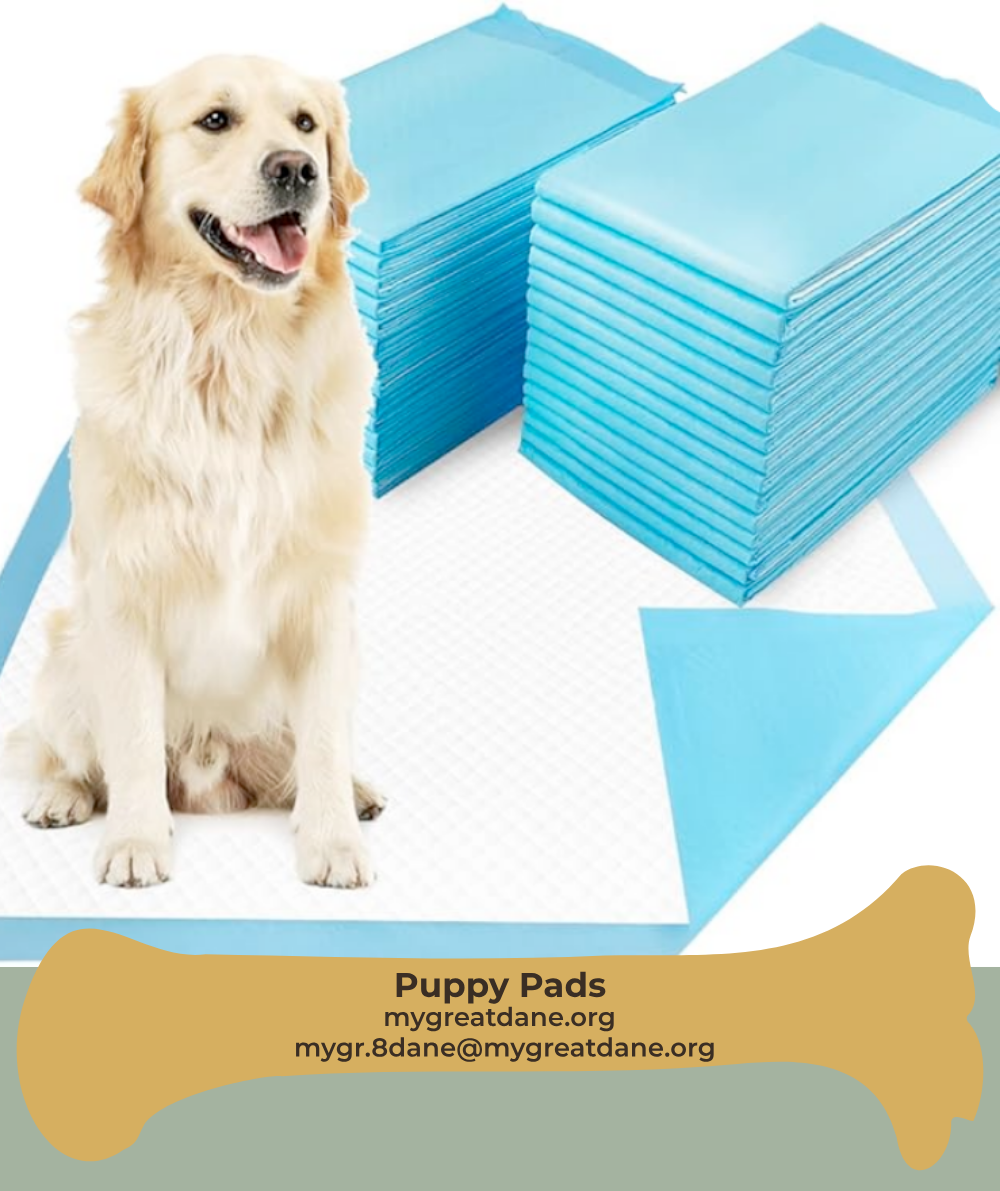
XXL Puppy Pads for Great Dane Training and Target Practice
Puppy pads are not absolutely essential for every household. However, when used correctly, they can be a helpful tool during early Great Dane puppy training. I personally used them extensively when I was breeding litters, primarily to give young puppies a clear and consistent potty target.
As a breeder, I always tried to begin Great Dane house training as early as possible. One reason I liked these pads in particular is the large white target area. To reinforce good habits, I intentionally kept the rest of the pen flooring a different color so the white potty zone stood out clearly to the puppies.
Using a “Target Area” During Great Dane Potty Training
Consistency is everything in effective Great Dane training. As my puppies grew, I gradually expanded their living space while always maintaining a clearly defined “target area” using these white pads. Over time, most puppies naturally began to seek out that designated spot.
That said, puppy pads are only helpful if your dog respects them. Some puppies love to shred them like confetti. Because of this, I recommend starting with a smaller quantity first. Make sure your little guy actually uses them before stocking up and spending unnecessary money.
Another practical benefit is travel. When my puppies went to their new homes, I would always send a few pads along for the car ride. They can be extremely useful when traveling with a young Great Dane puppy or during longer outings.
Why These XXL Puppy Pads Stand Out
Heavy Absorbency: These thicker, extra-large pads can hold up to 12 cups of liquid. The six-layer design absorbs more urine than many standard pads, which is especially helpful during busy Great Dane potty training phases.
Leak-Proof Protection: A waterproof plastic backing helps prevent leaks and protects your floors and carpet from damage. As a result, cleanup becomes much easier during the early training weeks.
Quick-Dry Surface: The soft non-woven top layer absorbs liquid quickly, while the diamond-quilted design helps speed drying and reduce overflow.
Quality Multi-Purpose Materials: Made from high-quality raw materials, these pads can be used for puppy training, general pet cleanup, travel situations, and more.
Extra-Large Size: Measuring 30" x 36", these XXL pads provide generous coverage and tend to be more durable than many standard training pads, making them suitable for both indoor and outdoor use.
My take: Puppy pads are not mandatory for every Great Dane owner. However, when used strategically as a visual target during early Great Dane house training, they can be a very useful tool — especially for young puppies and breeders managing multiple pups.
Find On Amazon →Affiliate link: I may earn a small commission at no extra cost to you. If this guide helped you, using my links helps support MyGreatDane.org.
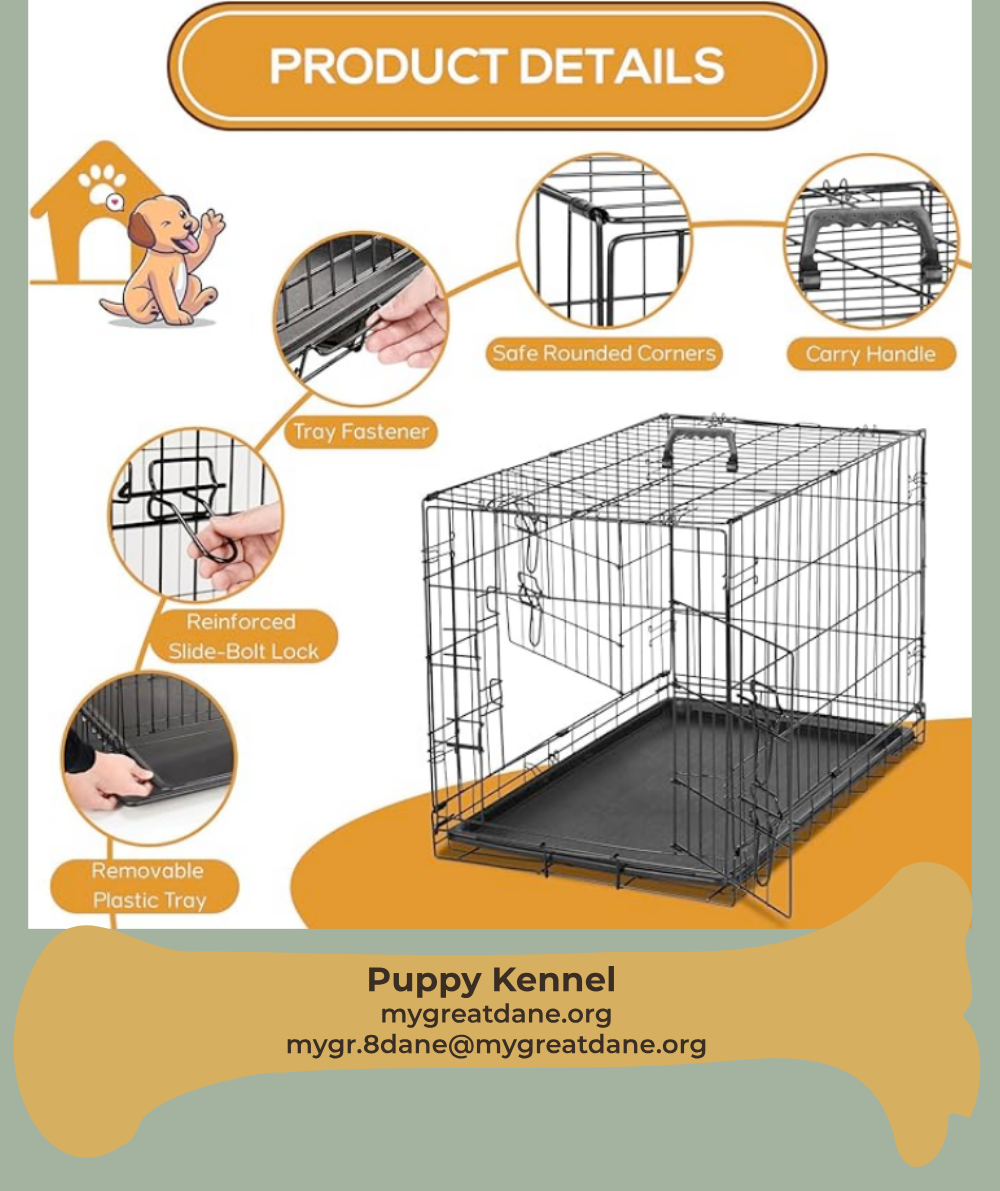
Choosing the Right Crate for Great Dane Puppy Training
If you are planning to kennel your puppy as part of your Great Dane training routine, I strongly recommend buying the crate sized for their adult body — not their current puppy size. Great Danes grow fast, and upgrading crates multiple times gets expensive quickly. Fortunately, most quality crates include an adjustable divider panel, allowing you to safely size down the interior space while your puppy is still small.
Additionally, when setting up your Puppy Zone (PZ), you can attach your playpen panels directly to the front or middle of the crate. This simple setup trick creates more usable space inside your Puppy Zone while still keeping the crate easily accessible for rest and nighttime routines.
Helpful Setup Tips for Multiple Great Dane Puppies
If you happen to be raising more than one puppy — especially littermates — a properly sized large crate can be very helpful. In many cases, puppies adopted from the same litter will naturally choose to sleep together. Because of this, a larger kennel provides flexibility during the early stages of Great Dane crate training.
This is the model I personally use, and one feature I really appreciate is the removable tray. Being able to slide the tray out for quick cleaning makes a big difference during the messy phases of Great Dane puppy training.
One honest note: while many listings show how easily these crates fold for storage, the reality is that the larger sizes are not especially lightweight or convenient to move around. Once assembled, most owners tend to leave them in place.
Key Features That Support Great Dane Training
Optimal Security: Rounded corners help protect your pet, while the thick metal mesh construction provides solid containment. The front and side doors feature heavy-duty sliding bolt locks, which help prevent escapes — an important consideration as your Great Dane puppy grows stronger.
Sturdy and Durable Construction: Built with high-quality materials, this crate is designed to withstand everyday wear and tear. Just as importantly, the enclosed design creates the cozy, den-like environment that supports successful Great Dane crate training.
Quick Assembly and Collapsible Design: The crate can be assembled in seconds without tools. In addition, the collapsible frame can be helpful for travel or temporary storage, although larger sizes are best treated as semi-permanent setups.
Easy Cleaning and Maintenance: The durable ABS composite tray is leak-resistant and simple to remove for cleaning. This helps maintain a hygienic space during active Great Dane house training periods.
Multiple Size Options: With several size choices available, you can select the crate that best fits your dog’s expected adult size and your home setup. Proper sizing is one of the most important factors in long-term Great Dane training success.
My take: For Great Dane owners, buying the right crate early and setting it up properly inside your Puppy Zone can make nighttime training, housebreaking, and overall structure much smoother. It is one of those foundational tools that pays off for years.
Find On Amazon →Affiliate link: I may earn a small commission at no extra cost to you. If this guide helped you, using my links helps support MyGreatDane.org.
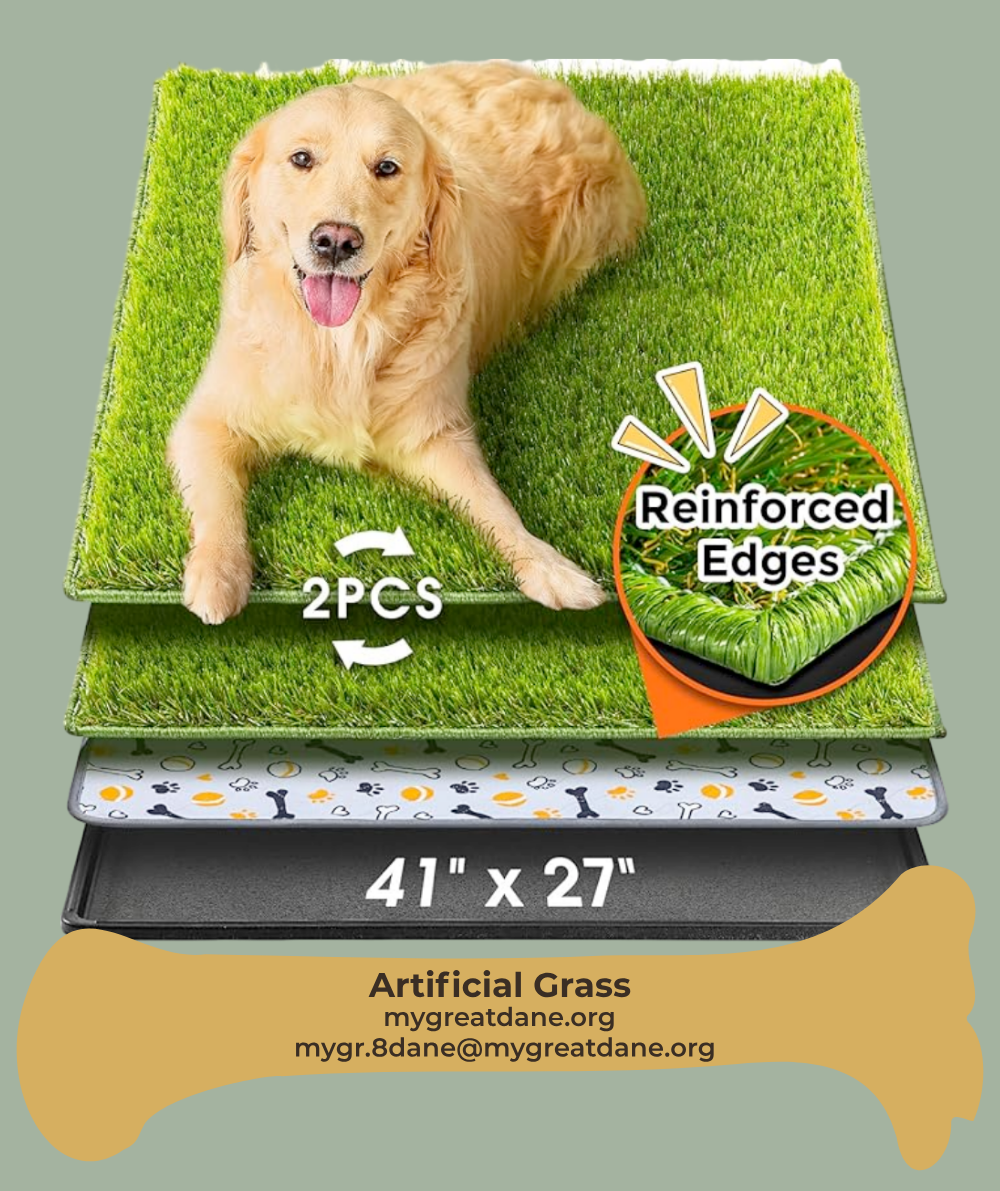
Artificial Grass Potty System for Great Dane Training
To be completely transparent, I have not personally used this exact product. However, I did build my own version using high-quality artificial turf paired with a tray underneath. Interestingly, it was not until I started building this page that I discovered Amazon already sells a ready-made version of what I thought was my brilliant invention.
That said, this type of setup can work very well during Great Dane puppy training, especially if you are teaching your pup to associate grass with potty time. For many owners, creating a consistent surface cue is a helpful step in early Great Dane house training.
One Honest Consideration: Potential Turf Odor
The one thing I did not love about my homemade version was the smell. Over time, artificial grass can develop an odor when it mixes with urine. Now, I cannot say for certain whether this specific product will behave the same way, since I used a different type of turf. However, based on the design, I suspect it will likely perform just fine for most households.
Still, if you do invest in a grass potty system and notice an unusual smell, the turf material is usually the culprit — not the tray itself. Regular cleaning and proper maintenance go a long way in keeping things fresh during active Great Dane potty training.
Choosing the Right Size for Your Great Dane
If you are using this primarily as a short-term training aid, I would not worry about purchasing the largest size right away. However, if you have multiple dogs or plan to use this long term when your Great Dane is older and occasionally indoors, then sizing up may be the smarter investment.
Another practical consideration is cleaning. These units can become heavy once used and rinsed. Therefore, if carrying a large, wet turf tray outside for cleaning would be difficult, keep that in mind when selecting your size. Choosing the right fit upfront makes your overall Great Dane training routine much easier to maintain.
Key Features of This Grass Potty System
Three-Layer System: This large pet litter box (41" x 27") features realistic artificial grass, reusable odor-resistant pee pads, and a heavy-duty collection tray. The drainage insert directs urine away from the surface to help protect your floors and carpet.
Replacement Artificial Turf Included: The chew-resistant hemming helps prevent shedding and accidental ingestion, while the high-density turf mimics the feel of real grass — a helpful cue during Great Dane potty training. Multiple drainage holes improve overall permeability.
Ultra-Absorbent Washable Pads: The reusable pads are designed to absorb urine efficiently while helping control odor. Because they are machine washable, they can reduce the ongoing cost and waste associated with disposable pads.
No Assembly and Easy Cleanup: The unit arrives ready to use. Both the turf and pads can be cleaned with soap and water, while the base tray can be rinsed with a hose for straightforward maintenance.
Indoor and Outdoor Flexibility: This portable potty solution is useful for situations where outdoor access is limited due to weather, illness, travel, or apartment living. It can be used indoors or placed on a patio or balcony if needed.
My take: For Great Dane owners who need an indoor potty option or an additional training surface, this type of system can be very helpful when used correctly. Just be realistic about cleaning and odor management, and choose a size that fits both your dog and your maintenance routine.
Find On Amazon →Affiliate link: I may earn a small commission at no extra cost to you. If this guide helped you, using my links helps support MyGreatDane.org.
Leash Training: Next Step for Your Great Dane Puppy
Once your puppy understands potty rules, leash training is the perfect time to work on polite leash manners. Short, positive sessions help your Dane burn energy and learn to walk without dragging you down the street.
See more Great Dane training tips →More Great Dane Training Reads
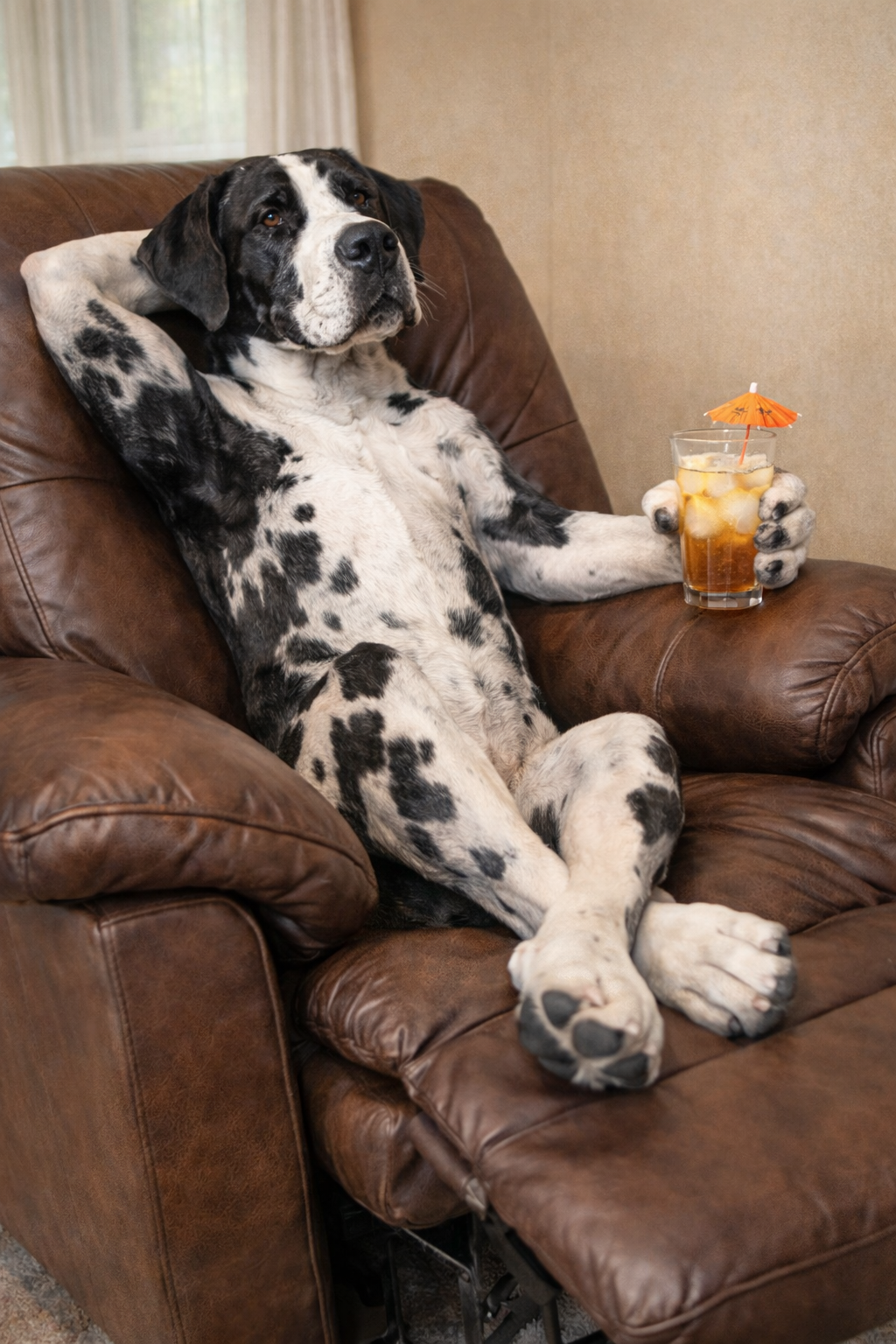
Calming Routines That Actually Work
Simple structure, white noise, and enrichment that helps sensitive Danes settle.
Read article →
Puppy Exercise (Joint-Safe)
How to burn energy without damaging growing joints.
Read guide →
Traction Zones to Prevent Slips
Home setup changes that reduce fear, falls, and injuries.
Read more →