Great Dane Leash Training
When it comes to Great Dane leash training, starting early makes the process much easier. However, if you’re getting a late start, don’t panic. With the right approach and consistent practice, dogs of almost any age can learn calm, reliable leash habits. In this guide, I’ll walk you through both early-stage puppy training and late-stage leash correction so you can build confident, stress-free walks with your gentle giant.
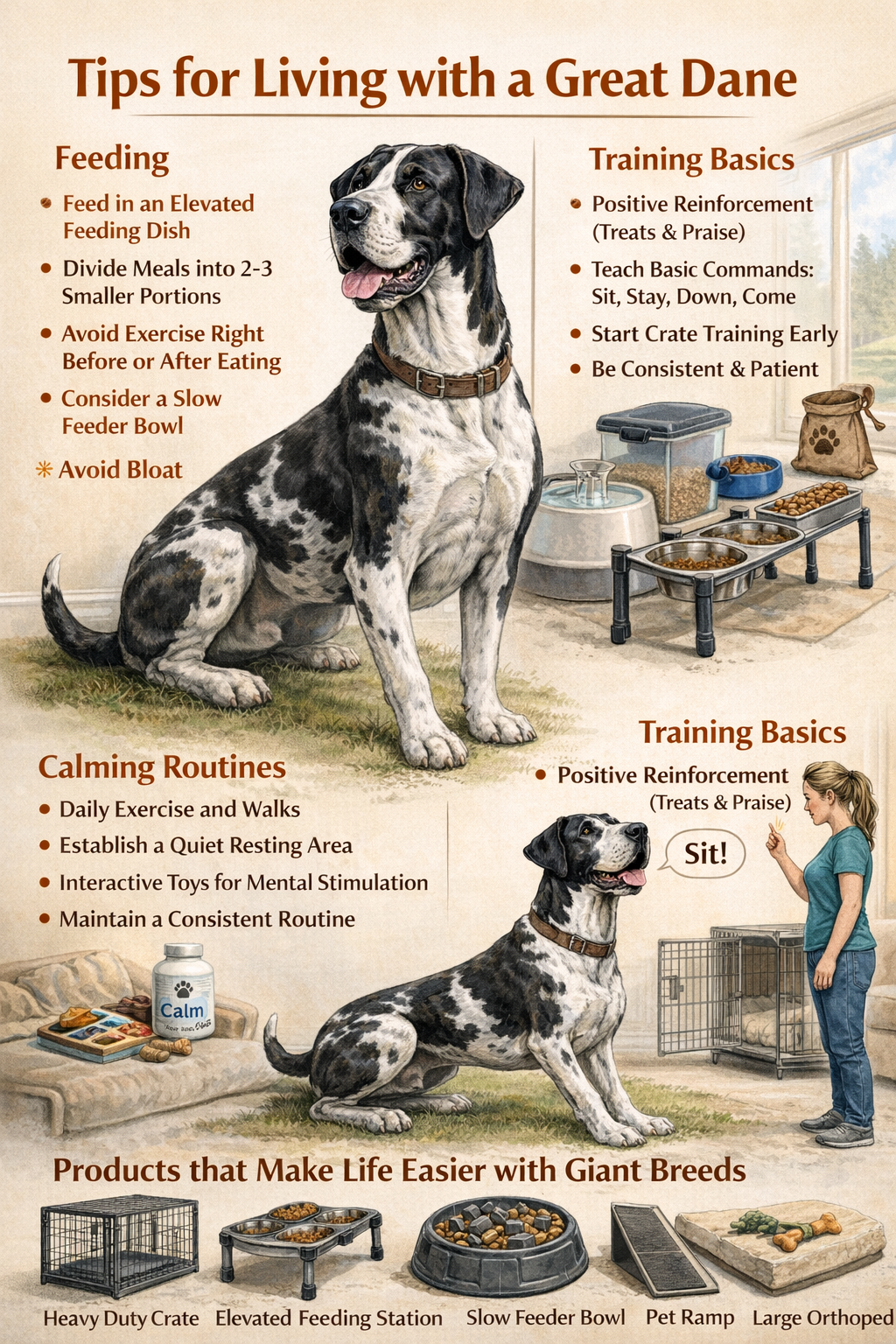
Training Tips & Daily Routines
Feeding, training basics, calming routines, and products that make life easier with giant breeds.
Go to Care →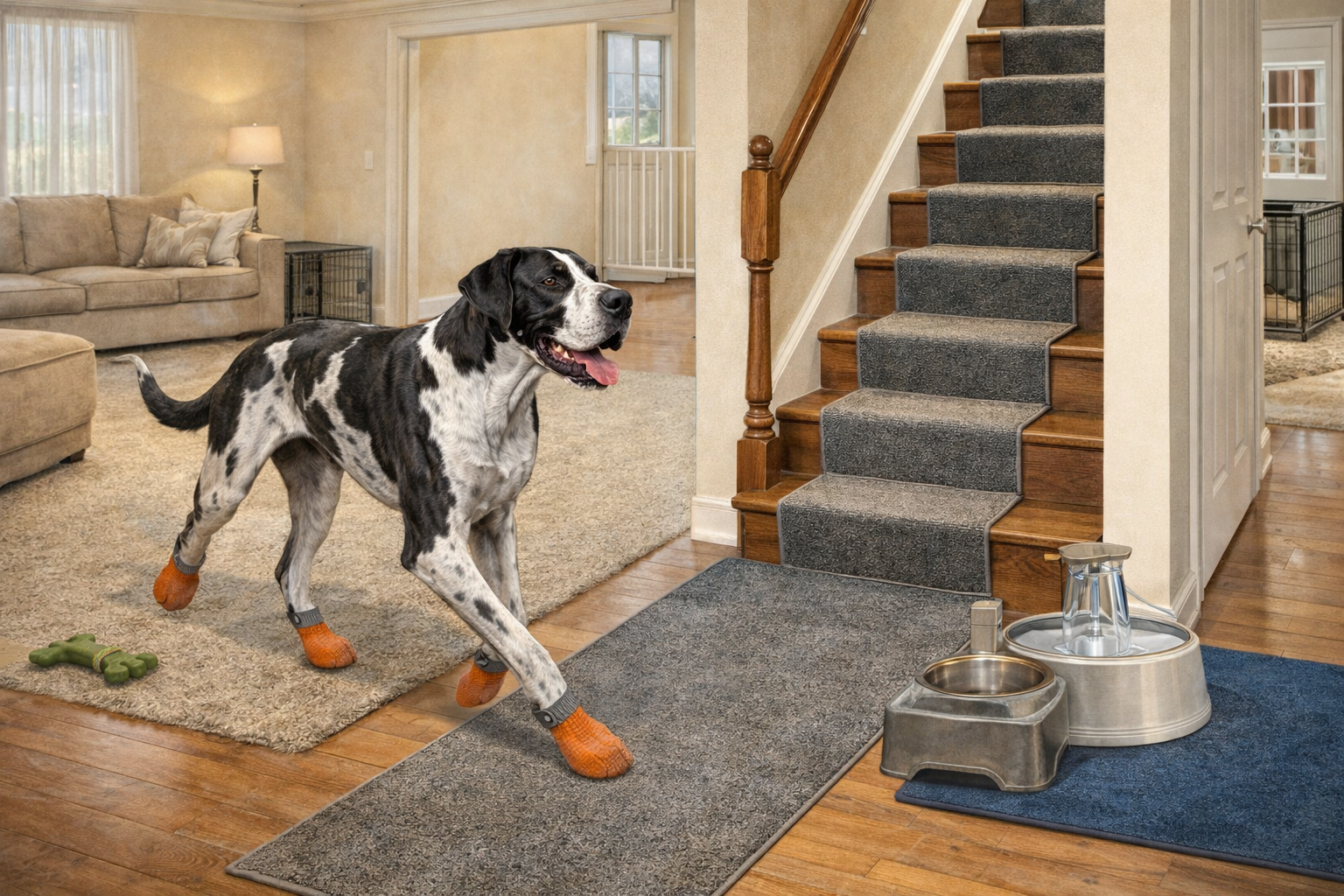
Great Dane Safe Home
Traction zones, stairs safety, and house setup changes that prevent slips and injuries.
Safer House →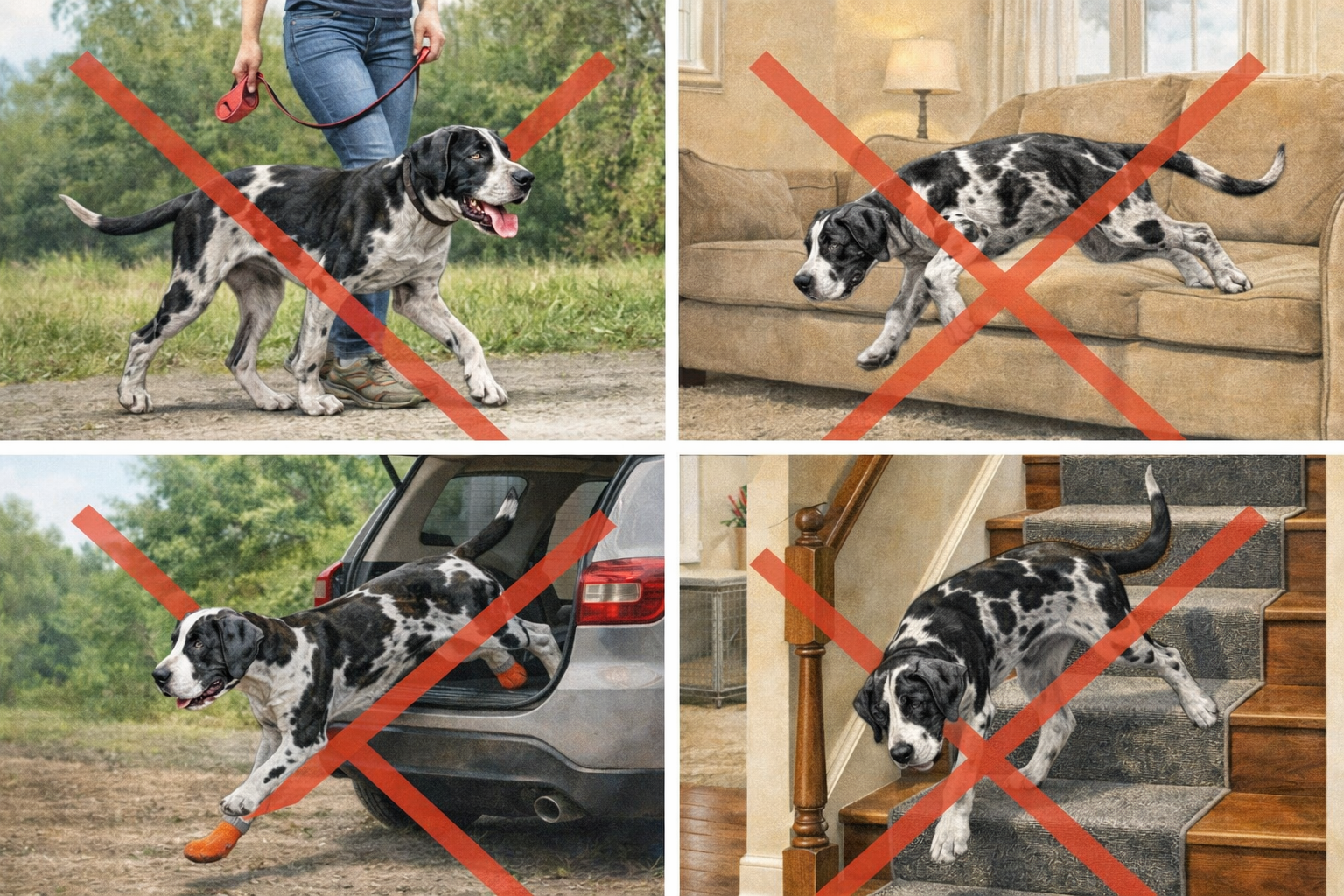
Exercise Guide (Puppy-Safe)
How much movement your Great Dane really needs—without stressing joints during growth.
Exercise Guide →Step 1: Puppy Zone Setup
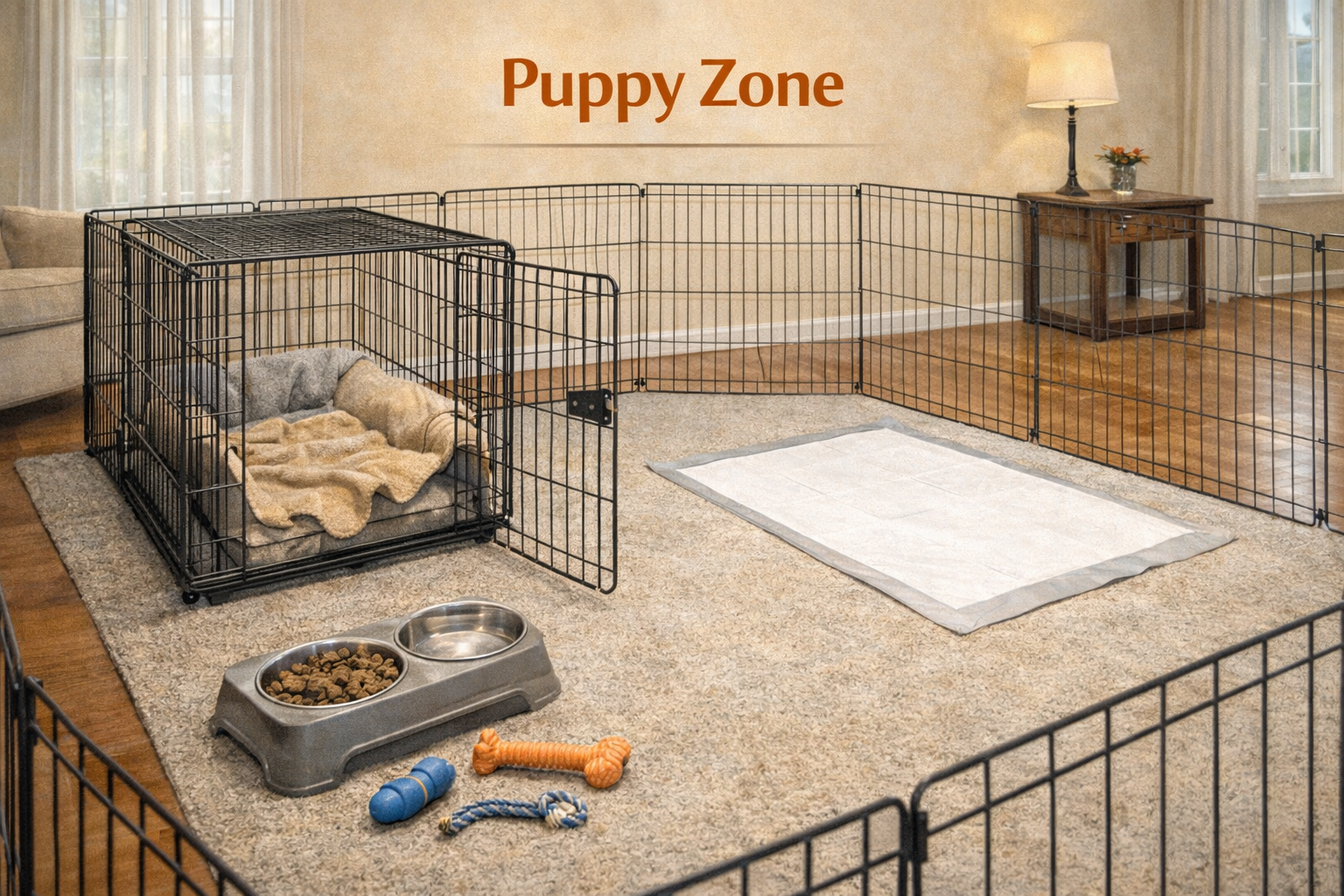
Puppy Zone (PZ): Building a Safe Space for Great Dane Training
One of the most important foundations of successful Great Dane puppy training is creating what I call the Puppy Zone (PZ). This is your puppy’s dedicated safe space — a place where they can relax, reset, and feel secure. When introduced properly, the Puppy Zone becomes a powerful tool for building confidence, encouraging independence, and supporting healthy sleep habits.
Most importantly, the Puppy Zone should be accessible at all times. Whenever you are supervising, I strongly recommend leaving the gate open so your puppy can come and go freely. This freedom allows your Great Dane puppy to begin choosing the space on their own, which is a critical step in positive Great Dane crate and zone training.
Encouraging Natural Naps in the Puppy Zone
Ideally, your puppy will begin to nap inside the Puppy Zone voluntarily. When this happens, you are winning. Puppies that learn to settle and sleep in their safe space during the day typically transition much more smoothly to sleeping there at night. In fact, daytime naps inside the PZ often predict fewer nighttime struggles.
However, if your puppy falls asleep outside the zone, you can gently move them into their bed inside the Puppy Zone when possible. Over time, this helps reinforce where restful sleep should happen. Consistency here truly pays dividends during nighttime Great Dane training routines.
Make the Puppy Zone Comfortable and Engaging
Just as importantly, building a comfortable bed inside the Puppy Zone is crucial. Your Great Dane puppy should view this space as inviting, not restrictive. In addition to proper bedding, I recommend keeping several safe enrichment items available in case your puppy is not quite ready to sleep.
For best results, I strongly suggest using the “Smells Like Success” method for toys and blankets. Familiar scents help puppies settle faster and feel more secure in their environment. You should also keep a few favorite toys inside the zone at night, along with an occasional puzzle toy or treat-dispensing toy for mental engagement.
Bedtime Strategy for Great Dane Puppies
When I put my puppies down for the night, I like to give them something that takes time to work on — for example, a safe chew or a bone with a small amount of peanut butter inside. The goal is simple: keep your puppy calmly occupied long enough for sleep to take over naturally. More often than not, once they finish working on the treat, they settle down and drift off.
Additionally, if your puppy develops the habit of shredding pee pads (and many do), I recommend switching to a tray system with artificial turf covering the pad. This helps prevent destructive habits while still supporting your house-training plan.
Using White Noise to Reduce Nighttime Disruptions
Finally, this is an excellent time to introduce white noise. Playing soft music or leaving the television on at low volume can significantly reduce your puppy’s reaction to outside sounds. Without background noise, many Great Dane puppies will bark or whine the moment they hear movement outside. White noise helps mask those triggers and often leads to calmer, more consistent sleep patterns.
When used consistently, the Puppy Zone becomes one of the most valuable tools in your entire Great Dane training system, supporting better sleep, calmer behavior, and a more confident young dog.
Jump to setup →Step 2: Potty Schedule
Great Dane Potty Training: Consistency Changes Everything
When it comes to Great Dane potty training, consistency is absolutely the key. In fact, this becomes even more important when more than one person in the household is helping with training. If you are following one routine but your spouse or kids are doing something completely different, your puppy will struggle to understand what is expected. Simply put, mixed signals slow down progress in any Great Dane training program.
For this reason, everyone in the home must be on the same page from day one. The clearer and more predictable the routine, the faster your Great Dane puppy will learn where and when to go.
Using a Leash to Guide Potty Success
One tool that can make early Great Dane puppy training much smoother is keeping a lightweight leash attached during supervised periods. This allows you to calmly guide your puppy straight outside and directly to the potty area without chasing, grabbing, or creating confusion. As a result, your puppy begins to associate going outside with the correct behavior much more quickly.
Additionally, the leash method pairs very well with door bell training if you choose to use it.
How the Potty Bell Method Works
Briefly, the bell method is simple. Each time you take your puppy outside to potty, you ring the bells hanging on or near the door. Over time, many puppies learn to ring the bells themselves to signal they need to go out. While I have not personally relied on this method, I do know several experienced owners who swear by it, particularly as their Great Dane puppies grow older and become more independent.
Timing Matters in Great Dane House Training
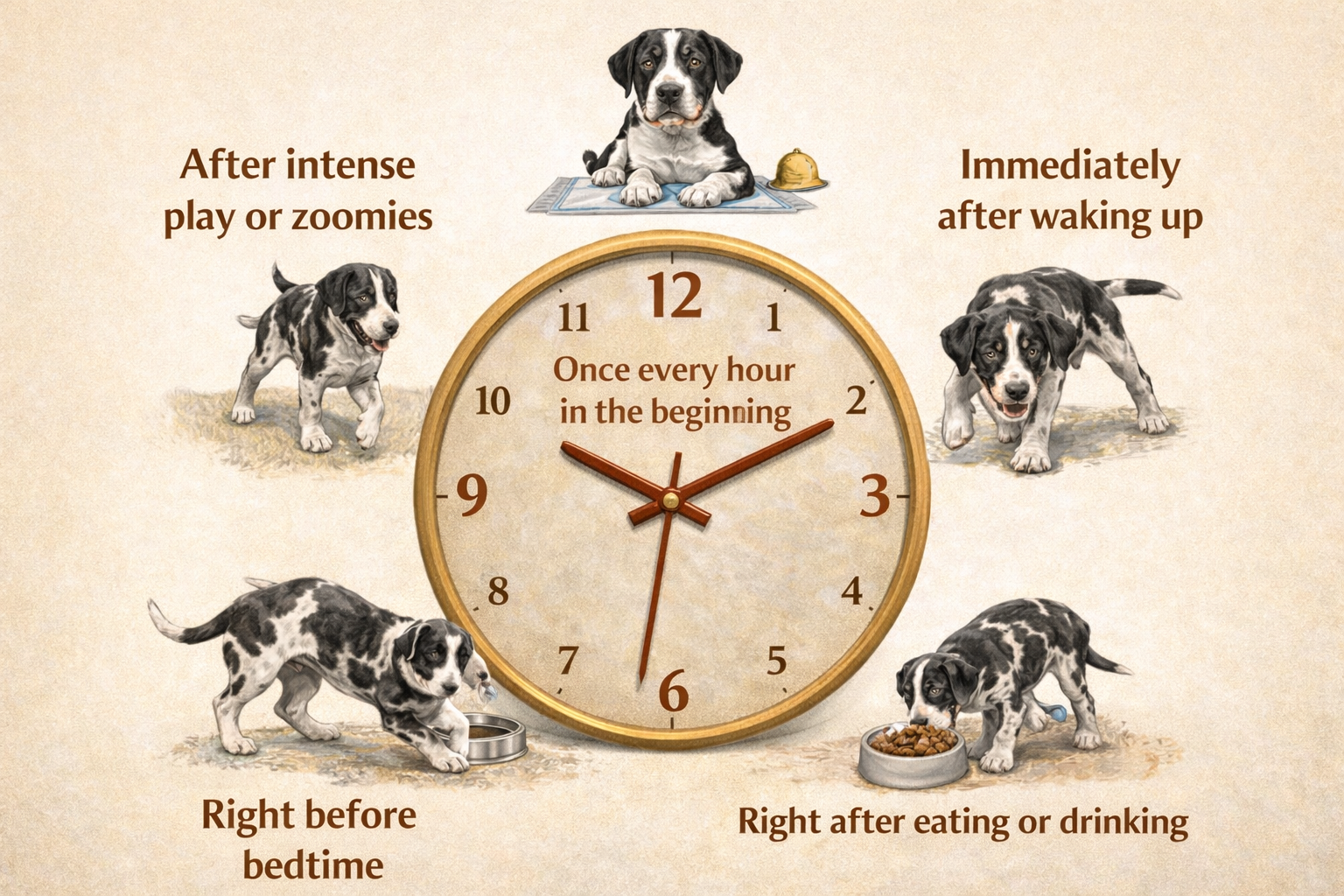
Equally important is being proactive with potty breaks. You must be diligent about taking your puppy out:
• Immediately after waking from a nap
• When they suddenly stop during play
• Right after playtime ends
• Roughly every 30 minutes during early training
• Especially after eating or drinking large amounts of water
Just as importantly, keep a close eye on your puppy’s body language. The moment they stop what they are doing and begin sniffing the floor, it’s go time. Quick action in these moments is one of the fastest ways to prevent indoor accidents and reinforce good Great Dane potty training habits.
Stay Consistent Even After Progress
Even after your puppy seems mostly trained, do not abandon the routine too quickly. Consistency over time prevents frustrating setbacks and helps lock in reliable habits. Remember, with Great Danes especially, steady structure early on pays off in a very big dog later.
Praise Is the Most Powerful Training Tool
Finally — and this is critical — when your puppy successfully goes potty outside, you need to celebrate the win. Offer enthusiastic praise, calm affection, and positive reinforcement so your puppy clearly understands they made the right choice. In effective Great Dane training, reward timing matters enormously.
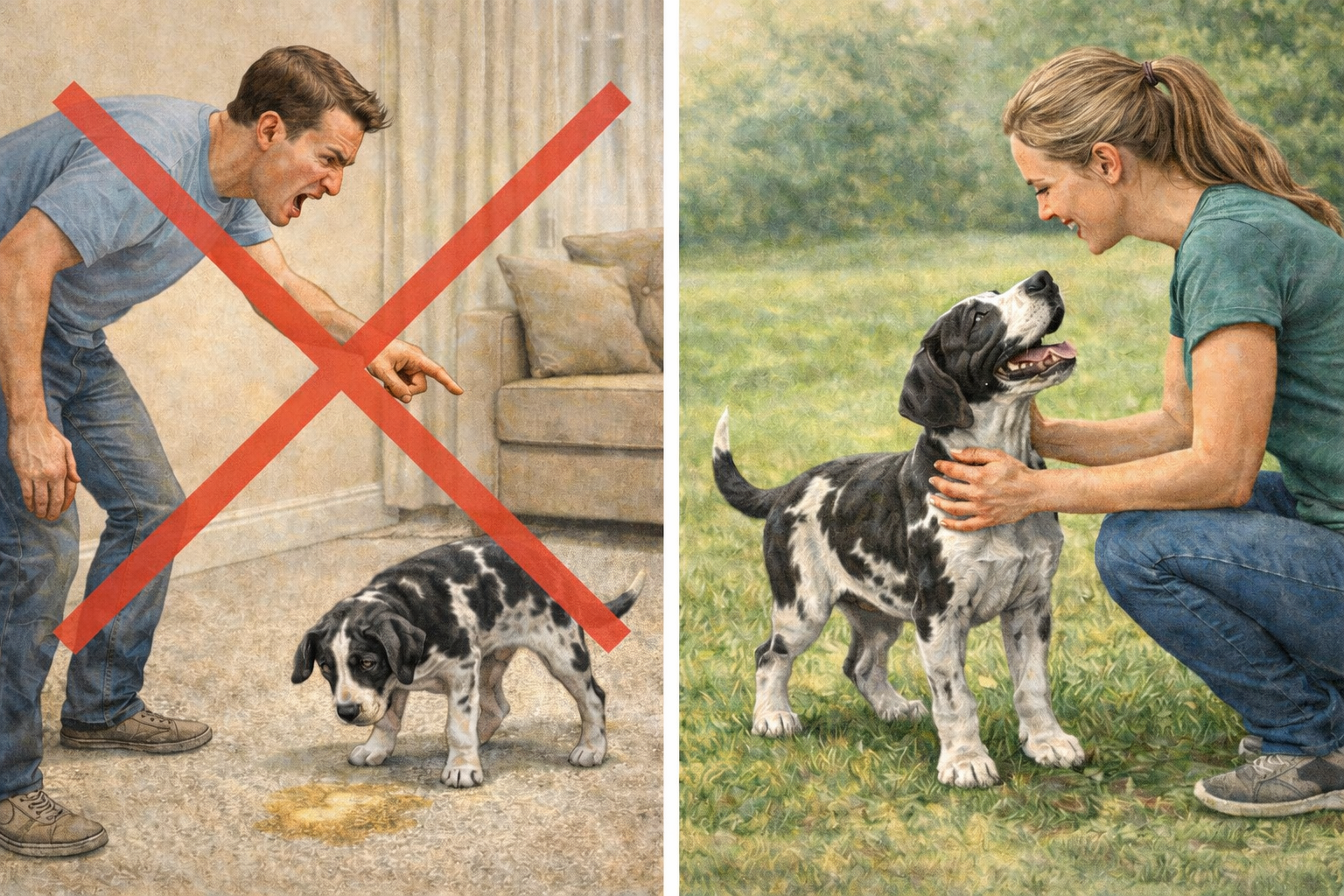
Just as important, never yell at or punish your puppy for accidents inside. They are still learning. Think of it this way: if you had a newborn baby, you would not yell or punish them for using their diaper. The same patience applies here. Clear guidance, consistent routines, and positive reinforcement will always outperform frustration.
See the schedule →Step 3 & 4: Accidents + Consistency
Handling Mistakes During Great Dane Puppy Training
When it comes to successful Great Dane puppy training, how you handle mistakes matters just as much as teaching the correct behavior. First and foremost, remember this: your puppy knows absolutely nothing yet. They do not understand our language, our expectations, or our dramatic hand waving. However, one thing puppies quickly recognize is human tone — especially yelling and disapproval.
Great Dane Bond
As your bond grows, your Great Dane puppy will naturally want to please you. In fact, most Danes are highly sensitive to their owner’s mood. Because of this, harsh corrections can do more harm than good. If you think about it, you would never yell at a newborn baby for making a mistake. The same calm, patient mindset should guide your entire Great Dane training approach.
Teaching “No” the Calm Way
One of the first commands I like puppies to learn is a calm, clear “No.” However, the key word here is calm. Any time you catch your puppy doing something inappropriate — or about to — give a firm but controlled “No,” then immediately redirect using the leash and guide them toward the correct behavior.
For example, if your puppy begins to potty inside, interrupt gently and move them outside to finish. If they do complete their business outdoors, follow up right away with praise and reward. This helps your puppy connect the dots much faster during Great Dane house training.
Why Harsh Corrections Backfire with Great Danes
It is especially important to understand that Great Danes can be naturally sensitive and, at times, a bit timid. Because of this, yelling or physical punishment often creates fear rather than learning. In many cases, harsh reactions simply make the puppy more uncertain and less confident. This will negatively affect their personality when they get older.
Great Danes are known for their wonderful, gentle personalities. However, if that confidence is damaged early through overly harsh handling, you may never fully see the best version of your dog. Calm structure, clear guidance, and consistent routines will always produce better long-term results in any Great Dane training program.
Proper Cleanup Prevents Repeat Accidents
Finally, accidents will happen — and when they do, proper cleanup is critical. You must use a cleaner specifically designed to eliminate odor completely. Dogs have an incredibly powerful sense of smell, and if any trace of urine or feces remains, your puppy may interpret that spot as an approved bathroom area.
By removing the scent thoroughly and continuing your consistent routine, you dramatically reduce the chances of repeat accidents inside the home.
How to handle accidents →Step One: Gear Up
Leash Training Equipment
- A good leash with a metal latch, we want it to be sturdy.
- We need a collar with a solid metal buckle, I prefer not to use the quick connecting type when training.
- Have to have a treat pouch, or training pouch. When we reward we need it in the moment and that’s what a pouch provides.
- Treats, rewards, we need something to reward with.
- A calm soothing, reassuring voice for commands and direction.
- Consistency, lots and lots of consistency.
Using the Right Tools for Successful Leash Training
Having the right tools for success is absolutely essential, especially when it comes to leash training. Before you ever step out the door, proper equipment helps set both you and your dog up for safer, more effective training sessions.
As you are beginning to see, leash training is one of the most important forms of dog training your pup will ever receive. A well-trained dog on leash is easier to manage, safer in public, and far more enjoyable to walk. In contrast, poor leash habits can quickly turn even a short walk into a frustrating experience.
Working confidently with a leash becomes vital anytime we take our dog into public spaces, busy neighborhoods, parks, or vet visits. Because of this, understanding the different uses and purposes of a leash is incredibly valuable for every dog owner, especially those handling large breeds like Great Danes.
Most importantly, we must make sure we are using the correct leash and collar for training. The right combination improves communication, supports loose-leash walking, and helps reinforce the calm leadership your dog needs to follow successfully.
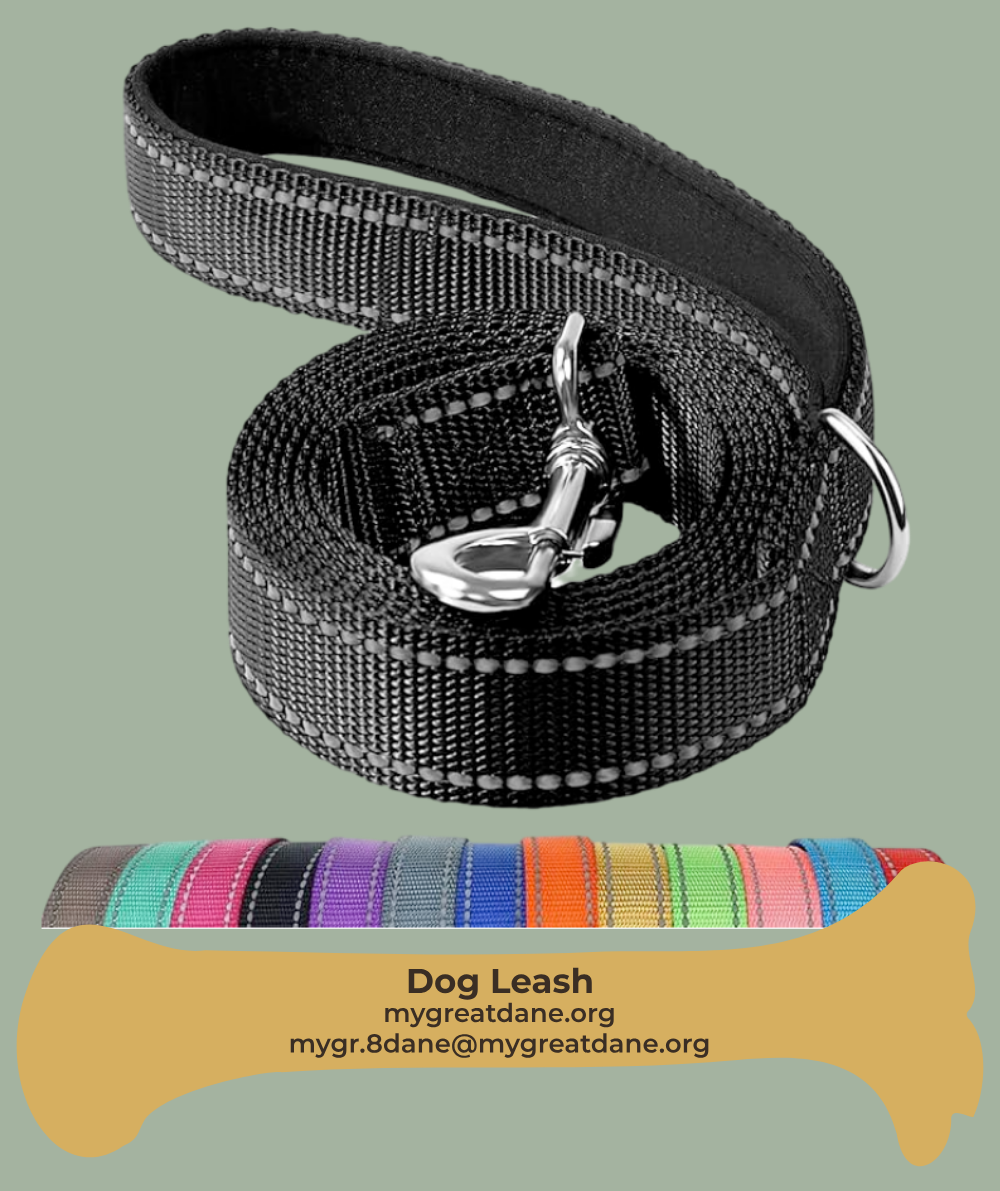
Joytale Dog Leash, 6 FT Double-Sided Reflective, Padded Handle Nylon Heavy Duty Leashes for Medium & Large Dogs Walking, Black
A six-foot lead is one of the most useful tools in everyday Great Dane puppy care, especially for indoor management, recall practice, and calm redirection. Because it keeps your puppy within reach, you can guide behavior the moment unwanted habits begin instead of reacting too late.
Redirection Using A Six-Foot Lead
When your puppy is inside, I strongly recommend keeping a lightweight six-foot lead attached during supervised time. As a
result, you can gently redirect at any moment without chasing, grabbing, or creating stress. The key here is gentle redirection.
Never jerk, pull, or drag your puppy. Instead, use the lead as a quiet guide to help them make better choices.
Just as importantly, redirection only works when you provide a clear alternative. For example, if your puppy heads into
a restricted room, calmly guide them back to the correct area. Likewise, if they grab a shoe or power cord, redirect them
immediately to an appropriate chew toy. Over time, this consistent pattern teaches your puppy what to do, not just what to avoid.
Always follow successful redirection with calm praise and affection. This reinforces the correct behavior and builds confidence
in the learning process.
Cautionary Advice
I’ve seen firsthand how quickly puppies can make dangerous decisions. Years ago, my boss’s young dog slipped out the door, ran straight into the road, and was tragically hit by a car. It was devastating. In many situations like this, a simple lead during early training stages can provide the extra second of control that prevents a heartbreaking accident. Find on Amazon →
Affiliate link: I may earn a small commission at no extra cost to you. If this guide helped you, using my links helps support MyGreatDane.org.
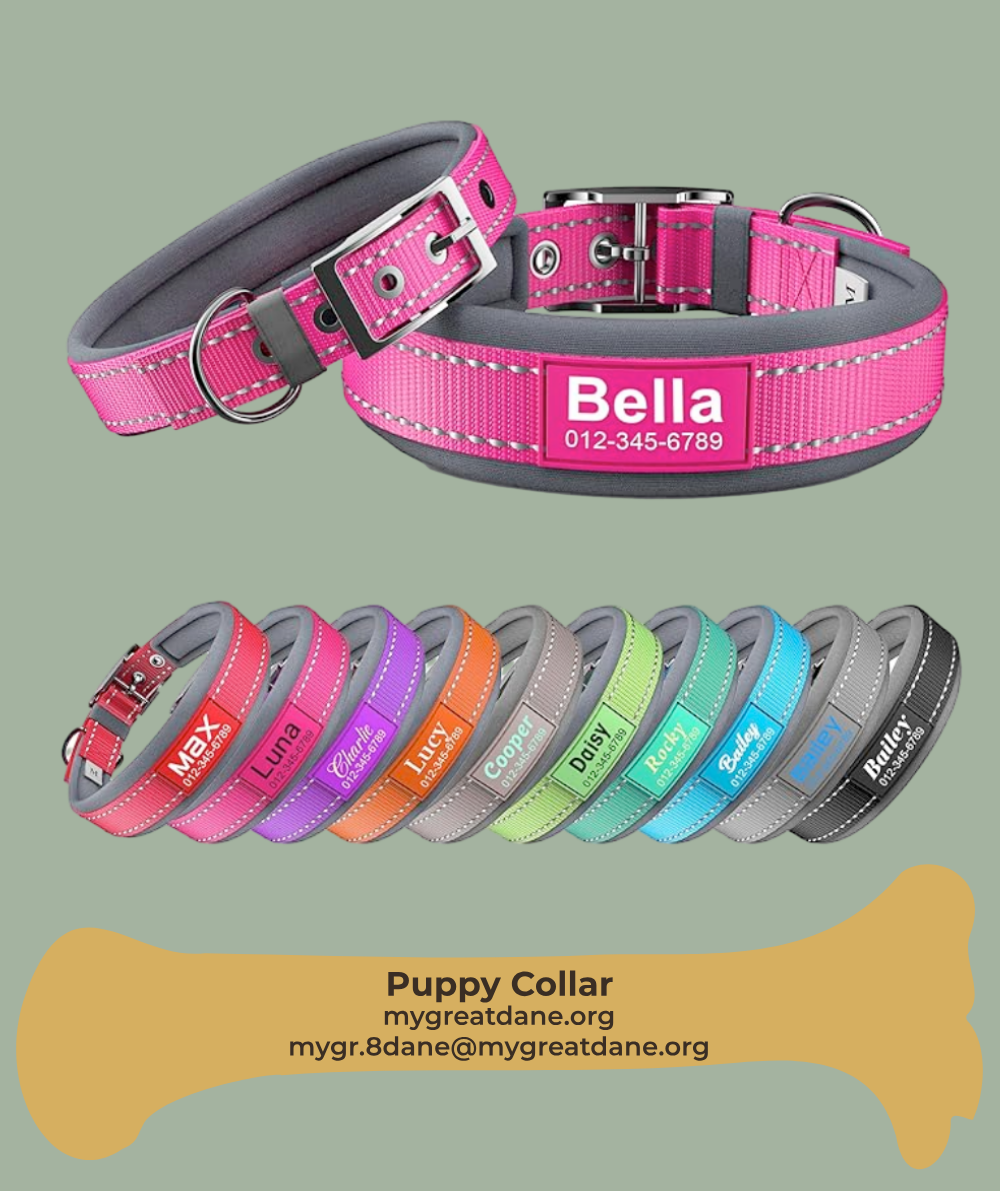
Personalized Dog Collar with Name & Phone Number | Reflective Ultra Wide Soft Neoprene Padded | Durable Metal Buckle for Large, Medium, and Small Dogs in Pink, Purple, Blue & Other Stylish Colors
Please Read and Consider: Your puppy is going to need a properly fitted collar. There’s really no way around it. However, one detail I strongly recommend paying close attention to is the type of buckle you choose.
Metal Buckle
For Great Dane puppy care, I strongly prefer a metal buckle collar over plastic quick-clip styles. While plastic
snap buckles are convenient, they can fail under sudden pressure or a sharp jolt, especially with fast-growing, strong puppies.
I have personally seen plastic quick-connect buckles fail even on young Great Dane puppies during early leash training inside the
house. Because of that experience, I recommend sticking with a sturdy metal buckle during the learning phase when unexpected lunges
and excitement are most common.
Never Jerk or Pull
That said, even metal hardware should always be used correctly and checked regularly for wear. In rare cases, I have seen
metal components fail on adult Great Danes, but this was typically due to improper use or damaged equipment rather than
normal handling.
As your puppy matures and develops reliable recall and leash manners, you can decide whether to transition to other collar
styles. However, during early training and management, a well-fitted collar with a quality metal buckle provides an extra
layer of security and peace of mind.
Affiliate link: I may earn a small commission at no extra cost to you. If this guide helped you, using my links helps support MyGreatDane.org.
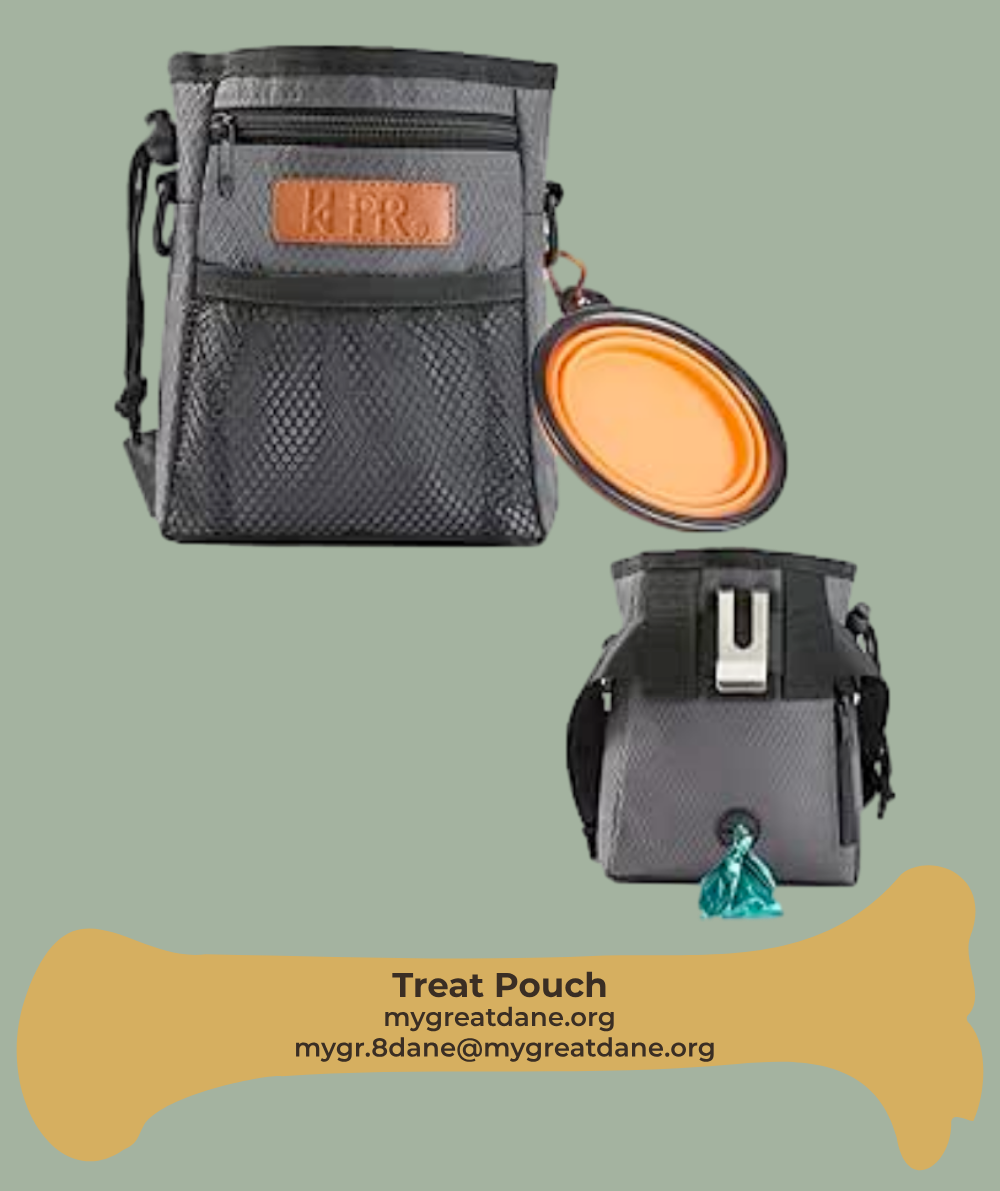
Dog Training Pouch with Treat Storage and Collapsible Bowl
When walking your dog or doing any type of outdoor obedience work, a reliable dog training pouch quickly becomes one of those tools you wonder how you lived without. This compact treat pouch is designed to keep your rewards, accessories, and cleanup supplies organized and within easy reach during every training session.
One feature I especially like on this model — and something my older pouch does not have — is the included collapsible silicone drink bowl. This is extremely helpful in hot climates, on longer walks, or when hiking with your dog. Quick access to water can make a big difference, especially for large breeds like Great Danes.
The pouch also includes a built-in dog waste bag dispenser, which allows you to pull bags quickly without fumbling through pockets. Typically, I load four or five beef sticks (usually Pup-Peroni), break them into small pieces, and fill the pouch before heading out. As a result, rewarding your dog during leash training becomes fast and seamless without stopping to dig through a backpack or jacket.
In addition, the spacious interior provides easy storage for dog treats, small toys, and other training essentials. The bright, easy-to-clean lining helps you quickly spot what you need, even during active training sessions at the park. Meanwhile, the two sturdy D-rings allow you to clip on a training clicker or attach used waste bags for convenience.
Overall, if you are serious about puppy training, Great Dane leash training, or structured daily walks, this all-in-one dog training bag is a highly useful piece of gear to keep within arm’s reach.
Find On Amazon →Affiliate link: I may earn a small commission at no extra cost to you. If this guide helped you, using my links helps support MyGreatDane.org.
Step Two: Use a Consistent Potty Schedule
A predictable potty training schedule is the foundation of housebreaking. The more chances you give your puppy to be right, the faster they connect the dots. Great Dane potty training is not rocket science, but being consistent and organized is essential.
Take your puppy outside (or to their pad)
- Once every hour in the beginning.
- Immediately after waking up.
- Right after eating or drinking.
- While playing if your puppy stops and starts sniffing, it’s go time! By “go time,” I mean hurry up and take that pup outside!
- Before bedtime. The best habit to give your puppy is going right before bedtime.
Use the same potty spot each time and repeat a simple cue like “Go potty.” This is a great phrase to get your pup used to. When they go, calmly celebrate with praise and maybe tiny treat. If you’re potty training indoors first, slowly move the pad closer to the door every day, and then eventually outside.
Joytale Dog Leash, 6 FT Double-Sided Reflective, Padded Handle Nylon Heavy Duty Leashes for Medium & Large Dogs Walking, Black
A six-foot lead is one of the most useful tools in everyday Great Dane puppy care, especially for indoor management, recall practice, and calm redirection. Because it keeps your puppy within reach, you can guide behavior the moment unwanted habits begin instead of reacting too late.
Redirection Using A Six-Foot Lead
When your puppy is inside, I strongly recommend keeping a lightweight six-foot lead attached during supervised time. As a
result, you can gently redirect at any moment without chasing, grabbing, or creating stress. The key here is gentle redirection.
Never jerk, pull, or drag your puppy. Instead, use the lead as a quiet guide to help them make better choices.
Just as importantly, redirection only works when you provide a clear alternative. For example, if your puppy heads into
a restricted room, calmly guide them back to the correct area. Likewise, if they grab a shoe or power cord, redirect them
immediately to an appropriate chew toy. Over time, this consistent pattern teaches your puppy what to do, not just what to avoid.
Always follow successful redirection with calm praise and affection. This reinforces the correct behavior and builds confidence
in the learning process.
Cautionary Advice
I’ve seen firsthand how quickly puppies can make dangerous decisions. Years ago, my boss’s young dog slipped out the door, ran
straight into the road, and was tragically hit by a car. It was devastating. In many situations like this, a simple lead during
early training stages can provide the extra second of control that prevents a heartbreaking accident.
Used correctly, a six-foot lead is a simple but powerful safety and training tool for raising a well-mannered Great Dane puppy.
Personalized Dog Collar with Name & Phone Number | Reflective Ultra Wide Soft Neoprene Padded | Durable Metal Buckle for Large, Medium, and Small Dogs in Pink, Purple, Blue & Other Stylish Colors
Please Read and Consider: Your puppy is going to need a properly fitted collar. There’s really no way around it. However, one detail I strongly recommend paying close attention to is the type of buckle you choose.
Metal Buckle
For Great Dane puppy care, I strongly prefer a metal buckle collar over plastic quick-clip styles. While plastic
snap buckles are convenient, they can fail under sudden pressure or a sharp jolt, especially with fast-growing, strong puppies.
I have personally seen plastic quick-connect buckles fail even on young Great Dane puppies during early leash training inside the
house. Because of that experience, I recommend sticking with a sturdy metal buckle during the learning phase when unexpected lunges
and excitement are most common.
Never Jerk or Pull
That said, even metal hardware should always be used correctly and checked regularly for wear. In rare cases, I have seen
metal components fail on adult Great Danes, but this was typically due to improper use or damaged equipment rather than
normal handling.
As your puppy matures and develops reliable recall and leash manners, you can decide whether to transition to other collar
styles. However, during early training and management, a well-fitted collar with a quality metal buckle provides an extra
layer of security and peace of mind.
Affiliate link: I may earn a small commission at no extra cost to you. If this guide helped you, using my links helps support MyGreatDane.org.
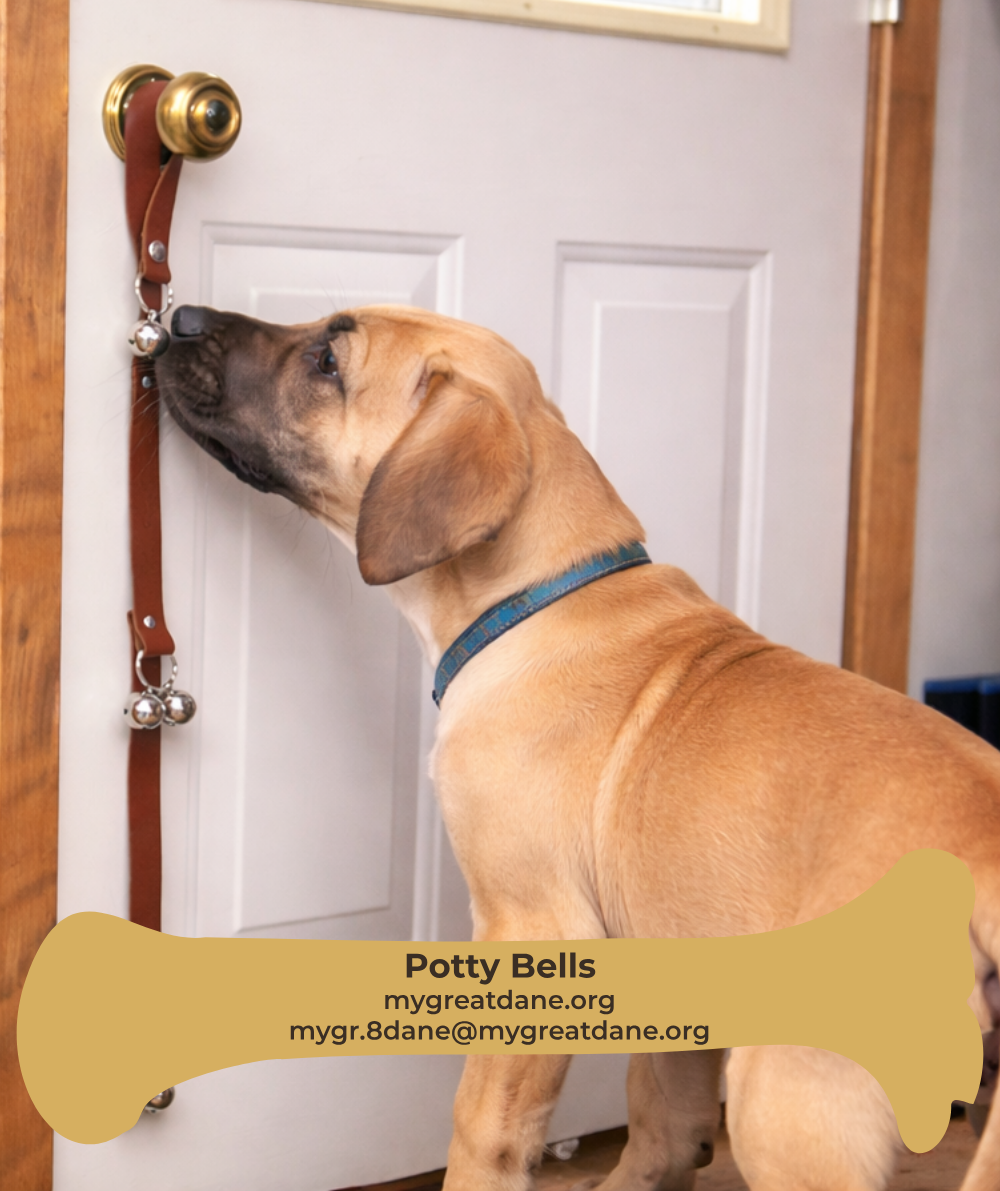
Bell Training for Great Dane Potty Breaks
Teaching your puppy to ring a bell for potty breaks can be a very effective part of your overall Great Dane training routine. When introduced consistently, bell training gives your dog a clear, reliable way to communicate their needs. As a result, many owners see faster progress in Great Dane house training and fewer indoor accidents.
To begin, hang a set of potty bells on the door at your puppy’s nose or paw level. Then, every time you take your puppy outside, guide them to touch or nudge the bells so they jingle immediately before the door opens. Most importantly, always reward this behavior with praise, a small treat, and quick access to the outdoors.
Step-by-Step Bell Training for Great Dane Puppies
Introduce the Bells: First, allow your puppy to sniff and investigate the bells on the floor. This helps them become comfortable with the object before you hang it on the door.
Establish the Routine: Next, hang the bells on the doorknob or beside your designated potty exit. Every single time you take your puppy out, gently guide them to ring the bell first. Consistency here is critical for successful Great Dane potty training.
Reward Immediately: The moment the bell rings, celebrate calmly with praise and a small treat, then open the door right away. Timing is extremely important in effective Great Dane training.
Separate Play from Potty: Finally, only honor the bell when it is truly potty time. If your puppy rings just to go outside and play, calmly leash them, take them to the potty area, and wait about five minutes. If nothing happens, quietly bring them back inside. This prevents the bell from becoming a “free backyard access” button.
Find On Amazon →Affiliate link: I may earn a small commission at no extra cost to you. If this guide helped you, using my links helps support MyGreatDane.org.
Important Tips for Bell Training Success
- Use a Clear Cue: As your puppy begins to understand the motion, add a verbal cue such as “Ring it” or “Outside.” Over time, many Great Dane puppies will begin to connect the cue, the bell, and the trip outdoors.
- Add a Gentle Lure if Needed: If your puppy seems hesitant, you can place a tiny smear of peanut butter or cream cheese on the bell to encourage a nose nudge. However, use this sparingly — the goal is confidence, not dependency.
- Leash Up for Focus: When responding to the bell, keep your puppy on a leash. This helps reinforce that the trip outside is for business first, not immediate playtime.
- Be Patient: Every puppy learns at a different pace. While some Great Dane puppies pick this up in a few days, others may take a bit longer. Calm repetition always wins.
- Stay Consistent: Most importantly, always use the same door for potty breaks. Consistency builds clarity, and clarity speeds up your entire Great Dane house training program.
- When practiced regularly, bell training can become a powerful communication tool that supports a smoother, more predictable Great Dane puppy routine.
Your puppy isn’t being stubborn or spiteful. They’re learning, and calm, consistent reactions keep potty training on track.
Step Three: Deal with Accidents Calmly
- Catching them in the act: calmly interrupt (“No”) and take them to the potty spot. Reward if they finish in the potty spot.
- Discovering accidents: clean it up without scolding. Correcting after they’ve already had the accident will damage trust, and create fear.
- Use enzyme cleaner: it removes odor so they aren’t drawn back to the same spot.
- Remember: accidents aren’t their fault. A puppy having an accident in the house is no different than a baby using a diaper; they don’t know or understand the difference. They’re still learning, and patience is part of the job.
Your puppy isn’t being stubborn or spiteful. They’re learning, and calm, consistent reactions keep potty training on track.
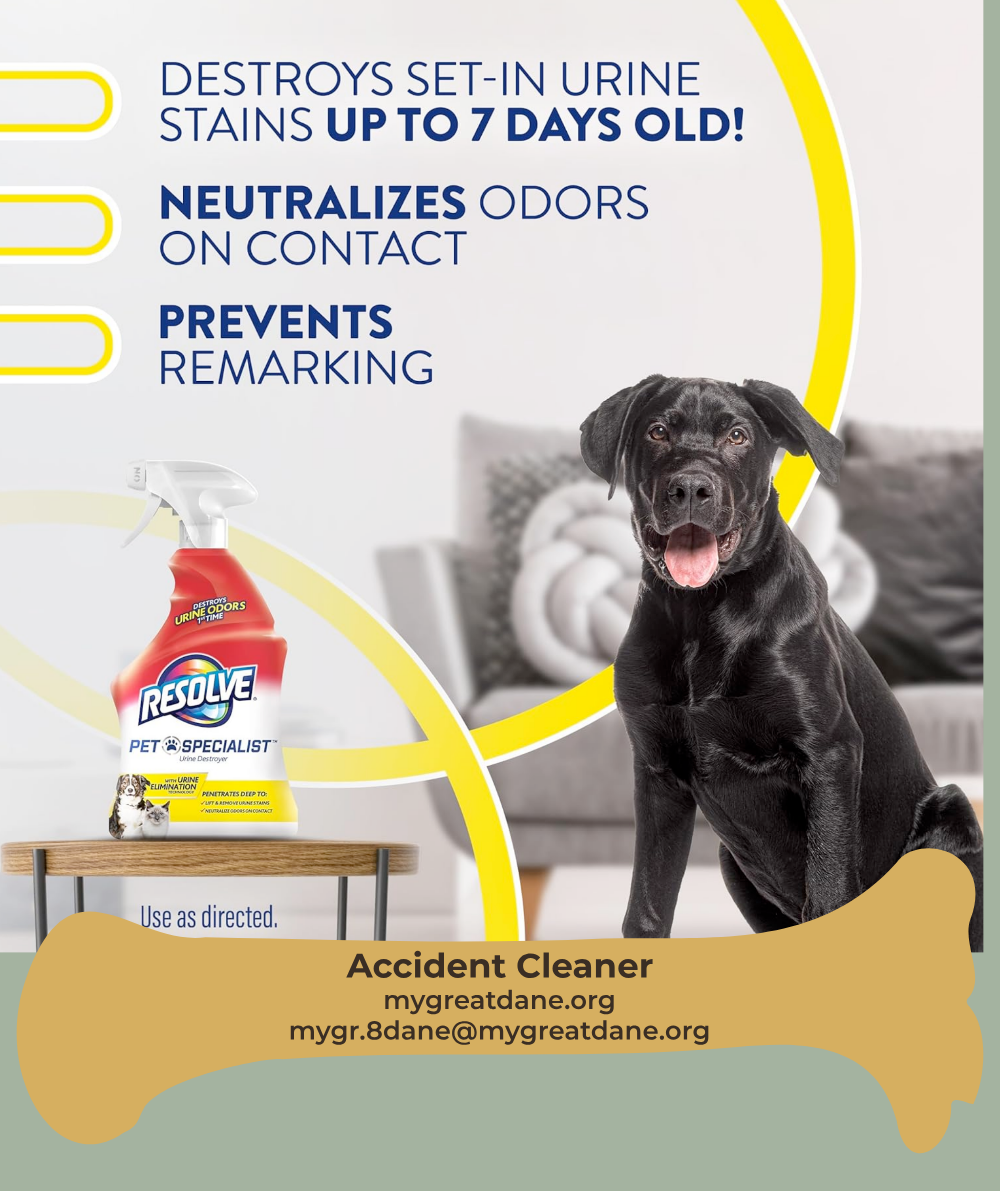
Resolve Pet Odor & Stain Remover for Great Dane Training Cleanup
When accidents happen during Great Dane puppy training — and they will — using the right cleaner is extremely important. Resolve Pet Odor & Stain Remover is designed to tackle one of the biggest challenges in early Great Dane house training: completely eliminating urine odors that can lead to repeat accidents.
Because dogs have an incredibly powerful sense of smell, even a faint remaining odor can signal that the same spot is an acceptable bathroom area. For this reason, using a cleaner that fully neutralizes urine is a critical step in maintaining consistent Great Dane potty training progress.
Why This Cleaner Works Well for Great Dane Owners
Destroys Urine Odors the First Time: Resolve uses urine elimination technology that neutralizes and removes odors on contact. As a result, your home stays fresher and your puppy is less likely to return to the same spot.
Removes Pet Stains and Everyday Messes: In addition to urine cleanup, this multi-purpose formula effectively tackles pet stains, food spills, and other common household messes that occur during active Great Dane training phases.
Helps Prevent Remarking: Just as importantly, the formula helps discourage pets from revisiting previously soiled areas. This feature is especially helpful during the early weeks of Great Dane housebreaking, when habits are still forming.
Suitable for Use Around Pets: When used as directed, the cleaner is considered suitable for use in pet households, making it a practical option for busy Great Dane homes.
Versatile Multi-Surface Use: Because the formula works on most carpets, fabrics, and hard surfaces, it provides flexible cleanup coverage throughout your training areas.
Product Details
Brand: Resolve
Manufacturer: Reckitt
Scent: Unscented
Special Feature: Multi-purpose cleaning
Contains Liquid: Yes
My take: During the early stages of Great Dane puppy training, odor control is not optional — it is foundational. Using a reliable enzymatic-style cleaner like this helps reinforce good potty habits and reduces the chance of repeat accidents in the same area.
Find On Amazon →Affiliate link: I may earn a small commission at no extra cost to you. If this guide helped you, using my links helps support MyGreatDane.org.

Amazon Basics Paper Towels: A Must-Have for Great Dane Puppy Training Cleanup
Here is one item I strongly recommend keeping stocked during Great Dane puppy training. Are these the most premium paper towels on the planet? No. However, they work — and when you are cleaning up frequent puppy messes, practical and affordable usually wins.
During the early stages of Great Dane house training, you will go through more cleanup supplies than you expect. For this reason, having a reliable supply of paper towels on hand makes daily life much easier. In fact, when it comes to routine puppy cleanup, inexpensive and dependable often beats fancy and expensive.
Why Automatic Delivery Helps Great Dane Owners
One of my favorite things about ordering these from Amazon is the ability to set up automatic shipping. As a result, you always have backup rolls ready when accidents happen — and they will happen. After all, everyone knows the feeling of being stuck on the toilet without toilet paper. Now imagine finding a fresh puppy mess with no paper towels in sight. Not ideal.
Because consistency is so important in Great Dane training and housebreaking, being prepared for quick cleanup helps reinforce good habits and keeps your training routine on track.
Product Highlights
Brand: Amazon Basics
Unit Count: 12 Rolls
Total Sheets: 1,800 (150 sheets per roll)
Ply Rating: 2-Ply
Special Feature: High absorbency
Shipment Contains: Each package includes 12 rolls with 150 two-ply sheets per roll, giving you a total of 1,800 sheets for everyday cleanup needs.
Great Value for Daily Messes: These Amazon Basics paper towels are designed to handle routine spills and pet messes while staying budget friendly — something every Great Dane household can appreciate.
Flex-Sheets for Less Waste: The adjustable sheet size allows you to use only what you need, which helps reduce waste during frequent Great Dane puppy cleanup.
FSC-Certified Materials: Made with materials sourced from well-managed forests, recycled materials, and other controlled wood sources.
My take: During the messy stages of Great Dane potty training, you simply need reliable supplies within reach. These may not be luxury paper towels, but they are affordable, absorbent, and extremely practical when you are in full puppy training mode.
Find On Amazon →Affiliate link: I may earn a small commission at no extra cost to you. If this guide helped you, using my links helps support MyGreatDane.org.
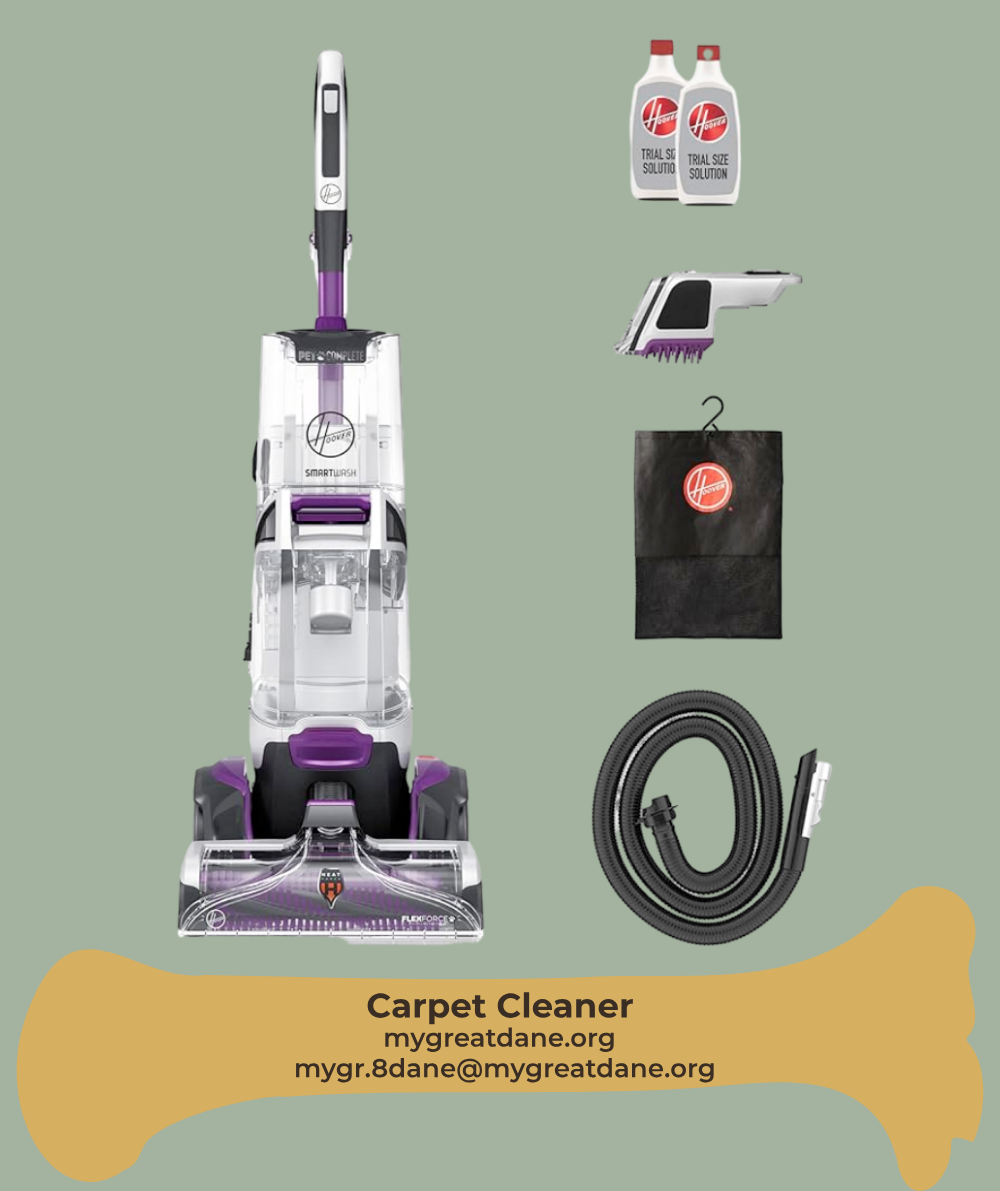
Hoover SmartWash: A Game-Changer for Great Dane Training Cleanup
This is the exact machine we use in our house, and honestly, I cannot imagine raising a large dog — especially during Great Dane puppy training — without one. Truthfully, even small-dog owners can benefit from a good carpet cleaner, but when you live with a Great Dane, it quickly becomes essential equipment.
The reason is simple: Great Danes are well known for having sensitive stomachs. Sooner or later, diarrhea happens. When that day comes, no amount of paper towels, spray cleaner, elbow grease, or soap and water is going to fully restore your carpet. During active Great Dane house training, having the right deep-clean tool can save your floors — and your patience.
My Real-World Great Dane Cleanup Routine
Typically, I start by cleaning the area as thoroughly as possible using paper towels and an odor-neutralizing cleaner. However, that is only step one. To truly finish the job and remove deep contamination, I bring out the Hoover SmartWash. This second pass is what really lifts the mess from the carpet fibers.
If you are new to Great Dane training, here is something many owners do not expect: sometimes puppies keep moving while they are going potty. As a result, you may find spots here, spots there, and unfortunately, once they step in it, the mess can spread quickly. This is exactly where a quality carpet extractor earns its keep.
Why the Hoover SmartWash Works Well for Pet Homes
Automatic Cleaning Technology: The motion-sensing SmartWash design features auto-mix and auto-dry technology, which removes much of the guesswork from deep carpet cleaning — a huge plus during busy Great Dane puppy training weeks.
Simple Push-Forward Operation: This upright cleaner is extremely easy to use. Simply push forward to wash and pull back to dry. There are no complicated triggers or buttons, and the powerful extraction helps remove both water and embedded dirt. In addition, HeatForce Technology helps carpets dry faster.
Designed Specifically for Pet Messes: The FlexForce Pet PowerBrushes are built to resist pet odors while lifting dirt, debris, and stubborn accidents. For tougher spots, the detachable Spot Chaser Pretreat Wand gives you extra targeted cleaning power.
My take: If you own a Great Dane — or plan to — this is one of those tools that pays for itself over time. Keep it clean, maintain it properly, and it should serve your household for years of real-world puppy training messes.
Find On Amazon →Affiliate link: I may earn a small commission at no extra cost to you. If this guide helped you, using my links helps support MyGreatDane.org.
Step Four: Consistency is a must
Everyone that walks your pup must be on the same page. We want everyone teaching the same way.
- Make sure everyone who walks your dog does it the same.
- Everyone needs the same commands.
- Also, make sure everyone praises when desired.
- No one yells or jerks the leash.
- Don’t forget the doggy bag!
Remember, there’s no such thing as too much praise when a puppy or an adult dog succeeds.
Leash Training
- Always first out the door, let your puppy/adult know you are the Alpha.
- Start with the “sit” command, make sure your puppy/adult know how to sit.
- Begin walking and once your puppy/adult pulls ahead say “no” and turn and walk back the way you came. Do not Jerk or Pull the leash.
- Once you turn your dog will follow.
- As soon as he gets ahead and pulling, repeat the “no” command and turn and walk the other direction.
- Keep repeating this over and over, for some dogs it might take awhile.
The important thing to remember is consistency and to remain calm.Do not jerk your dog or pull them. Simply turn and go the opposite direction. Even if you are walking to the car or done playing some where don’t let your dog pull you along. This is just the beginning.
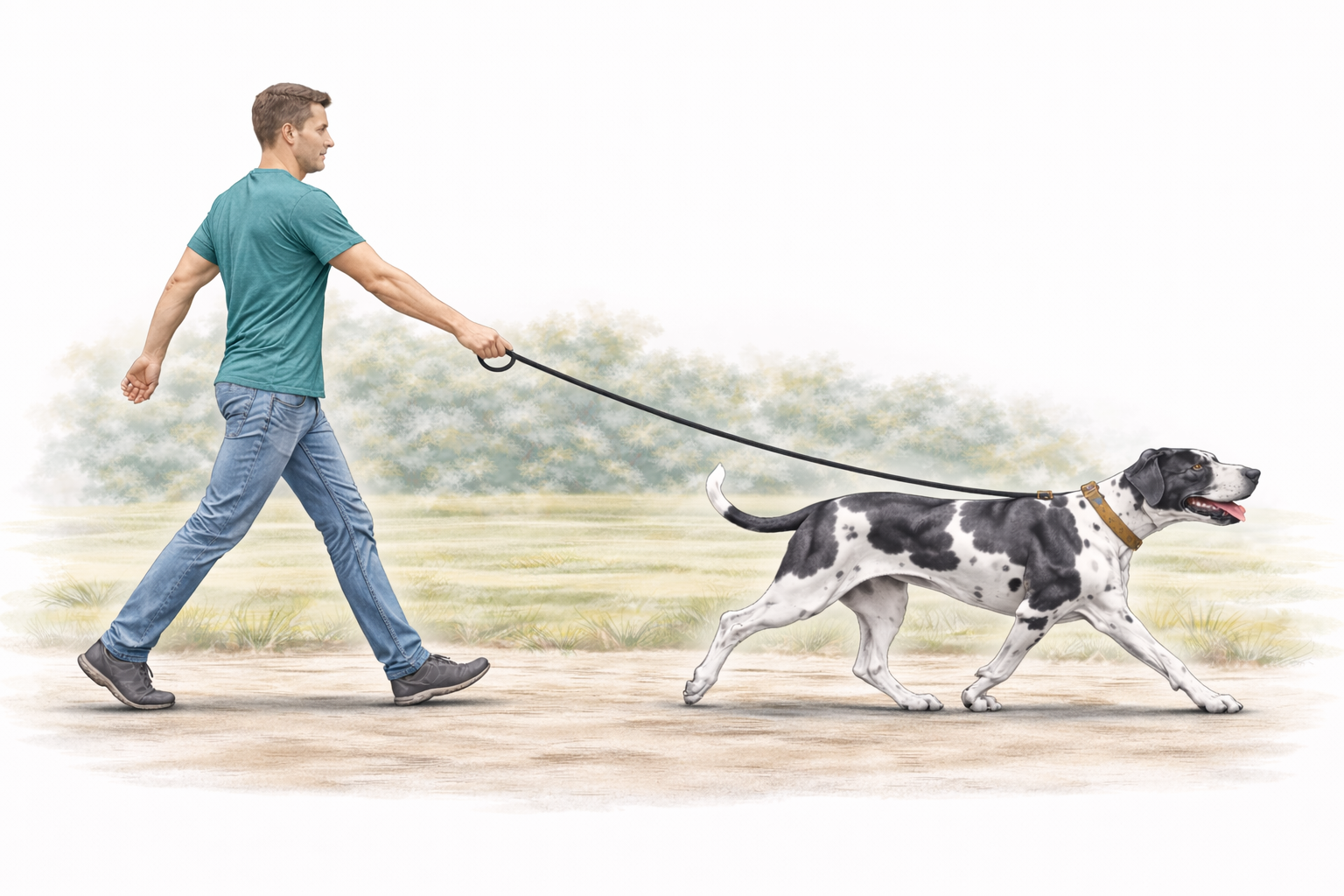
Leash Training Step 1: Out the Door
First and foremost, when beginning leash training, never allow your puppy or adult dog to rush out the door ahead of you. Establishing calm leadership from the very start is essential for successful leash training. By exiting first, you set the tone and reinforce your role as the guide your dog should follow.
At this stage, it is also helpful to reinforce basic obedience commands such as sit and no if your dog is already familiar with them. Consistency is the key to effective dog training. Just as important, always use a calm, reassuring voice. Remember, dogs do not understand our language the way humans do. However, they are extremely sensitive to tone and volume. Raised voices and frustration create fear, while calm guidance builds trust and confidence.
Before stepping outside, have your dog sit and pause for a moment. This allows them to observe the outdoor environment without becoming overstimulated. In addition, require your dog to remain seated until you give a clear release cue or physical signal to move. This step quietly reinforces the stay command while building impulse control.
Once you begin walking, maintain your leadership position. If your dog starts to pull ahead on the leash, calmly say “no” in that same reassuring tone. Then immediately turn and walk in the opposite direction. Importantly, do not yank or pull the leash when you change direction. Simply turn and move.
The goal of this leash training exercise is to encourage your dog to pay attention and choose to follow your lead. For best results, turn back toward your original starting point so your dog clearly understands the correction. This simple but powerful technique teaches focus, respect for leash boundaries, and proper walking behavior.
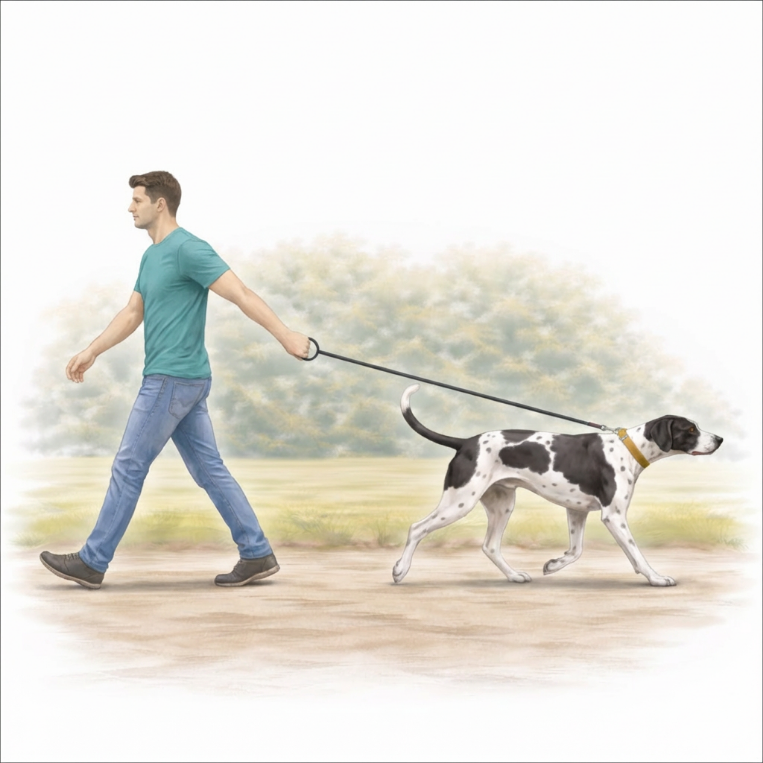
Leash Training Step 2: Changing Directions
To recap leash training step one, you have successfully exited the door and begun walking. At some point, your eager companion will likely surge ahead. When this happens, calmly stop, say “no” in your reassuring voice, and immediately turn back toward your starting point. This simple change-of-direction technique is one of the most effective leash training methods for teaching focus and respect.
As your dog returns to the proper walking position beside you, use a consistent marker phrase such as “right here”. If you already have your own preferred command, feel free to use it. The exact words matter less than your consistency and tone. Once your dog’s head is aligned near your waist, calmly praise them with “right here,” “good boy,” or “good girl.”
In the early stages of dog leash training, these correct-position moments may be brief. That is completely normal. Your dog is learning a new walking habit, not trying to sabotage your afternoon stroll. Over time, however, you do want to consistently acknowledge when your dog is in the proper heel position so they clearly understand what earns praise.
Ideally, your dog’s front legs should not move ahead of your front legs. The goal is a relaxed, loose-leash walk where your puppy or adult dog matches your pace instead of dragging you down the sidewalk like a sled dog in training. A tight leash usually signals that your dog is too far ahead and needs gentle redirection.
Most importantly, be patient and stay consistent. Loose-leash walking does take time to fully develop. In many cases, noticeable improvement comes within a few weeks, especially if you are walking your dog regularly and reinforcing good leash manners every time you head out.
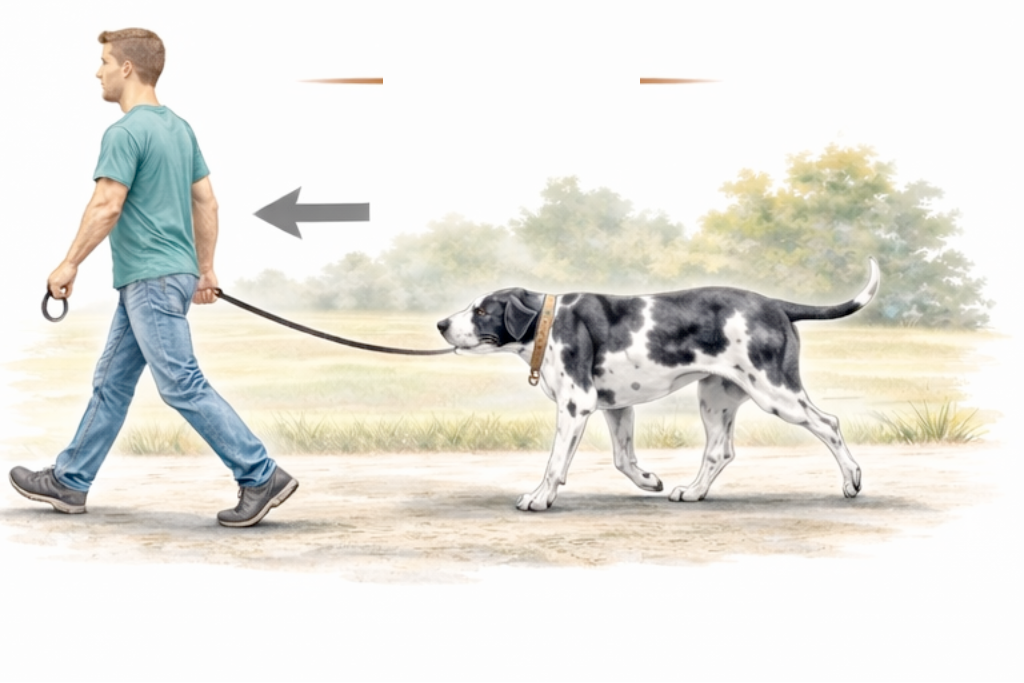
Leash Training Step 3: Building Focus and Consistency
To recap, you began your leash training journey by exiting calmly, your pup moved ahead, and you corrected the behavior by turning and walking the opposite direction. Now your dog is briefly following your lead, which is exactly the progress we want to see. However, this stage is where consistency and communication become especially important.
As you continue walking, make a habit of calmly talking to your dog. Dogs quickly become familiar with their owner’s voice, and hearing you regularly helps keep their attention anchored to you instead of every moving object in the neighborhood. Because Great Danes and other large breeds can become easily distracted outdoors, your steady, reassuring voice becomes a powerful training tool.
At the same time, always stay alert for common distractions such as cats, other dogs, squirrels, or sudden noises. When your dog begins to lock onto something inappropriate, calmly use your correction phrase. For example, I often say “that’s not for you” in a calm but clear tone. Remember, your dog is already excited just to be outside, so your job is to provide calm guidance, not more stimulation.
When your pup inevitably passes you again, simply repeat the process: say “no” and turn to walk the other direction. Especially in the early stages of leash training, you may only make it a few houses down the street before turning multiple times. Yes, your neighbors may wonder what on earth you are doing. Stay the course. This repetition is extremely important because your dog is learning a simple rule: if they do not follow your lead, the walk does not continue forward.
To keep your dog mentally engaged, continue talking to them and occasionally mix in obedience commands such as sit. This helps break up the routine and reinforces that walks are structured training time, not just free-for-all excitement.
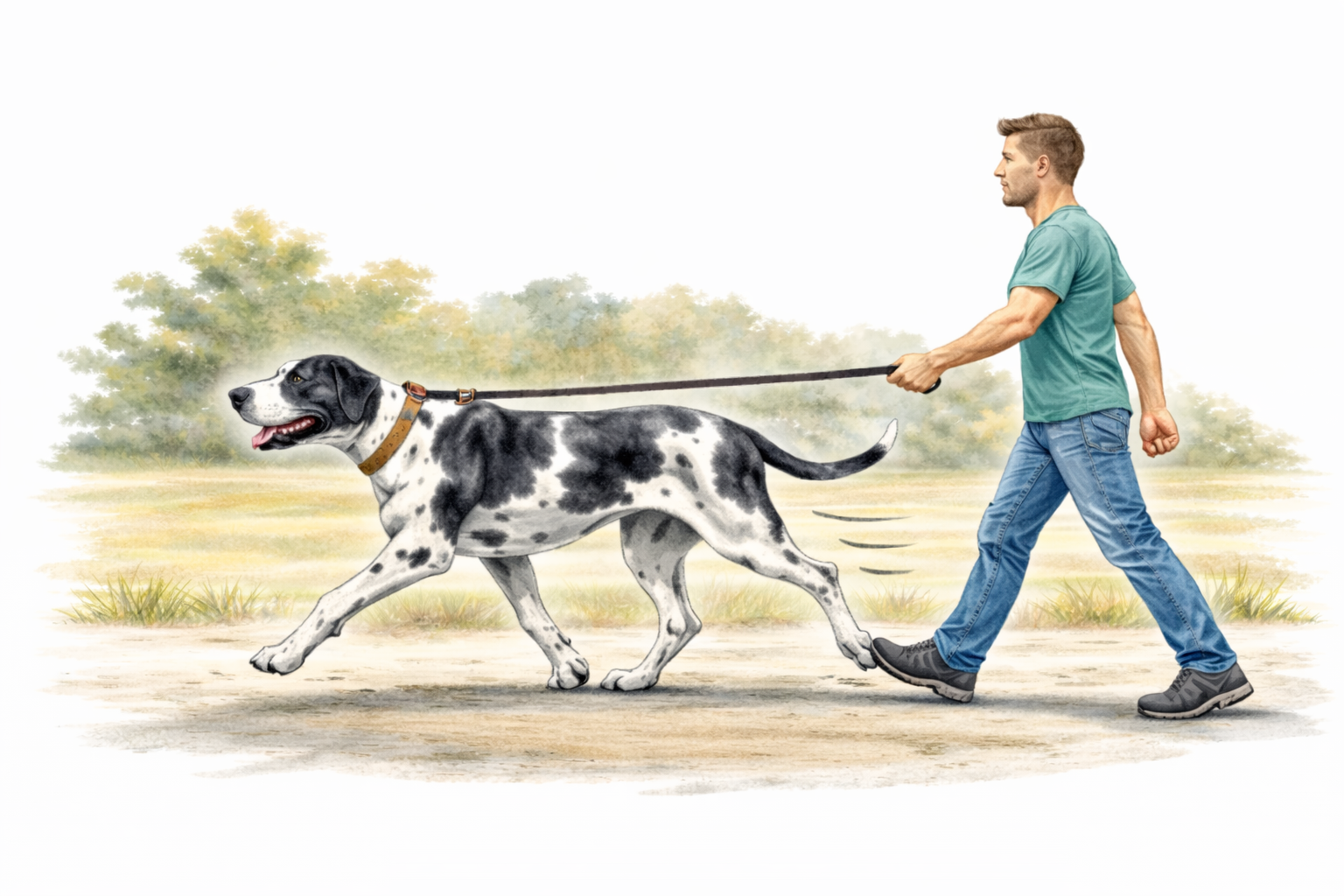
Leash Training Step 4: Introducing Treat Rewards
To recap, you and your best friend (BF) have begun your structured walk. As expected, your dog may still surge ahead from time to time. When that happens, you calmly turn and walk the opposite direction, and your pup begins following again. However, at this stage of leash training, we can introduce a powerful motivator: high-value treats.
Pup-peroni Sticks
Effective dog training almost always improves when positive rewards are added. Therefore, now is the perfect time to begin reinforcing proper loose-leash walking with treats. Personally, I like to use Pup-Peroni sticks because they have a strong smell that quickly grabs a dog’s attention. I simply break the sticks into small, bite-sized pieces and carry them in my training pouch along with my dog bags and clicker.
As your leash training walks start getting longer, you can begin what I call “dangling the carrot.” In other words, take three to four small treat pieces and hold your hand naturally at your side. When your dog walks calmly beside you in the “right here” position, immediately praise them and deliver one treat.
Harley
At first, many dogs (and yes, even well-trained Great Danes like Harley) will become extremely focused on your treat hand. That is perfectly fine in the beginning stages. Continue rewarding one treat at a time rather than giving them all at once. This method extends the amount of time your dog remains in the correct heel position and reinforces the behavior you want.
Over time, your dog will learn to keep their head aligned near your waist, which naturally keeps their feet from moving ahead of yours. Eventually, you will run out of treats during the walk, and your dog may begin to drift forward again. However, this is where your earlier work pays off. When you calmly say “right here,” most dogs will begin slowing down and returning to position.
How Long Do We Train
For best results, aim for about 20 minutes per session, three to four times per week, or more if your schedule allows. With consistent practice, most dogs begin showing noticeable improvement within just a few days. Before long, your pup will walk farther and farther beside you without needing frequent stops or direction changes.
Once you reach the stage where you are consistently incorporating treats into your leash training routine, you will notice your walks becoming longer, calmer, and far more productive. With continued consistency, your dog will quickly understand exactly where they are supposed to be during your walks.
Final Leash Training Notes
Final Leash Training Notes: Stay Calm and Stay Consistent
Above all, successful Great Dane leash training comes down to two simple principles: stay calm and stay consistent. In the ongoing battle between walking your dog and being walked by your dog, consistency almost always wins. Your tone, your timing, and your patience matter far more than physical strength.
Buster
I was reminded of this years ago when my parents were caring for a rescue Great Dane named Buster. He was extremely fearful and had very little leash experience. One afternoon at the soccer fields, as I was approaching with Hope (RIP), Buster became startled and tried to bolt. My dad instinctively pulled back on the leash while Buster pulled the opposite direction. Unfortunately, the hardware failed, and suddenly there was a 162-pound harlequin Great Dane joyfully sprinting through youth soccer practice.
While Buster was having the time of his life, my parents were understandably mortified. It took nearly 20 minutes to regain control. And yes, in true Great Dane fashion, Buster even stopped mid-adventure to leave an unforgettable “souvenir” on one of the practice fields. Funny in hindsight… less funny in the moment.
However, the lesson was clear. Instead of pulling against Buster, the better approach would have been to briefly move with him, then calmly turn and guide him the direction we wanted to go. During loose-leash training, your dog will not always immediately follow your lead. Sometimes you must give a few steps, then redirect. This is not losing. This is smart handling.
At times, leash training can feel like a battle of wills. That is completely normal, especially with powerful breeds like Great Danes. Nevertheless, staying calm is absolutely critical. If you become angry, loud, or frustrated, your dog will become more anxious and far less responsive. Calm leadership builds trust. Tension builds resistance.
Zoey
Once your dog is reliably walking on leash in quiet areas, begin gradually introducing busier environments. For example, Zoey used to be very nervous around crowds. To build her confidence, I regularly walked her near soccer practices and games. Whenever she stiffened or started to pull, we simply turned, walked a few steps away, and then calmly redirected back toward the crowd while I continued speaking to her in a reassuring voice.
Max
The same principle applies in many everyday situations. Max, my mom’s 200-pound Great Dane, occasionally decides he does not want to enter the vet’s office. Instead of forcing the issue, we calmly walk a few steps away, reset, and try again. Often by the third or fourth gentle redirect, he willingly moves forward. This is how effective dog leash training works in the real world.
Ultimately, once you understand the fundamentals of leash training, you will begin to see how these calm redirection techniques apply to many different situations in your dog’s life. That is exactly why it is so important to introduce the leash early in puppyhood. The sooner your dog learns to follow your calm, confident guidance, the smoother your walks — and your daily life together — will become.
Try for Four Training Sessions a Week
More Great Dane Training Reads
Calming Routines That Actually Work
Simple structure, white noise, and enrichment that helps sensitive Danes settle.
Read article →
Puppy Exercise (Joint-Safe)
How to burn energy without damaging growing joints.
Read guide →
Traction Zones to Prevent Slips
Home setup changes that reduce fear, falls, and injuries.
Read more →