Bloat (GDV) in Dogs: The Emergency Every Great Dane Owner Must Understand
Applies to: Great Danes (highest risk), other giant and large deep-chested breeds, and some medium breeds. This page is general education for Great Dane Bloat Prevention and not a substitute for veterinary care.
🐾 5 Steps That May Help Prevent Great Dane Bloat
Bloat (GDV) is one of the most serious health risks for Great Danes. Although no method can completely prevent bloat, following safe feeding and exercise habits can significantly reduce the risk. Below are five simple steps many Great Dane owners use to help protect their dogs.
Step 1 – Feed Multiple Smaller Meals
Instead of feeding one large meal per day, divide your Great Dane’s food into two or three smaller meals. This helps reduce the amount of food and air consumed at one time, which may lower the risk of stomach expansion.
Step 2 – Avoid Exercise Right Before or After Meals
Allow your Great Dane to rest before and after eating. Many veterinarians recommend waiting at least one hour before exercise and one to two hours after meals before engaging in activity.
Step 3 – Use Slow Feeding Bowls
Some dogs eat extremely fast, which can cause them to swallow excess air. Slow feeder bowls help pace your dog’s eating and encourage safer feeding habits.
Step 4 – Keep Water Intake Moderate During Meals
Large amounts of water consumed immediately after eating may contribute to stomach expansion. Instead, allow small amounts of water and encourage normal drinking throughout the day.
Step 5 – Reduce Stress During Feeding
Finally, create a calm feeding environment. Dogs that eat while anxious, competing with other dogs, or under stress may gulp food more quickly, which can increase the risk of bloat.
Preventative & Medications Guide
Learn daily routines, supplements, and vet conversations that may help reduce GDV risk in Great Danes.
Visit Preventative & Medications →Real Story: Titan’s GDV
A real owner experience that shows how fast GDV can escalate.
Read Titan’s Story →Not Ready Yet?
If you’re still converting pages and want consistency, use the site’s universal placeholder.
Under Construction →What Is Bloat (GDV)?
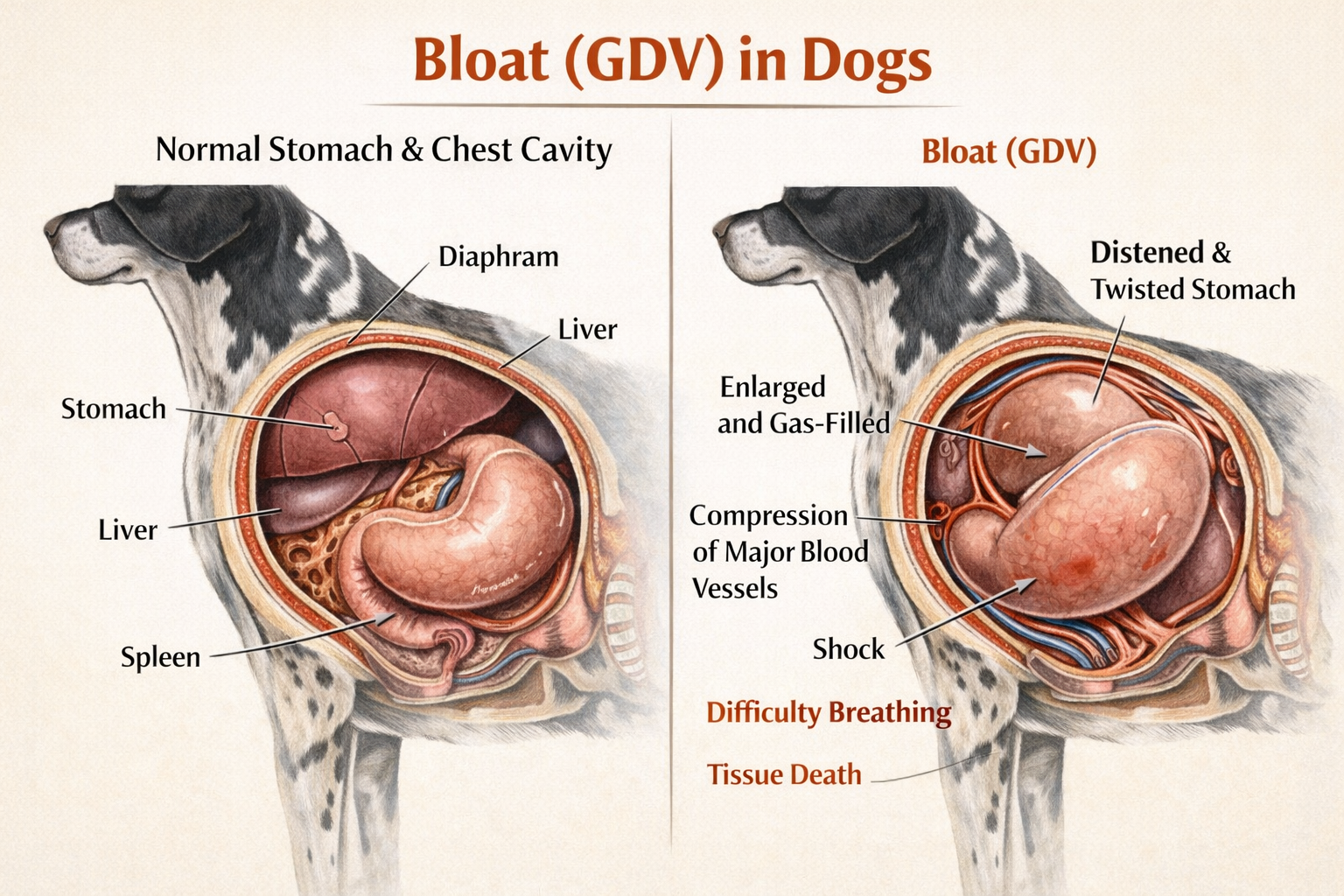
When people say a dog “bloated,” they’re usually talking about Gastric Dilatation-Volvulus (GDV). In GDV, the dog’s stomach fills with gas, food, or fluid and becomes severely distended. Then, in many cases, it twists on itself so nothing can get in or out. Blood flow is cut off, the dog can go into shock, and without treatment, GDV is often fatal.
Great Danes are one of the breeds at the very highest risk, with some estimates suggesting a lifetime risk around one-third for the breed. Deep-chested, large and giant dogs are most vulnerable, but any dog can develop GDV.
There are ways to help prevent bloat in Great Danes. Every owner should research bloat prevention and not just here on this site. Check other sites as well and make sure you completely understand this disease.
Emergency Signs of Bloat You Should Never Ignore
GDV usually comes on suddenly. A dog can seem completely normal earlier in the day and critical a few hours later. Common warning signs include:
- Trying to vomit or retch but nothing (or only foam) comes up
- Swollen, tight, or “drum-like” belly
- Restlessness, pacing, or extreme discomfort
- Heavy panting, drooling, anxiety
- Pale gums, rapid heart rate, weakness, collapse
If you ever suspect bloat, do not wait. This is a true “drop everything and go to the emergency vet” situation.
What Vets Do for Bloat (GDV)
At the clinic, the team will stabilize your dog with IV fluids, pain relief, and decompression of the stomach. X-rays are usually taken to confirm whether the stomach has twisted. GDV almost always requires emergency surgery to untwist and reposition the stomach, check for damaged tissue, and attach the stomach to the body wall to help prevent it from twisting again.
Even with fast treatment, GDV is serious. Survival rates are much better when treatment is started early and when a gastropexy (stomach tacking) is done during surgery.
Which Dogs Are at Higher Risk?
Any dog can technically get bloat, but risk is highest in:
- Large and giant deep-chested breeds – especially Great Danes, Weimaraners, St. Bernards, Irish Setters, Standard Poodles, Irish Wolfhounds, German Shepherds and others
- Dogs with a close relative that had GDV
- Dogs who eat one large meal per day or eat very quickly
- Dogs who are underweight, anxious, or stressed
Great Danes are one of the highest-risk breeds on the planet for GDV, which is why many Great Dane owners and veterinarians take bloat prevention extremely seriously.
Can Bloat Be Prevented?
Nothing can guarantee your dog will never bloat, but there are two main categories of prevention: everyday habits and stomach-tacking surgery.
1) Everyday Habits That May Reduce Risk
- Feed two or more smaller meals per day instead of one large meal.
- Avoid rapid “vacuum” style eating – use slow-feeder bowls or puzzle feeders if needed.
- Avoid heavy exercise right before and right after meals.
- Limit rapid gulping of large amounts of water immediately around mealtimes.
- Work on reducing overall anxiety and stress, which may be linked to higher GDV risk.
2) Gastropexy (“Stomach Stapling”)
For high-risk breeds like Great Danes, many veterinarians recommend a preventive surgery called a gastropexy that permanently attaches part of the stomach to the body wall so it’s much less likely to twist.
- Does not stop stomach distension (gas buildup), but greatly reduces deadly twisting.
- Often done at spay/neuter or after a GDV survival event.
- Open or minimally invasive techniques may be available.
Want more prevention detail? Visit:
Preventative & Medications Guide →Great Dane Bloat Prevention Tools
No product can “prevent” bloat, but some tools make safer habits much easier for you and your dog.
- Slow-feeder bowls or puzzle feeders for dogs that inhale meals
- Sturdy raised stands (only if recommended by your vet, since research is mixed)
- Timer-based feeders to split one big meal into several smaller ones
- Comfortable crates or quiet areas for calm, stress-free mealtimes
Some product links on this site may be affiliate links. If you buy through them, this site may earn a small commission at no extra cost to you.
Great Dane Bloat Prevention Right Now
- Learn the emergency signs above and share them with everyone in your household.
- Talk to your vet about your dog’s specific risk level and whether a preventive gastropexy makes sense.
- Adjust feeding routines so meals are smaller, calmer, and less rushed.
- Have a 24/7 emergency clinic identified before you ever need it.
Knowing what GDV looks like, how fast it moves, and what options exist to reduce risk gives you something important back: a little bit of control.