Nutrition
This is what I’ve actually fed my Danes, and how I think about Great Dane nutrition at each life stage.
Puppy Feeding (0–24 months)
Slow, steady growth, correct calcium and phosphorus balance, and multiple meals per day.
Go to Puppy Nutrition →Bloat (GDV) & Feeding Habits
Danes are high-risk. Meal size, speed, and exercise timing matter more than most owners realize.
Go to Bloat Section →Fresh Food Topper (JFFD)
How I use JustFoodForDogs alongside a high-quality kibble, or sometimes as a full diet.
See JFFD Meals →Great Dane Nutritional Guide
Great Danes are giant-breed dogs with unique nutrition needs. Their rapid growth, tall frames, and higher risk for conditions like bloat (gastric dilatation-volvulus) make careful feeding essential.
The right food, fed in the right amounts and on the right schedule, supports joint health, digestion, and energy while reducing the risk of serious issues. This guide breaks down Great Dane nutrition by life stage so you can feed your Dane with more confidence.
Key Nutritional Needs
- Controlled calories to avoid rapid weight gain and extra stress on joints.
- Balanced calcium & phosphorus for proper bone growth, especially in puppies.
- High-quality protein for muscle maintenance without excess fat.
- Healthy fats for skin, coat, and steady energy.
- Digestive support like fiber, probiotics, or gentler ingredients for sensitive stomachs.
- Joint support such as glucosamine and chondroitin in adult and senior diets.
Tip: Keep your Dane on the lean side of normal. You should be able to feel ribs easily under a thin layer of fat.
Puppy Nutrition (up to ~18–24 months)
Great Dane puppies are still building the frame they’ll use for life. Overfeeding or using the wrong food can increase the risk of orthopedic problems and worsen issues like hip dysplasia.
- Feed a giant-breed puppy formula with controlled calcium and phosphorus.
- Avoid extra calcium supplements unless your vet specifically recommends them.
- Choose moderate calories. Slow, steady growth is the goal, not bigger faster.
- Use multiple meals per day to help limit bloat risk and keep energy more balanced.
Many Danes don’t fully mature until close to 2 years old, so “puppy” feeding guidelines often last longer than they do in smaller breeds.
Adult Nutrition (2–6 years)
Once growth plates are closed and your Dane has reached adult size, the goal shifts to maintaining a lean, strong body and supporting joints for the long haul.
- Select a high-quality large- or giant-breed adult formula with moderate calories.
- Watch body condition monthly and adjust portions if ribs disappear or the waistline vanishes.
- Feed at least two meals per day to help lower bloat risk.
- Consider joint-supportive formulas or supplements if your Dane is very active or already has issues.
Senior Danes (6+ years)
Senior Great Danes often need fewer calories but more support for joints, digestion, and heart health.
- Use lower-calorie or healthy-weight formulas if your dog is slowing down.
- Prioritize joint support, heart health, and easy digestion.
- Add probiotics or digestive support if your vet recommends them.
- Keep meals smaller and more frequent if your senior Dane is gassy or prone to stomach upset.
Special Considerations for Great Danes
Bloat (Gastric Dilatation-Volvulus)
Bloat (GDV) is a life-threatening emergency where the stomach fills with gas and may twist on itself. Great Danes are one of the highest-risk breeds.
Understanding Bloat: Why Eating Too Fast Is Dangerous
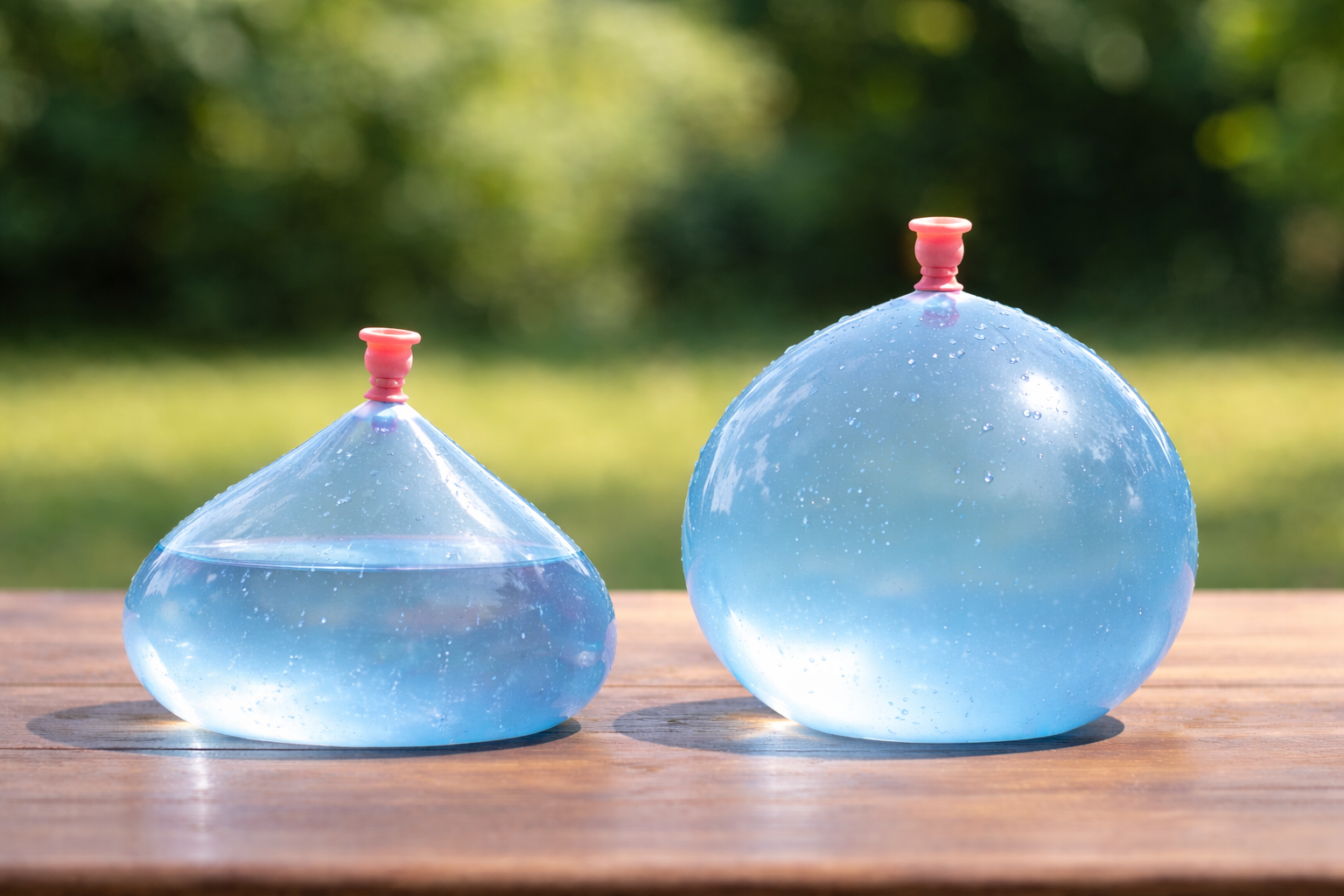
Imagine your dog’s stomach like a balloon filled with water. One balloon is completely full, stretched tight and unstable. The other is about three-quarters full, still flexible and controlled. That difference matters more than most people realize.
When a dog eats or drinks too quickly, they don’t just take in food—they also swallow a large amount of air. This can cause the stomach to expand rapidly, much like an overfilled balloon. In this state, the stomach becomes tight, heavy, and far more likely to shift or twist.
For large and deep-chested breeds like Great Danes, this is where the real danger begins. A full, gas-filled stomach is unstable, and even normal movement—running, jumping, or playing—can increase the risk of the stomach twisting. When that happens, it can cut off blood flow and quickly become a life-threatening emergency.
On the other hand, a stomach that isn’t overfilled is far less likely to twist. Slower eating means less swallowed air, less pressure, and a more stable digestive system overall.
This is why it’s important to allow your dog to rest before and after meals and avoid intense activity during that window. If your dog tends to be very gassy or eats quickly, a slow feeder can help reduce how much air they swallow, supporting safer, healthier digestion.
Preventive Surgery – Gastropexy (Stomach Tacking)
What Is Gastropexy and Why It Matters for Bloat Prevention
Gastropexy: Added Protection, Not a Free Pass
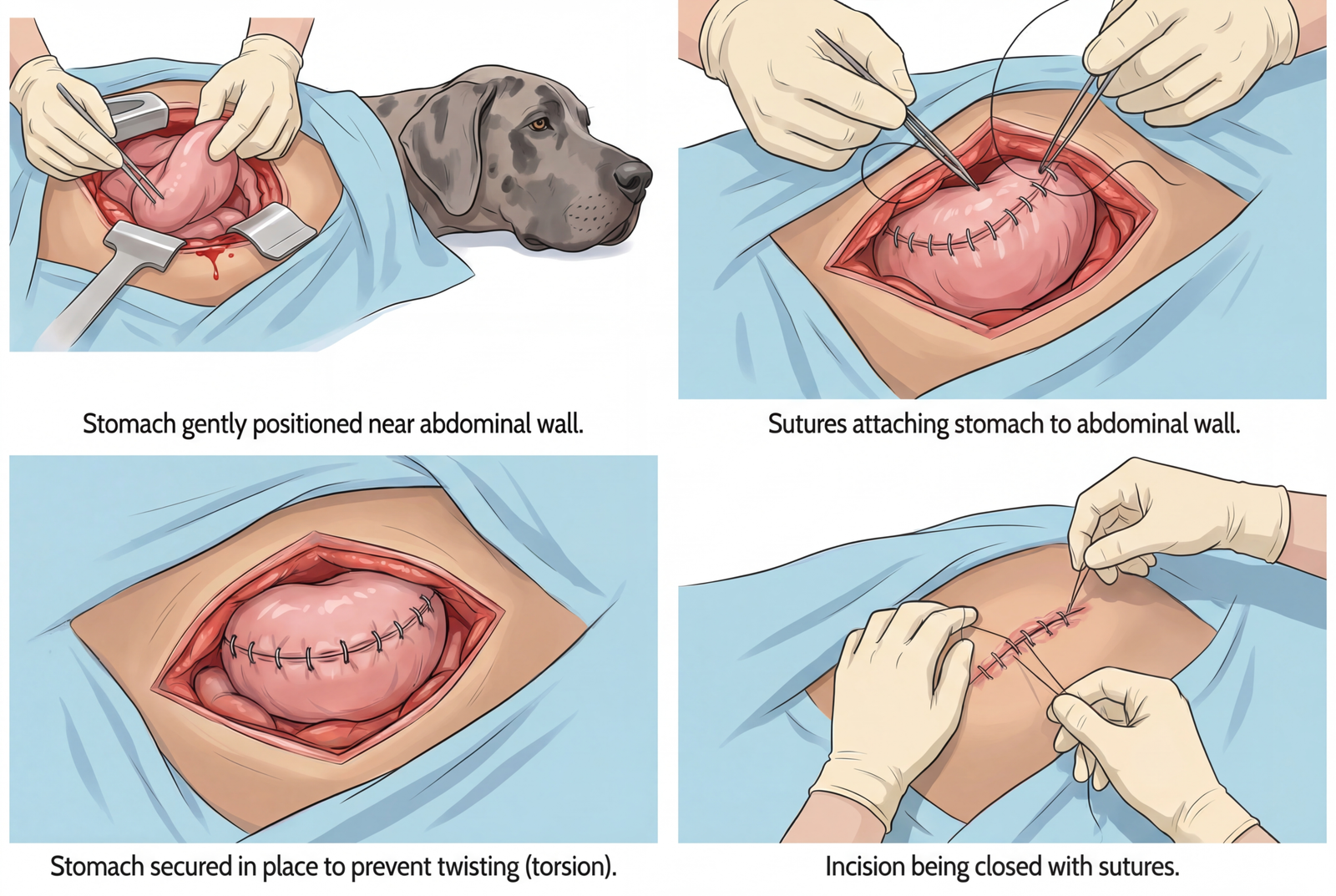
Gastropexy is a preventive surgery where a veterinarian attaches the stomach to the abdominal wall to help prevent it from twisting. This is especially important for deep-chested breeds like Great Danes, who are at a much higher risk for bloat (GDV).
Think of it as anchoring the stomach in place. Without that support, a full stomach has more freedom to shift and rotate inside the body. By securing it, gastropexy greatly reduces the chances of a dangerous twist occurring.
However, while gastropexy significantly lowers the risk of a life-threatening twist, it does not stop the stomach from filling with gas. In other words, your dog can still experience bloating—it just helps prevent the worst-case scenario where the stomach flips and cuts off blood flow.
That’s why daily habits still matter just as much as the surgery itself. When a dog eats or drinks too quickly, they can swallow excess air, causing the stomach to expand and become uncomfortable. Even without twisting, this pressure can still lead to distress and digestive issues.
Dogs should always be given time to rest before and after meals, and intense activity should be avoided during that window. Running, jumping, or rough play on a full stomach can increase stress on the digestive system, even in dogs who have had the procedure.
If your dog tends to inhale their food or is frequently gassy, using a slow feeder can help reduce gulping and limit how much air they take in during meals. Slowing down eating helps keep the stomach more stable and supports healthier digestion overall.
Sample Daily Feeding Plan (Adult Dane ~140 lbs)
Every dog is different, but this is a rough example of how I’ve fed my adult Danes. Adjust portions based on body condition, activity level, and your vet’s advice.
- Breakfast: measured portion of large- or giant-breed kibble plus a fresh topper like JustFoodForDogs.
- Evening meal: kibble plus wet or fresh JustFoodForDogs recipe, split into a second meal.
- Optional: joint supplement or fish oil if your vet recommends it.
- Treats: count them into daily calories instead of piling them on top.
Always monitor weight every few weeks and adjust portions gradually. Sudden big changes can upset sensitive stomachs.
JustFoodForDogs Meals I Recommend
Fresh, gently cooked meals have been a great option for my Danes with sensitive stomachs. I use JustFoodForDogs as either a full diet or a topper alongside a high-quality kibble, depending on the dog.
Fresh Frozen Meals
A complete fresh-food option with simpler ingredients for dogs who do better on less processed meals.
Product Info
Fresh Frozen Human-Grade Dog Food
These meals use real meats and whole-food ingredients in gently cooked recipes designed to support digestion, energy, and long-term health.
Why I Like It
The ingredient lists are cleaner, the protein options are broader, and it can work well for Danes with touchy stomachs or picky appetites.
Best Use
Use it as a full meal, a topper, or a short-term reset when your Dane needs something gentler and more appealing.
Affiliate link: I may earn a small commission at no extra cost to you.
Pantry Fresh Meals
A shelf-stable fresh-food option that is easier to store and useful for travel, backup meals, or transitions.
Product Info
Why It Helps
You get a fresh-food style option without needing freezer space, which makes it practical for busy households or backup feeding.
Good Fit For
Picky eaters, sensitive stomach dogs, and owners who want something easier to keep on hand.
Flexible Feeding
Works as a full meal or topper, depending on your dog and your budget.
Affiliate link: I may earn a small commission at no extra cost to you.
Digestive Support Option
A gentler formula designed for dogs who need simpler meals and steadier digestion.
Product Info
Best For
Loose stool, upset stomach, transition periods, or dogs who just do not handle richer formulas well.
Why Owners Like It
It gives you a more targeted option when your Dane’s stomach is clearly not happy and you need something easier to work with.
Affiliate link: I may earn a small commission at no extra cost to you.