Great Dane Puppy Care Guide
In this guide, you’ll learn the essential foundations of Great Dane puppy care, including nutrition, exercise, joint protection, training, and everyday comfort. With the right approach early on, your giant baby is far more likely to grow into a calm, confident, and healthy adult.
From tiny spotted potatoes to lanky teenagers, Great Dane puppies grow incredibly fast and, as a result, require thoughtful, structured care. Because of their rapid growth and sensitive joints, early habits matter more than most owners realize.
🐾 1 – Use a Calm Voice and Redirection
When it comes to Great Dane puppy care, one of the most important principles is maintaining a calm and patient approach. Although Great Danes are giant dogs, they are known for having very sensitive personalities.
Because of this, harsh corrections or yelling can easily intimidate them. If a puppy is constantly punished or corrected aggressively, these gentle giants may become nervous or fearful.
Instead, use a calm voice and focus on redirection during Great Dane puppy training. Guide your puppy toward the behavior you want rather than simply punishing the behavior you do not want. Over time, this builds trust and helps your Great Dane grow into a confident and well-mannered adult dog.
🐾 2 – Use an Indoor Lead for Better Control
Another helpful strategy for training Great Dane puppies is leaving a lightweight lead attached to your puppy while they are indoors. Typically, a short 5–6 foot lead works well for this purpose.
This simple tool makes redirection much easier. Instead of chasing your puppy or grabbing their collar, you can calmly guide them away from trouble and reinforce household boundaries.
Additionally, an indoor lead can prevent accidents and dangerous situations. For example, if someone opens a door unexpectedly, the lead allows you to quickly stop your puppy from running outside or into traffic.
🐾 3 – Avoid Overfeeding Your Great Dane Puppy
Proper nutrition plays a major role in healthy Great Dane puppy growth. Because Great Danes grow extremely fast, overfeeding can contribute to rapid growth that places unnecessary stress on developing joints and bones.
In many cases, excessive growth is linked to joint issues such as hip dysplasia and other skeletal conditions. For this reason, it is important to follow recommended feeding guidelines and avoid giving your puppy more food than necessary.
Maintaining balanced portions helps ensure your Great Dane grows at a steady, healthy pace.
🐾 4 – Create a Dedicated “Puppy Zone”
A Puppy Zone (PZ) is an essential part of successful Great Dane puppy care. This area serves as a safe and comfortable space where your puppy can rest, relax, and sleep.
Ideally, the Puppy Zone should remain available throughout the day so your dog has a quiet place to settle down whenever needed. It is also an excellent place for daytime naps and nighttime sleep routines.
Providing a consistent resting area helps reduce stress while also teaching your puppy healthy routines and boundaries.
🐾 5 – Avoid Too Much Exercise
Finally, it is important to remember that Great Dane puppies should not receive excessive exercise. Because their bones and joints are still developing, high-impact activity can cause injuries or long-term joint problems.
For this reason, avoid activities such as running on stairs, jumping off furniture, or excessive rough play. Instead, focus on short walks, gentle play sessions, and plenty of rest.
By monitoring activity levels and keeping exercise moderate, you help protect your puppy’s developing joints and support long-term health.
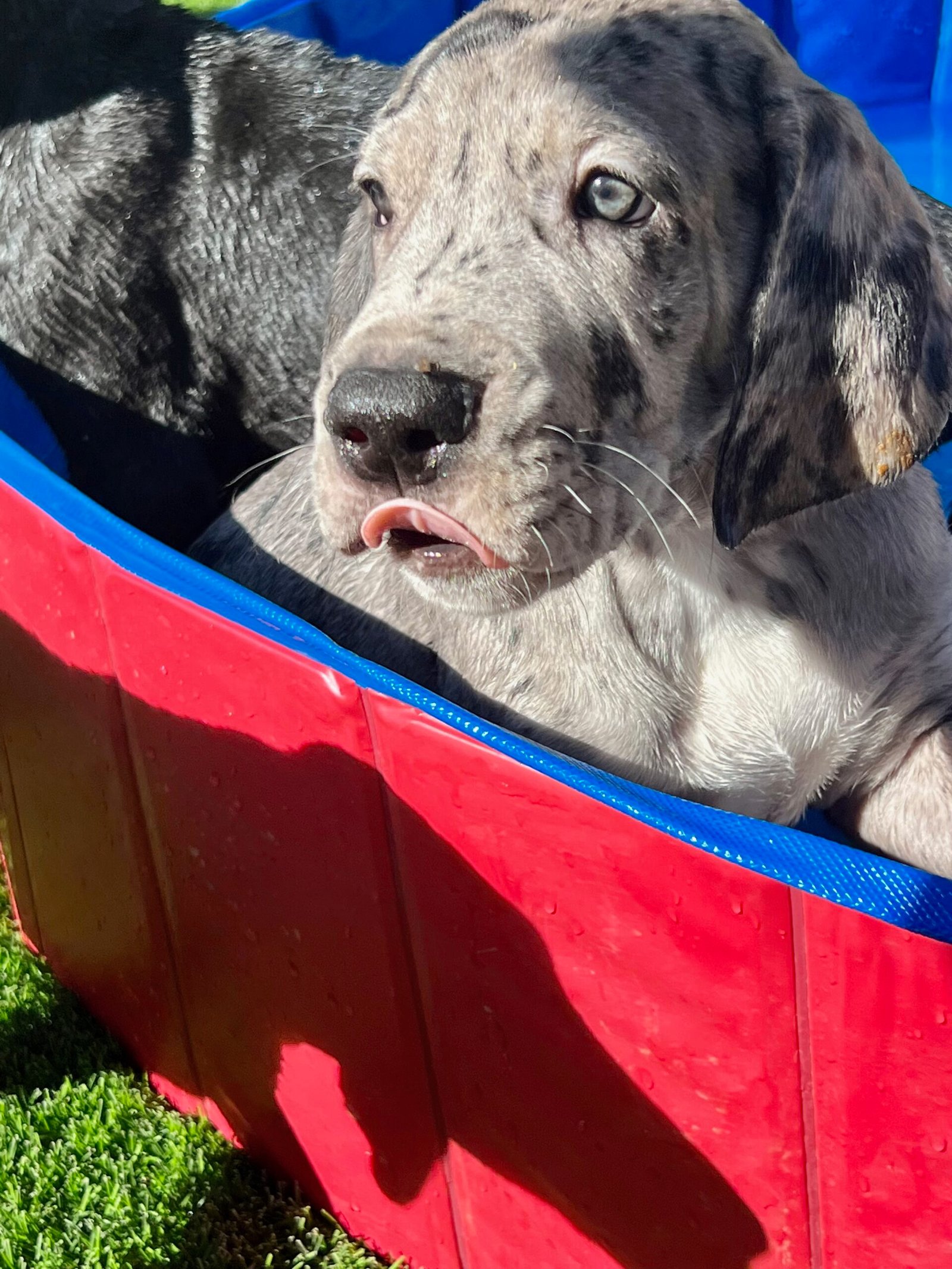
Nutrition for Giant-Breed Puppies
Steady growth, correct minerals, meal schedules, and treat choices that protect developing joints.
Read nutrition →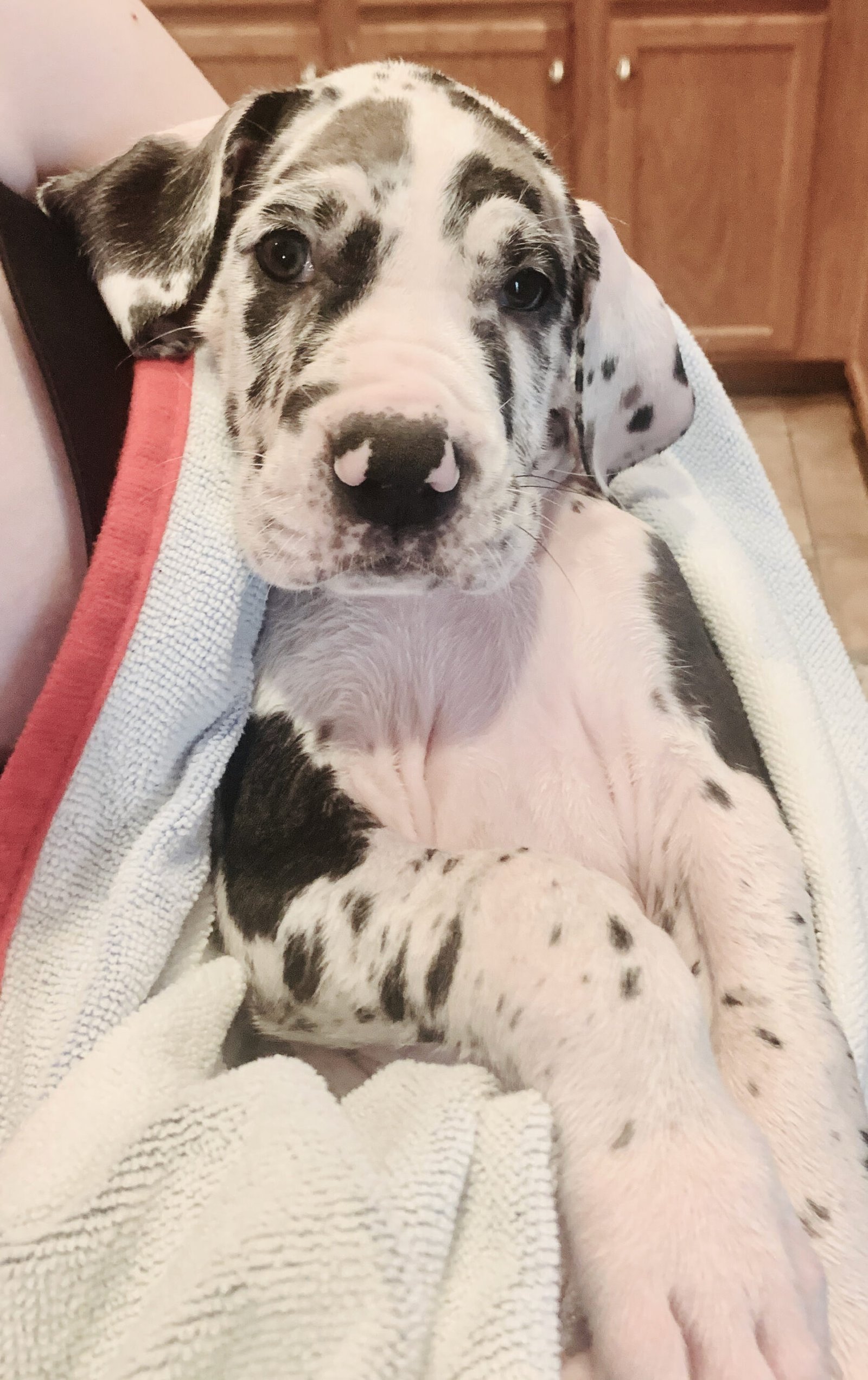
Growth & Safe Exercise
Short, controlled movement and low-impact routines that help protect open growth plates.
Read exercise →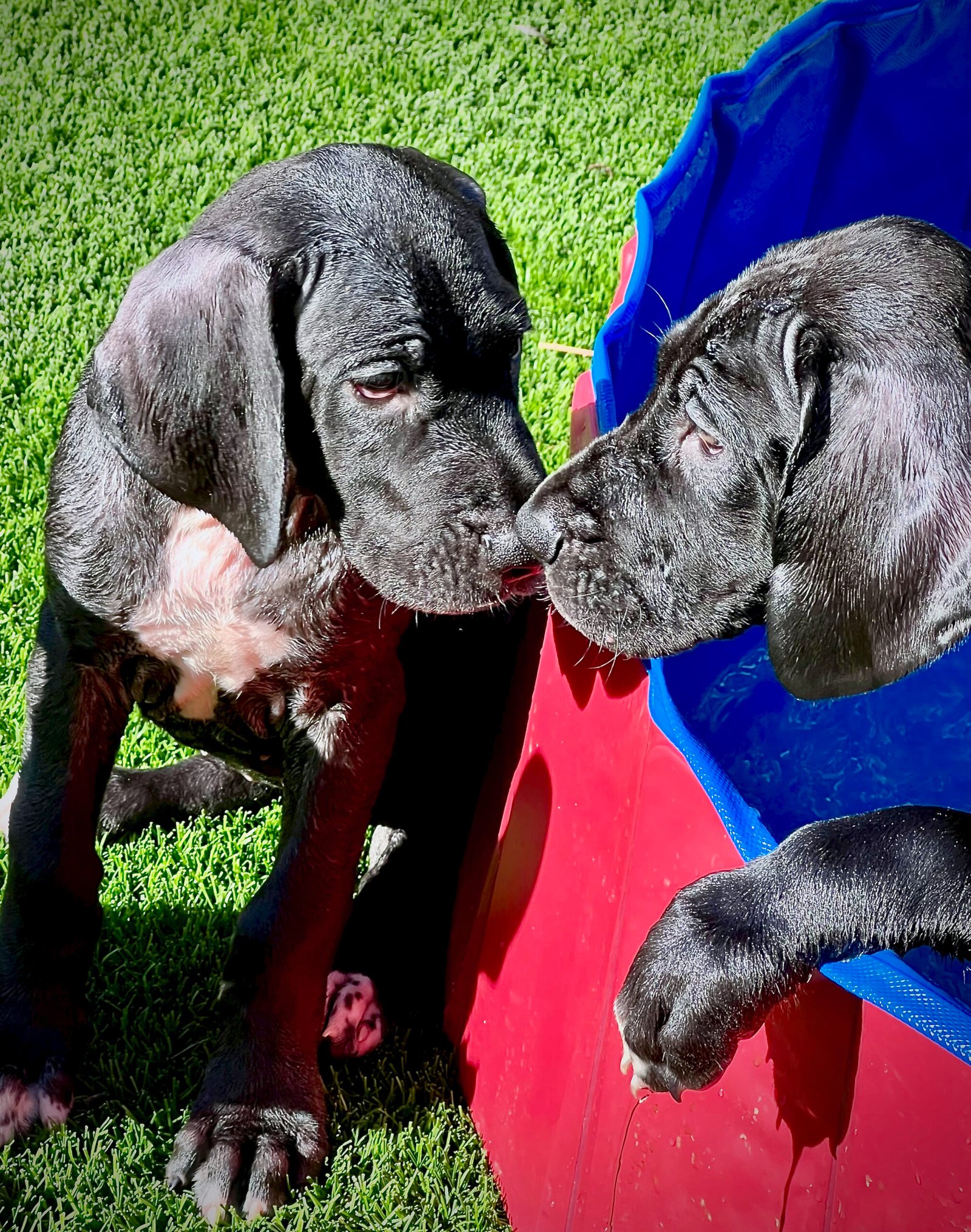
Training & Socialization
Positive reinforcement, confidence-building exposure, and early manners that truly matter.
Read training →1. Nutrition for Great Dane Puppies and other large breeds
Great Dane puppies are not simply oversized small-breed pups. Instead, they have very specific nutritional needs. Instead, they require food specifically designed for large and giant breed puppies so their bones, joints, and growth plates develop slowly and safely.
- Use a giant-breed puppy formula: Choose a reputable food labeled for large or giant breed puppies with controlled calories and minerals.
- Watch calcium and phosphorus: Too much calcium can contribute to skeletal problems, so avoid unnecessary supplements unless your vet recommends them.
- Follow a structured meal schedule:
- 8–12 weeks: 3–4 small meals per day
- 3–6 months: 3 meals per day
- 6+ months: transition to 2 meals per day
- Avoid rapid “puppy boosting”: Fast growth may look impressive online; however, it places unnecessary stress on developing joints.
- Keep treats limited: Ideally, treats should stay under 10% of daily calories and come from simple, quality ingredients.
For a deeper breakdown of foods and brands I actually use, visit the Great Dane nutrition guide →

Variety Pack – Puppy 18 oz (7 Pack)
Feeding plays a major role in both the short-term and long-term health of your puppy. Because Great Dane puppies grow so quickly, proper nutrition is a critical part of responsible Great Dane puppy care. When feeding is done correctly, it supports steady development, strong joints, and healthy overall growth.
JustFoodForDogs Puppy Variety Pack:
includes two fresh recipes: Chicken & Rice and Fish & Sweet Potato. While both formulas are complete and balanced for dogs of any age, they contain slightly higher calcium and phosphorus levels, which makes them especially suitable for growing puppies.
In addition, this starter pack works well for pregnant and lactating dogs, who often require significantly more calories during this demanding stage. Nursing females may need up to 2–4 times their normal food intake to maintain proper body condition.
100% Human-grade Ingredients
Made with 100% human-grade ingredients and real chicken thighs, these recipes contain no harsh chemicals, artificial additives, preservatives, or growth hormones. As a result, they are a solid option for owners who want a cleaner, minimally processed approach to Great Dane puppy nutrition.
JustFoodForDogs →Affiliate link: I may earn a small commission at no extra cost to you. If this guide helped you, using my links helps support MyGreatDane.org.

Purina ONE Large Breed Puppy Formula Dry Dog Food
Purina ONE Large Breed Puppy with Real Chicken has been a reliable staple in my Great Dane puppy care routine, especially during the fast-growth months when nutrition matters most. Because large and giant breed puppies develop differently than smaller dogs, choosing a formula designed specifically for growing joints and muscles is extremely important.
High-quality Protein
This recipe provides high-quality protein from real chicken along with balanced calcium and phosphorus levels to support steady, controlled growth. In addition, it includes DHA for brain and vision development, which is especially helpful during early puppy stages.
Widely Available
In my experience, this food is widely available and reasonably priced, making it a practical option for owners raising
Great Dane puppies on a consistent feeding schedule. However, I personally recommend purchasing from Tractor Supply,
Walmart, or trusted local pet and feed stores whenever possible to ensure freshness and proper storage conditions.
When stored and handled correctly, Purina ONE Large Breed Puppy can be a solid, budget-friendly foundation for
supporting healthy growth in Great Dane puppies.
Affiliate link: I may earn a small commission at no extra cost to you. If this guide helped you, using my links helps support MyGreatDane.org.
2. Great Dane Puppy Growth & Safe Exercise
Great Dane puppies are all legs and enthusiasm. However, their growth plates remain open much longer than those of smaller breeds. Because of this, it is especially critical to limit high-impact activity during the early months.
- Focus on short, controlled exercise: Frequent potty walks, gentle play, and brief leash walks work far better than long outings.
- Avoid high-impact activity: Repetitive jumping, long runs, hard-surface sprints, and excessive stair use should be limited.
- Choose joint-friendly surfaces: Grass, dirt, and rubber flooring are typically easier on developing joints than slick tile or concrete.
- Watch for overexertion: Limping, slowing down, or bunny-hopping in the rear should signal rest and, if persistent, a vet visit.
Protecting joints early can significantly reduce the severity of problems like hip and elbow dysplasia later in life.
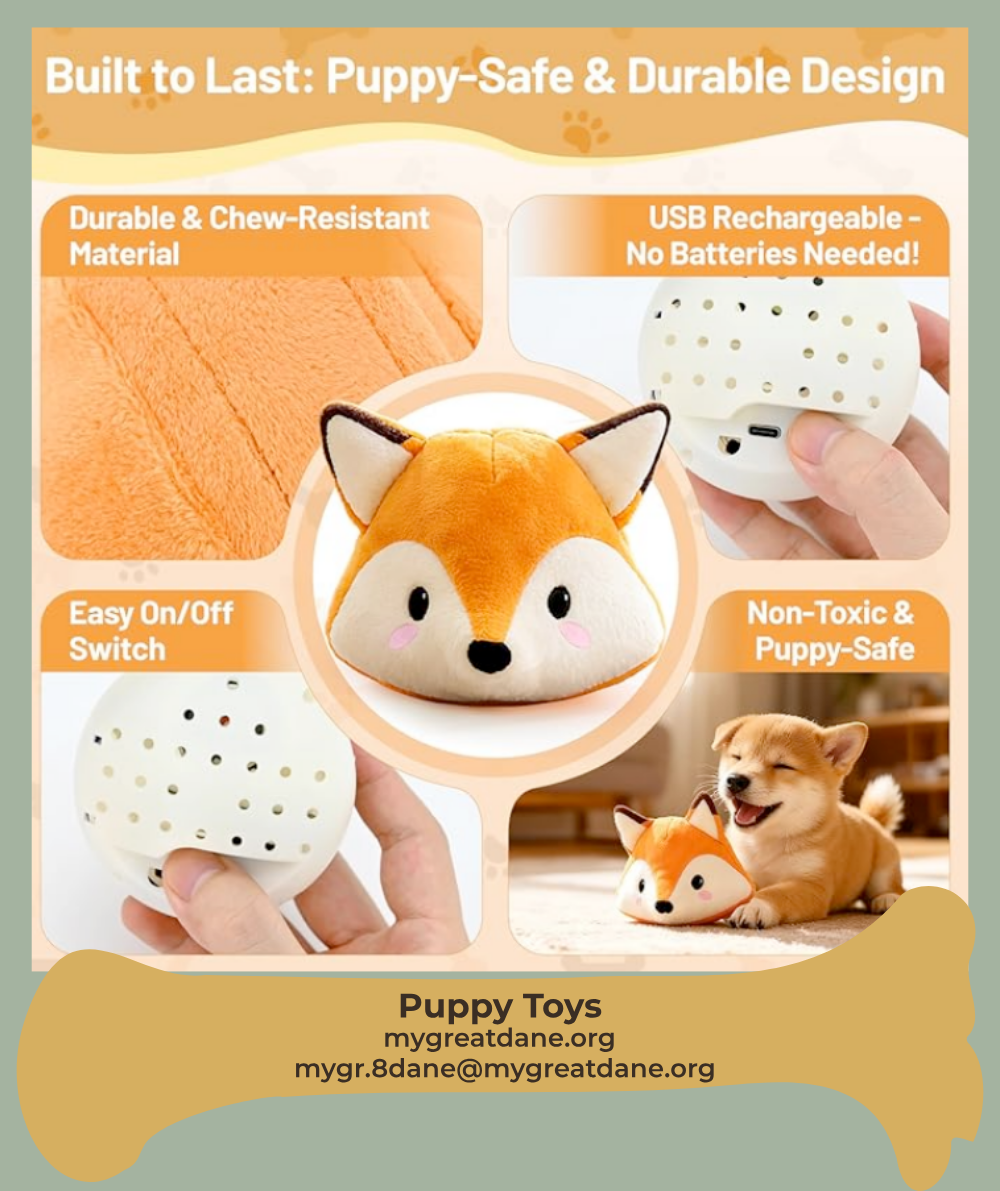
Movement That Grabs Puppy Attention
This interactive Foxy toy is a fun addition to a well-rounded Great Dane puppy care routine, especially for high-energy pups that struggle with boredom. Because the toy moves, bounces, and vibrates unpredictably, it naturally captures your puppy’s attention and encourages independent play when you’re busy or away.
More importantly, the unpredictable motion makes this toy especially useful for redirection training. If you redirect your puppy to this toy and it suddenly scoots or wiggles away, most curious puppies will immediately lock in and give chase. As a result, it can be a helpful tool for pulling focus away from shoes, furniture, or other off-limits targets.
Mental Stimulation and Energy Outlet
In addition, the built-in motion and sound features provide valuable mental stimulation, which can help reduce mild separation anxiety and discourage unwanted chewing behaviors. With a simple switch, the toy activates automatically, making it a convenient hands-free option for encouraging healthy play and light exercise throughout the day.
The rechargeable design eliminates the need for constant battery replacements. At the same time, the soft plush exterior is gentle on developing teeth and sensitive gums, which is important during the Great Dane puppy teething phase. For added engagement, treats can be placed inside the secure Velcro compartment, although it’s important to fully close the panel before play begins.
Surface Matters More Than You Think
One thing to keep in mind is your flooring. While I have used similar motion toys in the past, I have not personally tested this exact model. However, based on my experience with toys in this category, movement can sometimes be limited on thick carpet.
Generally, these types of interactive puppy toys perform best on smoother, firmer surfaces such as hardwood, tile, laminate, or low-pile rugs. That said, it may still work fine in your setup. I simply like to give a realistic heads-up so expectations match real-world conditions.
Important Durability Note
However, while this toy works well for most playful puppies, it is not designed for heavy or highly destructive chewers. When used appropriately and under supervision, though, it can be a helpful enrichment tool for keeping curious Great Dane puppies mentally engaged, physically active, and easier to redirect toward appropriate play.
View on Amazon →Affiliate link: I may earn a small commission at no extra cost to you. If this guide helped you, using my links helps support MyGreatDane.org.
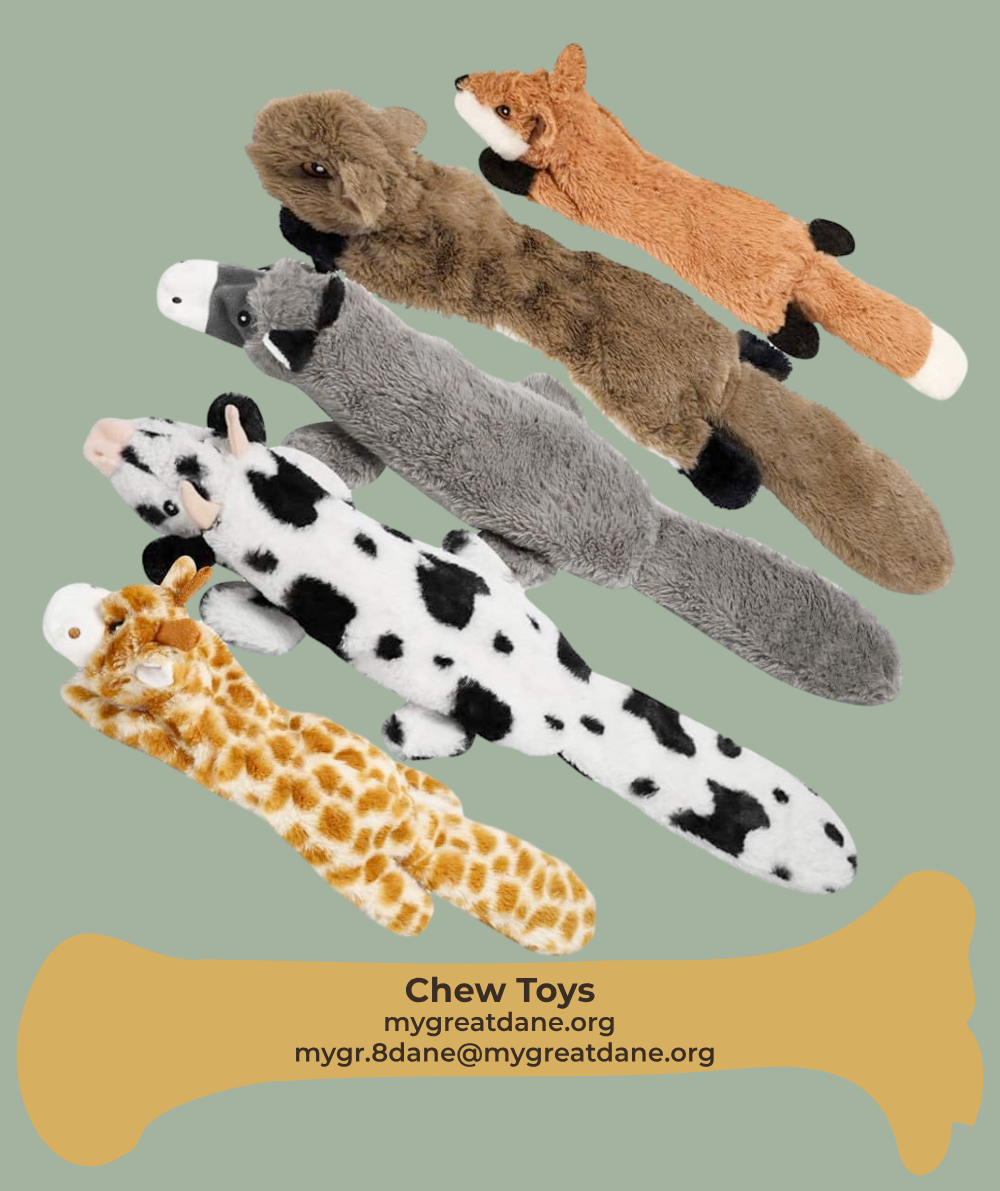
Dog Squeak Toys, No Stuffing Plush Dogs Chew Toy Bundle for Small Medium Large Breed Chewer Tough Durable Squeaky Pet Fetch Puppy Teething Chewing Interactive to Keep Them Busy Best Birthday Gift
Low-Mess Play for Great Dane Puppies
This stuffing-free plush squeaky toy bundle is a smart addition to any well-rounded Great Dane puppy care routine, especially for pups that need safe, low-mess play options. Because the toys are completely stuffing-free, they significantly reduce the usual fluff explosion that happens when enthusiastic puppies enter full destruction mode. As a result, cleanup is easier while playtime stays fun and engaging.
Designed to Keep Puppies Interested
In addition, each toy includes squeakers in both the head and tail, which helps capture your puppy’s attention and encourages healthy interactive play. The lightweight, floppy design makes the toys easy for Great Dane puppies to carry, toss, and shake. At the same time, the soft plush exterior is gentle on developing teeth and sensitive gums during the teething stage.
Helpful for Boredom and Redirection
Furthermore, rotating toys like these can help reduce boredom, ease mild separation stress, and support effective redirection training. When your puppy has an appropriate outlet for chewing and play, unwanted habits are much easier to manage. Over time, this helps build better daily behavior patterns inside the home.
Works Well with “Smells Like Success”
Because these toys are fabric-based and stuffing-free, they also work especially well with the “Smells Like Success” method. Simply allow the toy to absorb your scent (dirty laundry works great), and your puppy is often more motivated to choose the toy over your shoes, socks, or furniture.
Important Durability Note
However, while these toys are more durable than traditional stuffed plush options, they are not designed for extremely powerful or aggressive chewers. For most Great Dane puppies and moderate chewers, though, they provide a fun, safer, and far less messy play option.
Find on Amazon →Affiliate link: I may earn a small commission at no extra cost to you. If this guide helped you, using my links helps support MyGreatDane.org.
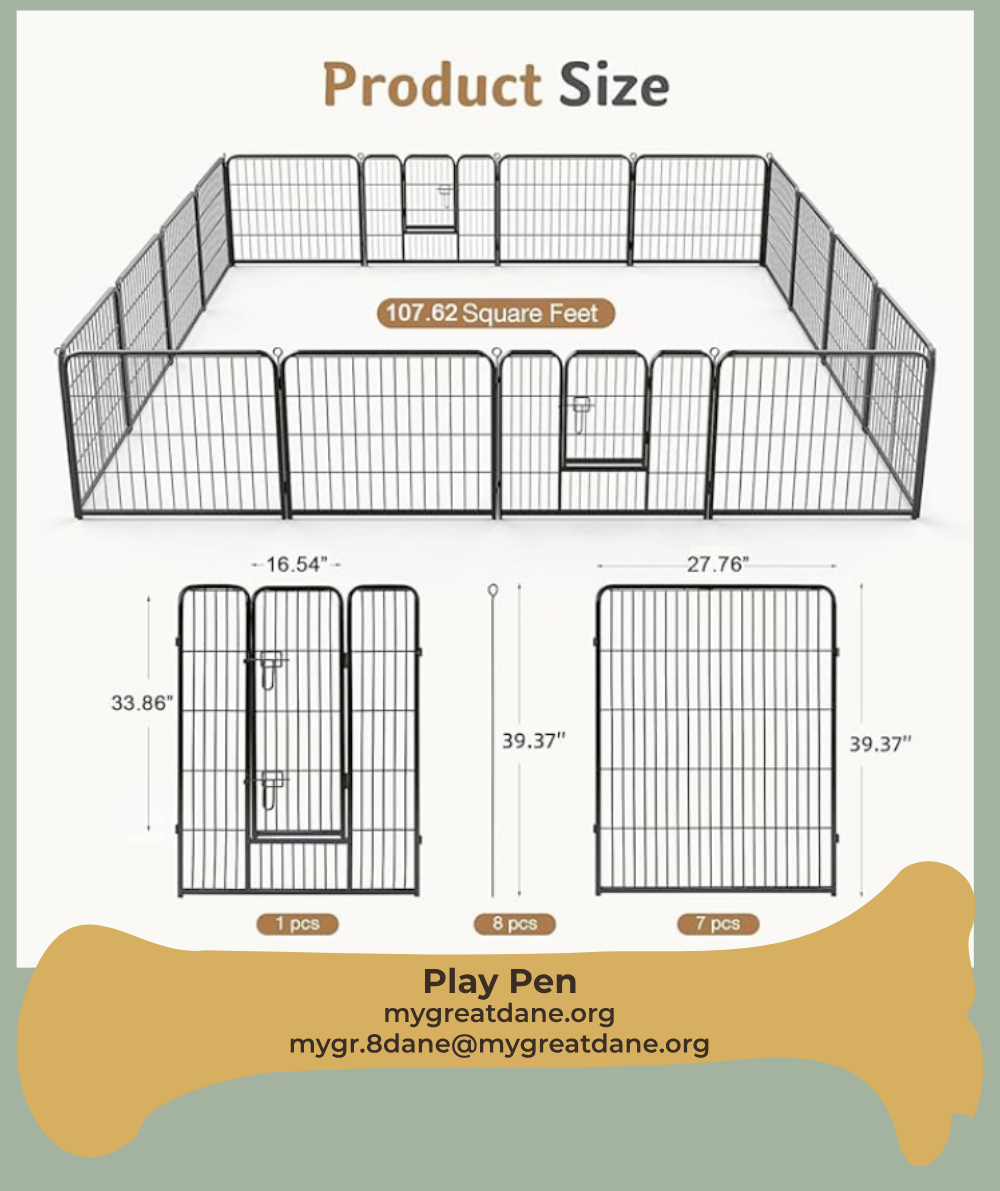
DUMOS Dog Playpen Indoor, Metal 40 Inch 16 Panels Foldable Pet Fence with Door, Outdoor Small Medium Large Dog Puppy Portable Exercise Play Pen for RV Camping, Trips, Play Yard
More Than An Exercise Pen
This exercise pen has been a reliable part of my Great Dane care routine for years, both when raising litters and managing my adult Danes today. Because of its sturdy metal frame and protective coating, it works well for both indoor and outdoor setups, including everyday home use, yard sectioning, camping, or RV trips.
Tallest Panels For Great Danes
In my experience, choosing the tallest height with additional panels is the way to go for Great Dane puppies. As a result, you get better containment during the day while still giving your pups room to move comfortably. It also works well for temporarily sectioning off part of the yard when you need a safe, controlled space.
Still Not Enough For Some Danes
That said, most of my Danes have respected the barrier without issue. However, my girl Zoey, who is extremely athletic and lightweight, has cleared it before. Therefore, while this pen works great for the majority of Danes, very agile jumpers may still test your security system.
Built-in Gate
One feature I especially like is the built-in gate, which makes it easy for you to step in and out without rearranging panels. Just as importantly, make sure the pins are fully secured through both the top and bottom holes during setup, otherwise, the pins will bend and it is super tough to get them back out.
This is A Must Have
Overall, this is a must-have tool for structured Great Dane puppy care and safe daily management. If you have a smaller breed, however, the taller panels are usually unnecessary, and a standard height will typically do the job.
Find On Amazon →Affiliate link: I may earn a small commission at no extra cost to you. If this guide helped you, using my links helps support MyGreatDane.org.
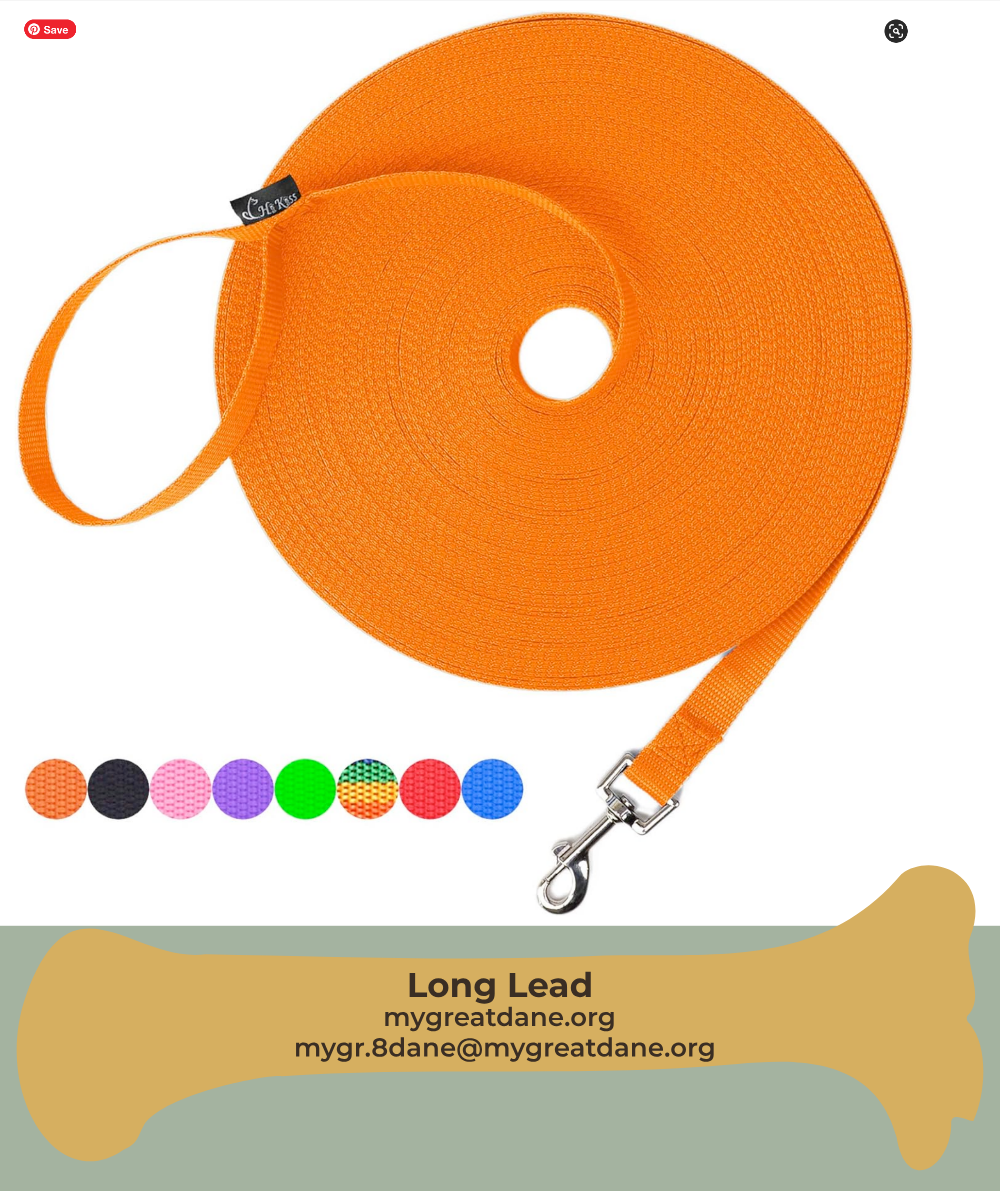
Hi Kiss Dog/Puppy Obedience Recall Training Agility Lead – 15ft 20ft 30ft 50ft 100ft Leash – Great for Play, Camping, or Backyard – Orange
This long lead is an excellent tool for teaching reliable recall and supporting consistent Great Dane puppy care. Because it gives your puppy safe freedom to wander, you can begin recall practice while still maintaining gentle control.
Recall
Start by calling your puppy in an upbeat, inviting voice. Whenever possible, try to encourage them back first by using happy
noises, arm movement, clapping, or even a whistle. Yes, you may feel a little ridiculous, but this positive energy is often
the fastest way to get a curious puppy moving toward you.
However, if your pup ignores your best performance, the long lead allows you to gently guide them back. Importantly, the goal
is to encourage, not drag. Keep the pressure light and supportive so your puppy builds confidence instead of resistance.
Always Praise When Your Puppy Returns
Most importantly, always reward the return with a small treat paired with generous praise and affection. Over time, this teaches your puppy that coming back to you is always a win.
Always Start Recall Training Inside
For best results, begin recall training indoors where distractions are minimal. Then, gradually work your way outside once
your puppy understands the game. Finally and always, never punish a puppy for returning, whether they came on their own or
with guidance. After all, if you were small and unsure, you wouldn’t run toward someone who sounded upset either.
Affiliate link: I may earn a small commission at no extra cost to you. If this guide helped you, using my links helps support MyGreatDane.org.
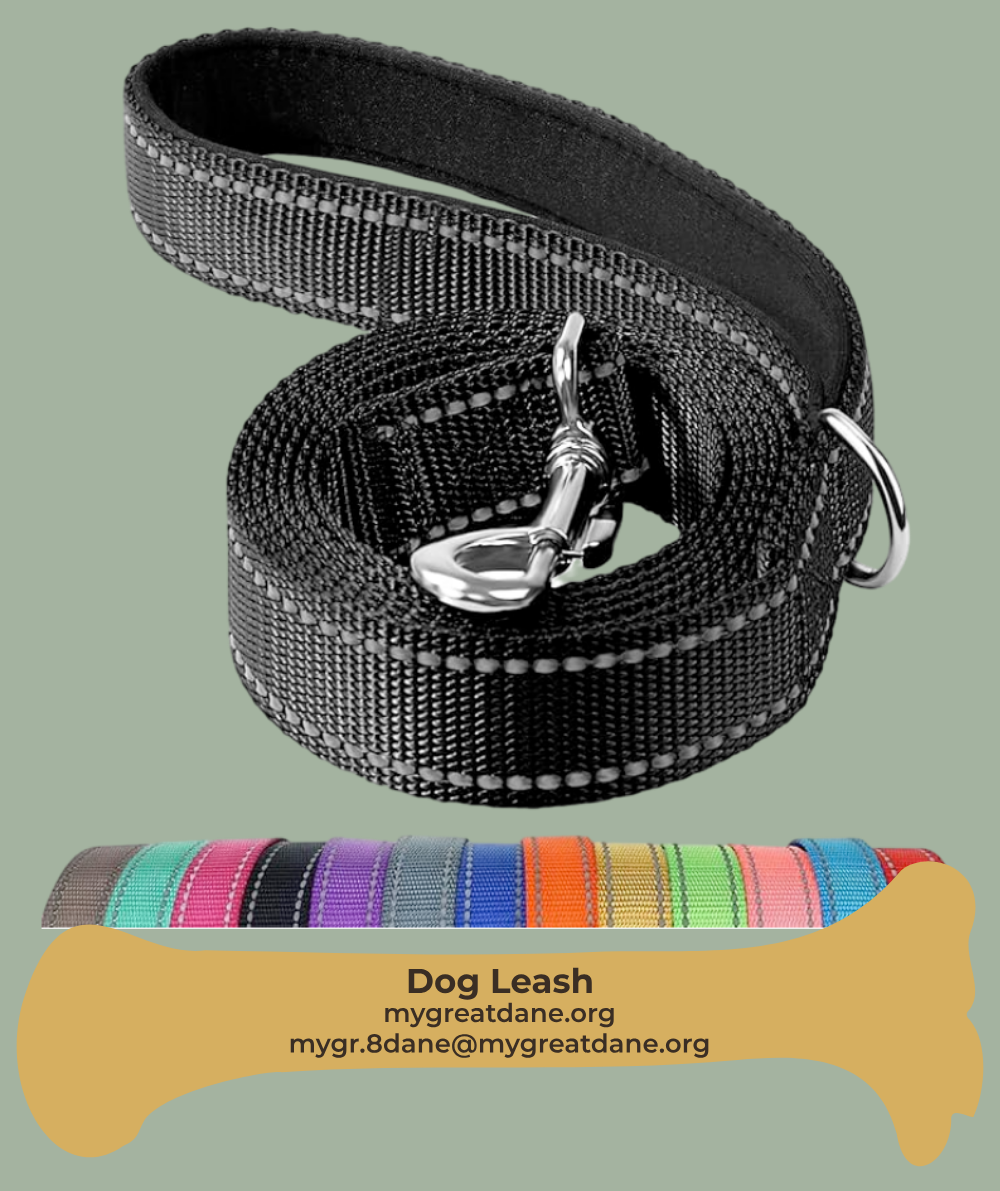
Joytale Dog Leash, 6 FT Double-Sided Reflective, Padded Handle Nylon Heavy Duty Leashes for Medium & Large Dogs Walking, Black
A six-foot lead is one of the most useful tools in everyday Great Dane puppy care, especially for indoor management, recall practice, and calm redirection. Because it keeps your puppy within reach, you can guide behavior the moment unwanted habits begin instead of reacting too late.
Redirection Using A Six-Foot Lead
When your puppy is inside, I strongly recommend keeping a lightweight six-foot lead attached during supervised time. As a
result, you can gently redirect at any moment without chasing, grabbing, or creating stress. The key here is gentle redirection.
Never jerk, pull, or drag your puppy. Instead, use the lead as a quiet guide to help them make better choices.
Just as importantly, redirection only works when you provide a clear alternative. For example, if your puppy heads into
a restricted room, calmly guide them back to the correct area. Likewise, if they grab a shoe or power cord, redirect them
immediately to an appropriate chew toy. Over time, this consistent pattern teaches your puppy what to do, not just what to avoid.
Always follow successful redirection with calm praise and affection. This reinforces the correct behavior and builds confidence
in the learning process.
Cautionary Advice
I’ve seen firsthand how quickly puppies can make dangerous decisions. Years ago, my boss’s young dog slipped out the door, ran
straight into the road, and was tragically hit by a car. It was devastating. In many situations like this, a simple lead during
early training stages can provide the extra second of control that prevents a heartbreaking accident.
Used correctly, a six-foot lead is a simple but powerful safety and training tool for raising a well-mannered Great Dane puppy.
Affiliate link: I may earn a small commission at no extra cost to you. If this guide helped you, using my links helps support MyGreatDane.org.
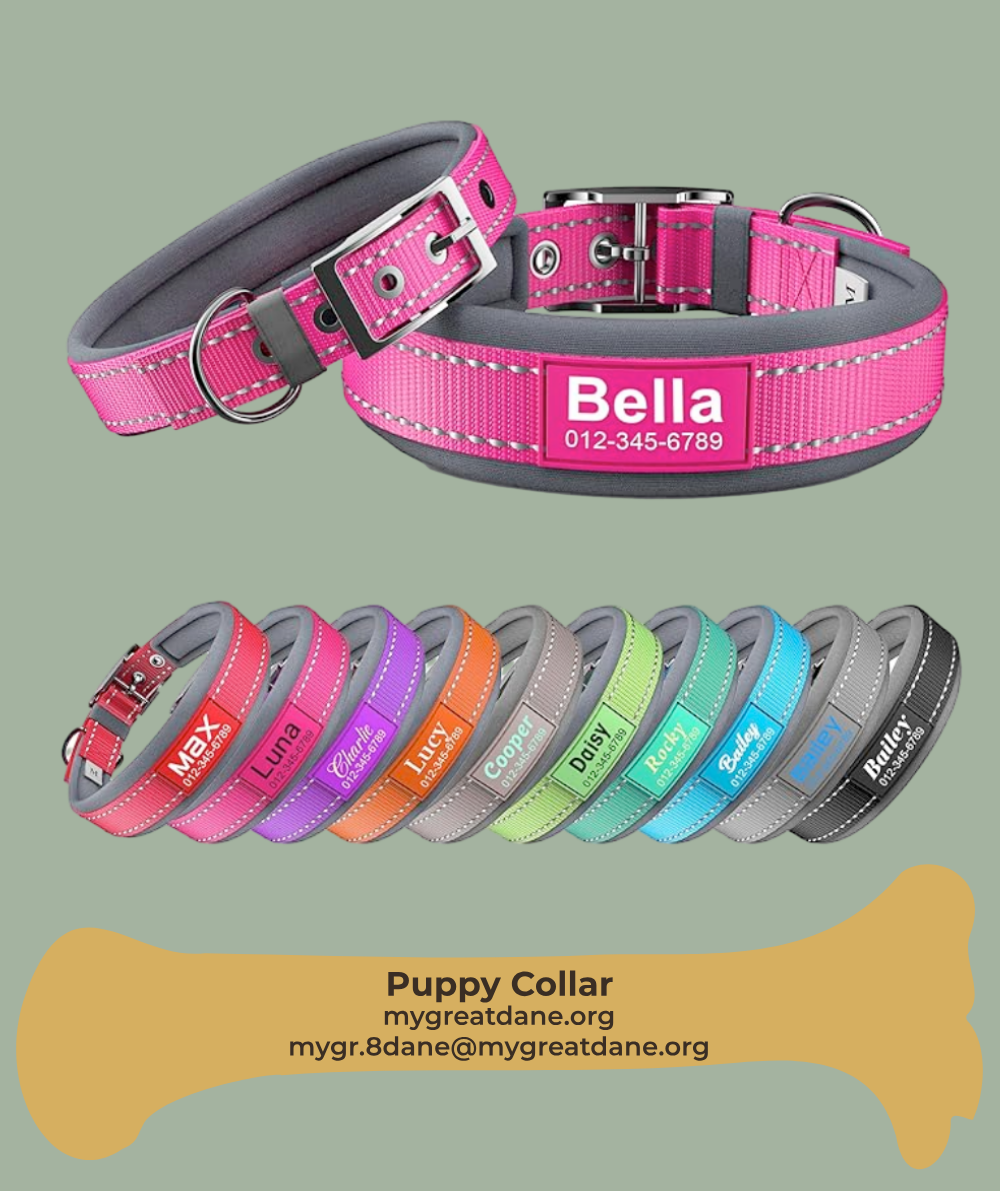
Personalized Dog Collar with Name & Phone Number | Reflective Ultra Wide Soft Neoprene Padded | Durable Metal Buckle for Large, Medium, and Small Dogs in Pink, Purple, Blue & Other Stylish Colors
Please Read and Consider: Your puppy is going to need a properly fitted collar. There’s really no way around it. However, one detail I strongly recommend paying close attention to is the type of buckle you choose.
Metal Buckle
For Great Dane puppy care, I strongly prefer a metal buckle collar over plastic quick-clip styles. While plastic
snap buckles are convenient, they can fail under sudden pressure or a sharp jolt, especially with fast-growing, strong puppies.
I have personally seen plastic quick-connect buckles fail even on young Great Dane puppies during early leash training inside the
house. Because of that experience, I recommend sticking with a sturdy metal buckle during the learning phase when unexpected lunges
and excitement are most common.
Never Jerk or Pull
That said, even metal hardware should always be used correctly and checked regularly for wear. In rare cases, I have seen
metal components fail on adult Great Danes, but this was typically due to improper use or damaged equipment rather than
normal handling.
As your puppy matures and develops reliable recall and leash manners, you can decide whether to transition to other collar
styles. However, during early training and management, a well-fitted collar with a quality metal buckle provides an extra
layer of security and peace of mind.
Affiliate link: I may earn a small commission at no extra cost to you. If this guide helped you, using my links helps support MyGreatDane.org.
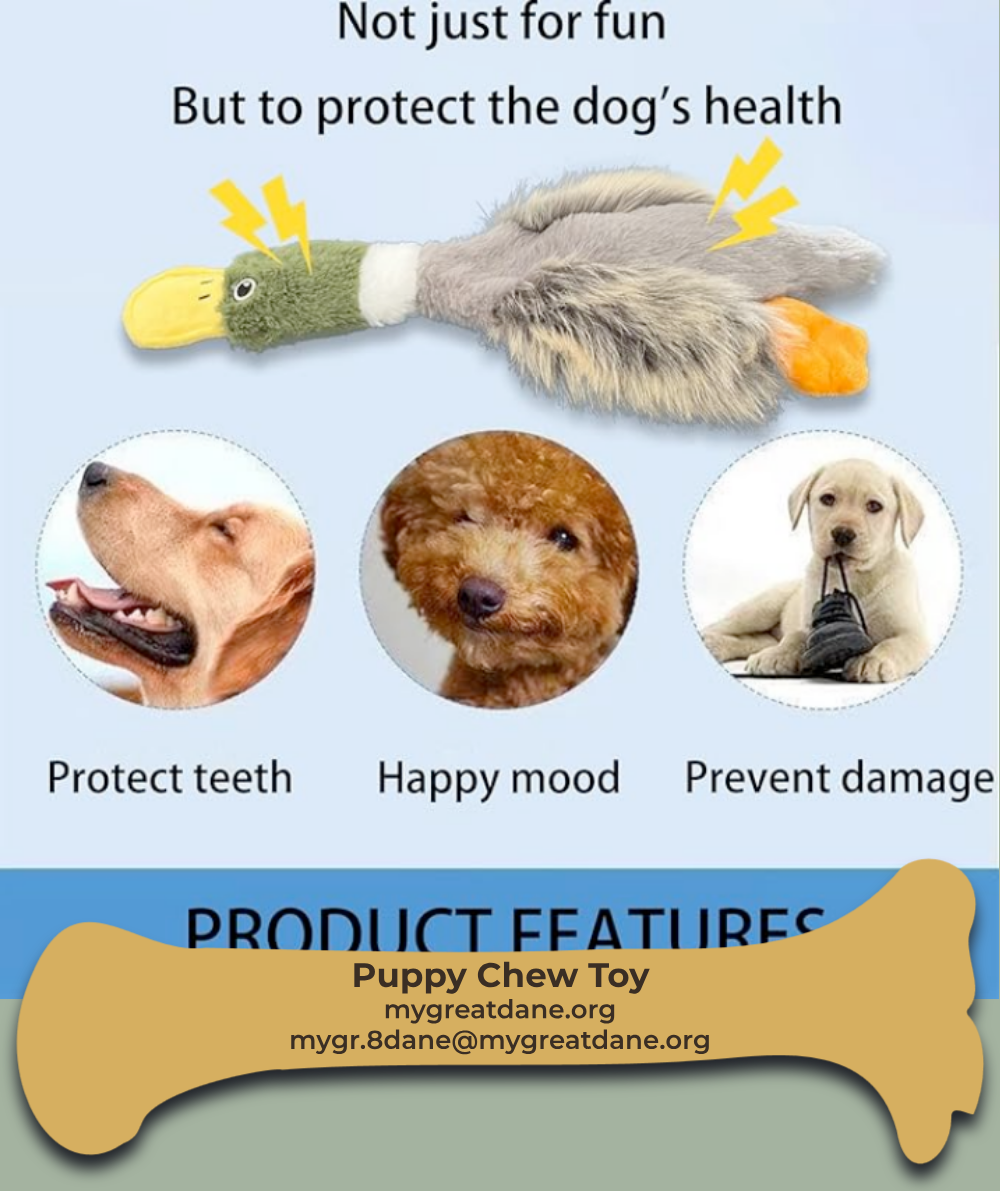
No Stuffing Toys 3 Pack
These stuffing-free chew toys are great for dogs of all ages, especially powerful chewers who love to test their gear.
Smells Like Success
What I really like is the no-stuffing design. They’re mostly durable fabric, which is perfect for adding your scent to the toy.
If you haven’t seen that section on the site yet, the idea is simple: add your scent so your puppy wants the toy more than your shoes, socks, or anything else they “adopt.”
How to do it
Bury the toys in dirty laundry for a day or two so they soak up human smell. If you have kids, use their laundry. Kids have elite-level stink power.
Redirection
This simple step increases toy attraction and makes redirection easier. When your pup prefers the toy, unwanted chewing becomes faster to stop and easier to redirect.
Bottom line: fewer fluff explosions, better scent attraction, and a stronger tool for redirection training.
Find on Amazon →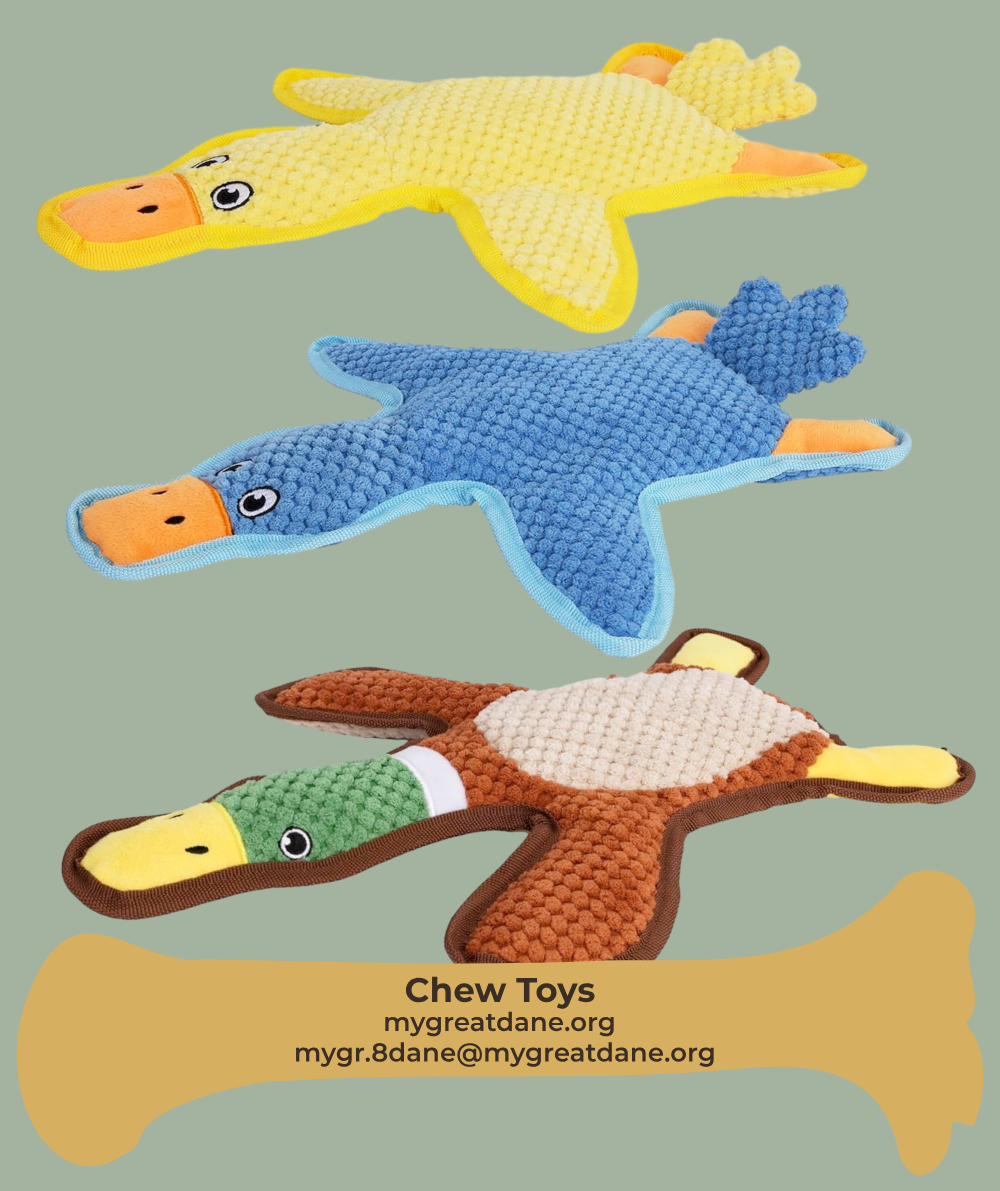
Great Dane Puppy Care Chew Toys
These toys aren’t much different from the ones to the left, just a slightly different design. They still work great for Smells Like Success and redirection training.
Why this style works
I’ve tried a lot of different toys over the years. However, this style of stuffing-free toy consistently works best in my house. You don’t need this exact brand, but look for a similar design and material.
Why I avoid stuffing
Toys with stuffing usually don’t last long here. Most end up in the trash the same night I hand them over to these monsters.
Great Dane puppies have razor-sharp teeth, and when you combine that with their chewing strength, it often equals one thing: a living room covered in fluff.
That’s why I stick with durable, stuffing-free toys like these. Less mess, better durability, and more effective scent-based redirection.
Find on Amazon →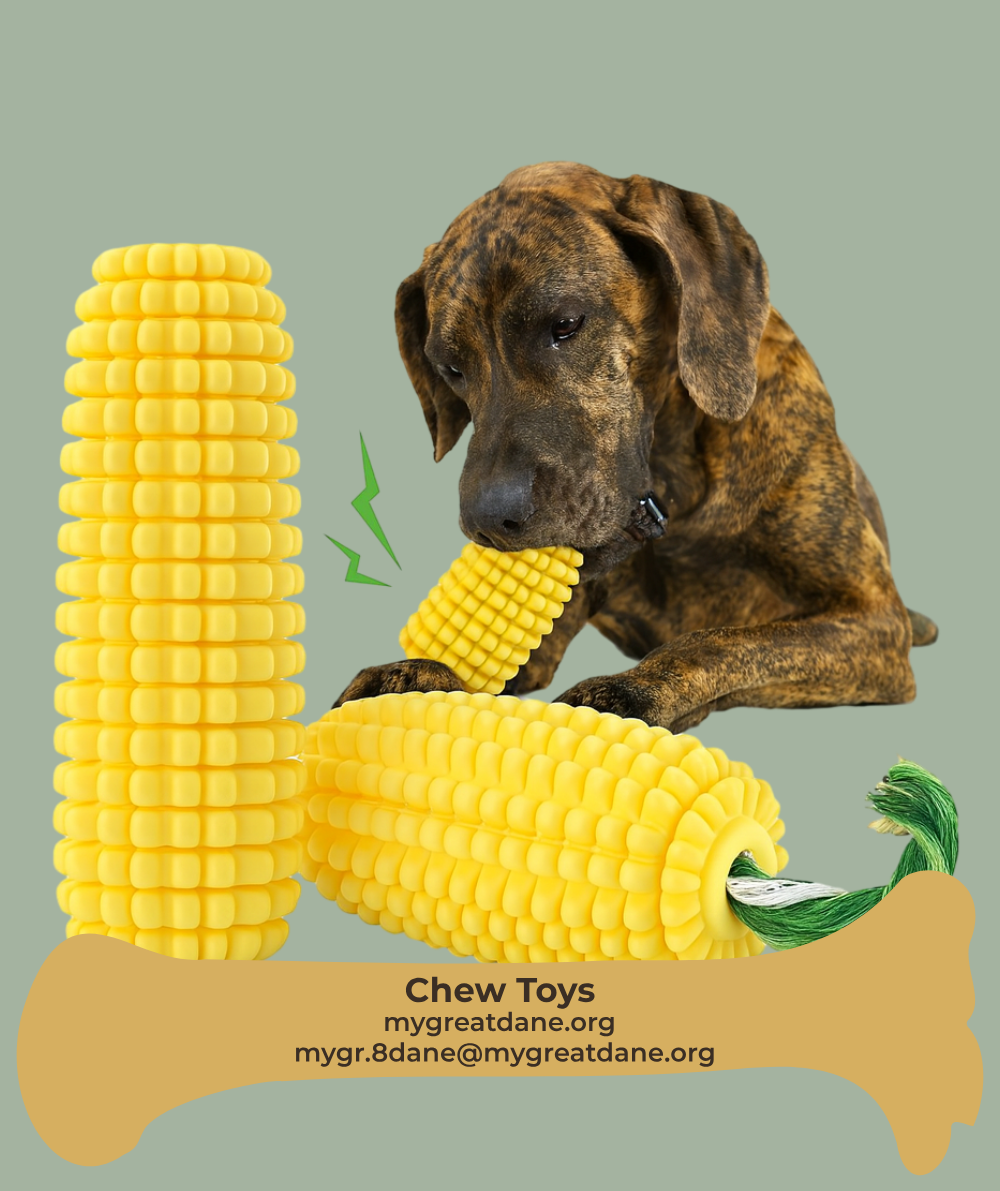
Corn Chew Toy
This is one of the few rubber or plastic toys I consistently recommend for Great Danes. While I usually prefer fabric toys, this durable rubber design holds up extremely well.
Teething support
First, the textured corn shape can help soothe irritated gums, which is especially useful for Great Dane puppies during the teething phase.
Entertainment + durability
In addition, the squeaker keeps pups engaged. Another big plus is durability. In my experience, none of my Great Danes have actually destroyed one.
Usually it gets carried outside, lost, or eventually becomes gross enough that I throw it away. Still, it rarely gets shredded.
Fetch-friendly
Because of the firm rubber construction, it also works great for fetch. It bounces well and is easy to throw.
Overall: if you want a durable Great Dane puppy toy that helps with teething and encourages play, this one is worth considering.
Find on Amazon →